

The Times: Putin Is Preparing To Use Weapons Of Mass Destruction
15- 25.01.2026, 12:24
- 24,102
If the war reaches a stalemate.
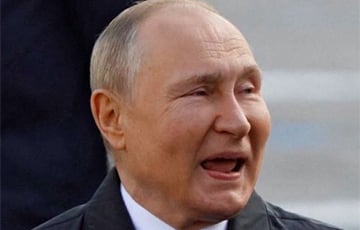
A prolongation or stalemate in the war against Ukraine could prompt Russian dictator Vladimir Putin to use chemical weapons for mass destruction.
This is reported by The Times.
According to the Ukrainian military, Russian occupiers have used dangerous chemicals more than 9,000 times since the war began - 6,540 times last year alone.
This is largely due to the use of grenades filled with riot gases such as CS and CN.
Ukrainian and European officials say Russian units have also sometimes resorted to chloropicrin, a choking agent first used in World War I.
Western officials fear that the chemicals reported by Ukraine may not reflect the full extent of Russia's arsenal, the publication said.
"Allied capitals are concerned that a protracted or stalemated war in Ukraine could prompt the Kremlin to use more dangerous weapons of mass destruction. Putin has repeatedly rattled off nuclear weapons while remaining defiantly silent about chemical or biological weapons of mass destruction," The Times noted.
After the poisoning of Alexei Navalny in 2020, the research group Bellingcat concluded that Russia's Novichok nerve agent program continued "well beyond the officially announced closing date."
According to their investigation, scientists involved in the development of the nerve agent were transferred to ostensibly civilian institutes, allowing work on chemical weapons to continue under the guise of medical and industrial research.
Employees of two such organizations, the State Institute of Experimental Military Medicine and the Scientific Center "Signal," have been named as key players in perfecting and "weaponizing" Novichok through the 2010s.
"It is safe to assume that Russia's chemical weapons program still exists. If Novichok were used on a larger scale, it could have enormous consequences," said former British army officer Hamish de Breton-Gordon.
The former commander of Britain's Armed Forces Joint Command, General Sir Richard Barrons, says a move to a more lethal chemical weapon would be a disadvantageous move for Moscow because it would bring little military benefit and high costs.
"You draw attention to a war crime, you run the risk of facing retaliation, and it's a double-edged sword - you can put your own forces at risk, for example, if the wind changes," he said.
But Barrons said the temptation to use such weapons could arise "if you find yourself in a situation where the stakes are extremely high, where the survival of the country is at stake."

Bank's name: Bank Millennium S.A.
Address: ul. Stanislawa Zaryna, 2A, 02-593, Warszawa
IBAN: PL97116022020000000216711123
SWIFT: BIGBPLPW
Name of the account holder: Fundacja “KARTA ‘97”
Purpose/title of payment: Donation for statuary aims
You can contact us by the e-mail charter97@gmail.com