


Maduro's Arrest Has Caused A Wave Of Shock In Moscow And Beijing
18- 5.01.2026, 18:21
- 22,480
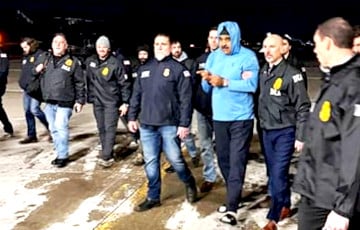
China and Russia have lost a key ally.
Few believed the United States could pull off the operation that culminated in the capture and removal of Venezuelan dictator Nicolas Maduro and his wife Silia Flores, writes The Telegraph (translated by the website Charter97.org).
In 1989, it took U.S. troops two weeks to locate, blockade and arrest Panamanian dictator Manuel Noriega - an operation that claimed the lives of 26 Americans and hundreds of Panamanians. Panama is a small country with one major city and a significant American military presence.
An operation in Venezuela, a much larger country with a powerful army and loyal security forces, would be more like the invasion of Iraq, where the search for Saddam Hussein took nine months and regime change led to chaos and seriously damaged Washington's reputation.
But Trump has, at least for now, defied critics' expectations by conducting - probably with the assistance of someone in Maduro's inner circle - an impressive operation, more in the vein of the Mossad than the Pentagon.
The US president is sure to present it as the fastest regime-change operation in more than a century and as a demonstration that the American colossus still dominates the world. This kind of "gunboat diplomacy" is traditionally available only to great empires - the same ones that once displaced unwanted rulers just as easily.
It is not surprising if the lightning raid in Caracas has caused deep unease in Moscow and Beijing, Maduro's main patrons. The capture and removal of an autocrat whose fate will now be decided by a foreign court is a wake-up call for any authoritarian leader.
Putin was reportedly deeply shaken by the massacre of Muammar Gaddafi in 2011 and is rumored to have repeatedly reviewed videos of his assassination. He may have felt a similar sense of vulnerability now - especially given the International Criminal Court's warrant against him.

Bank's name: Bank Millennium S.A.
Address: ul. Stanislawa Zaryna, 2A, 02-593, Warszawa
IBAN: PL97116022020000000216711123
SWIFT: BIGBPLPW
Name of the account holder: Fundacja “KARTA ‘97”
Purpose/title of payment: Donation for statuary aims
You can contact us by the e-mail charter97@gmail.com