


NYT: AI Enters The Battlefield In Ukraine
4- 5.01.2026, 17:16
- 6,122
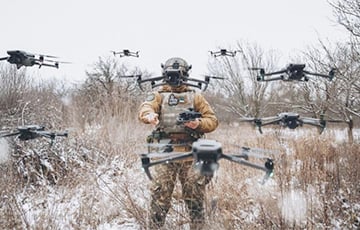
Drone warfare has taken drone warfare to a whole new level.
Over the past year, the war in Ukraine has become a testing ground for a new and military technology - combat drones with artificial intelligence elements. While most drones previously required constant control by an operator, now the frontline is increasingly using devices capable of independently targeting and attacking a target without human intervention at the final stage, according to The New York Times.
Ukrainian units have begun using autonomous and semi-autonomous drones that are resistant to radio-electronic suppression. One such drone, known as Bumblebee, after capturing a target, can continue an attack even if it completely loses communication with the operator. According to the developers and the military, such drones have already made thousands of combat sorties, striking warehouses, equipment and enemy positions where conventional drones were powerless.
The development and implementation of such systems have been accelerated due to the active use of electronic warfare. In response, Ukrainian engineers and startups, supported by the government, Western investors and private technology companies, have begun equipping drones with computer vision, autonomous navigation and target recognition algorithms. Some systems allow one operator to control dozens of drones at once, which brings closer the introduction of the concept of a "drone swarm."
At the same time, experts and human rights activists are sounding the alarm. They warn that the weapon's autonomous target selection without a direct human decision jeopardizes the norms of international humanitarian law and the protection of civilians. Despite the developers' statements about keeping "humans in the decision-making loop," the technical possibility of full autonomy already exists.
The era of AI weapons is no longer a theory. It is taking shape in the here and now - without international rules and with far-reaching consequences for future conflicts.

Bank's name: Bank Millennium S.A.
Address: ul. Stanislawa Zaryna, 2A, 02-593, Warszawa
IBAN: PL97116022020000000216711123
SWIFT: BIGBPLPW
Name of the account holder: Fundacja “KARTA ‘97”
Purpose/title of payment: Donation for statuary aims
You can contact us by the e-mail charter97@gmail.com