

Reuters: Kremlin Oil Bypasses Are Closing
1- 10.02.2026, 11:18
- 2,414
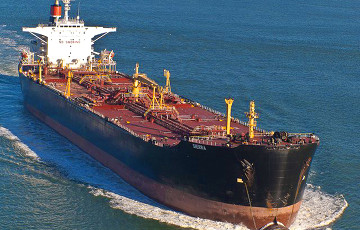
The EU is preparing sanctions against third country ports for the first time.
The European Union (EU) for the first time proposes to impose sanctions against the ports of third countries (Georgia and Indonesia) to block Russian oil export routes. The 20th package of sanctions also envisages severe restrictions on metal imports, financial transactions and fight against circumvention of sanctions through other states.
About it writes Reuters with reference to the draft of the relevant document submitted to the EU member states. Brussels proposed to extend restrictions not only to Russian companies and banks, but also to the ports of third countries that are involved in the processing of Russian oil.
The issue is the port of Kulevi in Georgia and the port of Karimun in Indonesia. According to the document, the ports of Kulevi and Karimun are planned to be added to the sanctions list. If the decision is taken, European companies and individuals will be completely banned from carrying out any transactions with these ports. This will concern financial settlements, logistics services, insurance, maintenance and other forms of cooperation.
The new sanctions package was jointly prepared by the EU diplomatic service, the European External Action Service and the European Commission and presented to member states on Monday. Its adoption requires the unanimous support of all EU countries.
European Commission President Ursula von der Leyen said earlier that the package signaled a fundamental shift in the approach to restrictions against Russian oil. Instead of the current price ceiling mechanism of the G7 countries, the EU proposes to move to a complete ban on maritime services for the transportation of Russian crude oil.
In addition to sanctions against ports, the 20th package envisages an expansion of the list of goods banned for import from Russia. The EU proposes to block supplies of nickel ingots, iron ores and concentrates, unrefined and processed copper, as well as various scrap metals, including aluminum.
The import of salt, ammonia, pebbles, silicon and fur products may also be banned. The purpose of these steps is to reduce Russia's revenues from raw materials exports and limit access to the European market for key Russian industries.
For the first time under the sanctions, the EU plans to apply a special tool to counteract the circumvention of restrictions against a third country. In particular, it is proposed to ban the export of metal-cutting machine tools and communications equipment (modems, routers and other voice, image and data transmission equipment) to Kyrgyzstan, which, according to Brussels, is used as a transit link for goods to Russia.
A separate block of the 20th package concerns financial institutions. The EU proposes to impose sanctions on two Kyrgyz banks, Keremet and Capital Bank of Central Asia, which, according to the EU, provide crypto-asset services for Russia. Banks in Laos and Tajikistan may also fall under the restrictions. If the decision is made, these institutions will be banned from carrying out any transactions with individuals and legal entities from the EU.
The European External Action Service also proposed to expand the sanctions list to include 30 individuals and 64 companies. These include Bashneft, a subsidiary of oil giant Rosneft, as well as eight Russian oil refineries, particularly the Tuapse and Syzran refineries, which are controlled by Rosneft.

Bank's name: Bank Millennium S.A.
Address: ul. Stanislawa Zaryna, 2A, 02-593, Warszawa
IBAN: PL97116022020000000216711123
SWIFT: BIGBPLPW
Name of the account holder: Fundacja “KARTA ‘97”
Purpose/title of payment: Donation for statuary aims
You can contact us by the e-mail charter97@gmail.com