

Pro-Kremlin Economists Have Announced The Beginning Of A Banking Crisis In Russia
16- 2.02.2026, 21:06
- 21,260
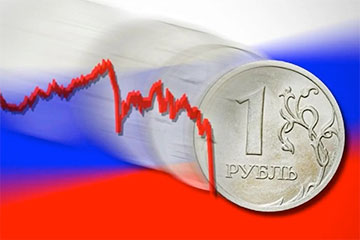
The "flight of depositors" has begun.
"Previously predicted by our early warning system ... the banking crisis is now fixed according to formal criteria, and a little earlier ... a crisis of bad debts was already fixed," stated the analytical center CMACP, which is close to the authorities.
The leading indicator also fixes high risks of "flight of depositors". So far, this effect does not arise due to the latent nature of the crisis, says the CMACP, but "in case of strengthening of crisis processes, they may come to the surface," reports The Moscow Times.
The center understands a systemic banking crisis as a situation in which at least one of the following conditions is realized:
the share of problem assets in the banking system exceeds 10%;
clients withdraw a significant share of funds from their accounts and deposits;
to prevent the consequences of the crisis, at least one of the following measures is taken However, in some areas, the "depth of defeat" may be even greater: for loans to small and medium-sized businesses (SMB), it averages 19%, the Central Bank of Russia cites an example.
According to the Central Bank of Russia at the end of October, 11.2% of corporate loans worth 10.4 trillion rubles and 6.1% of retail loans worth 2.3 trillion rubles were in trouble.
The Central Bank asks banks to satisfy companies' requests for loan restructuring if there is hope that they will be able to cope with the difficulties. This is how it hopes to prevent mass business bankruptcies. Last spring, the regulator issued such recommendations, agreeing not to increase the provisioning of such loans even retroactively - from the middle of 2024. At the end of last year, the Central Bank extended the indulgences and advised banks to meet the borrowers at least in the first half of this year.
Thanks to the masking of banks' problem assets by intensive restructuring of overdue loans, as well as due to the dominance of state banks (which helps prevent bank failures and bank "panic"), the crisis is still in a latent form - just as it will be in 2022, concludes CMACP.
Part of the investments from the National Welfare Fund (NWF) are made through subordinated deposits in the largest banks - mostly state-owned, but not only. Such funds can be accounted for in capital, and when in June 300 billion rubles from the NWF were placed in banks to finance the Moscow-St. Petersburg High-Speed Railway, the CMACP called it "an emergency additional capitalization of several major banks." In December, 82.6 billion rubles of FNB funds were placed on a subordinated deposit in Gazprombank to "finance an infrastructure project."
Central Bank calls the quality of banks' loan portfolios "acceptable," but emphasizes growing risks. Two of the four main financial sector vulnerabilities it identified are related to business debt problems.
The economic slowdown, poor market conditions and high interest rates have increased the debt and interest burden of companies, credit risk in the corporate sector is growing, the Central Bank noted: the share of the so-called green zone (without signs of impairment) in the portfolio of loans to large and medium-sized companies is gradually decreasing, and in the SME segment the number of companies going into default is growing. Against the background of extreme strengthening of the ruble (by a quarter over the year in real terms) and high interest rates, the Central Bank of Russia has recorded a sharp deterioration in the quality of the corporate portfolio, especially in loans to export-oriented companies - oil and gas and mining and metallurgical companies.
To contain risks, the Central Bank since last year began to make it more difficult for banks to lend to the largest companies with high debt load, increasing the provisioning of such loans. So far, this has not helped: according to the Central Bank, despite its measures, for 11 months the liabilities of such borrowers to banks increased by 15.5%, and the entire corporate sector - by 11.3%. From March, the Central Bank will again sharply increase the requirements to reserves for the growth of such loans, and if it does not help, threatens to increase them even more. Analysts at Gazprombank's Center for Economic Forecasting consider this decision important given the accumulating risks.

Bank's name: Bank Millennium S.A.
Address: ul. Stanislawa Zaryna, 2A, 02-593, Warszawa
IBAN: PL97116022020000000216711123
SWIFT: BIGBPLPW
Name of the account holder: Fundacja “KARTA ‘97”
Purpose/title of payment: Donation for statuary aims
You can contact us by the e-mail charter97@gmail.com