
Orban Becomes A Hostage Of Rosatom
3- 7.02.2026, 18:52
- 5,956
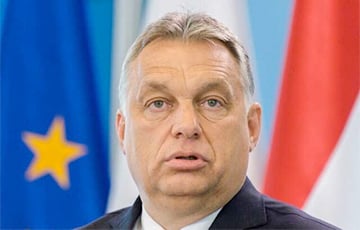
Hungary's Paks-II nuclear power plant could become the new Chernobyl.
On February 5, 2026, the "first concrete" of the fifth unit of the Paks II nuclear power plant was ceremonially poured in Hungary. There were speeches on the site about "a big day for Russia", IAEA Director General Rafael Grossi smiled for the camera, and official press releases were scattered with compliments about "Russian technology". But something not so "cheerful" is hiding behind the parade picture.
Internal reports of Rosatom specialists record what should not be on the site of the future nuclear power plant in principle. Cracks in the pit, ochre deposits, a persistent odor of hydrogen sulfide and abnormal chemical processes in the concrete mixture. All this suggests that the base of the power unit is interacting with aggressive ground and seepage water and is already showing signs of destruction.
In any normal country, such signals would be a stopcock. But not in the case of Paks II. The Russian contractor continues to pour concrete on top of the problematic foundation as if it were building a temporary warehouse rather than a nuclear facility. In fact, the NPP foundation is being built on a base that is already showing signs of instability. This is not just negligence, but a conscious, demonstrative violation of basic engineering standards.
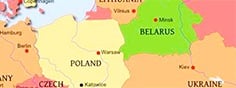
It is important to realize that "Pakhsh-II" is not a single failure, but a symptom of a systemic disease of the entire Rosatom-Atomstroyexport connection. In 2024-2025, the Belarusian NPP faced depressurization of fuel assemblies and defects in the main circulation pipeline system. In other words, an operating facility operating in close proximity to the EU borders has revealed problems that are considered a red line in the nuclear industry.
An accident at Paks II, caused by defects that are already being laid bare today, would not be just a "Hungarian problem." Radioactive emissions, contaminated air and water know no borders and no visa regimes. The potential impact zone covers the entire Central and a large part of Southern and Western Europe.
The contaminated air and water masses could reach the territories of Poland, Slovakia, Czech Republic, Croatia, Slovenia, Serbia, Italy, Austria, Germany, Romania, Ukraine, the Baltic Sea, the Alpine region and even the Mediterranean. Central Europe risks turning into a man-made disaster zone, where millions of people will be forced to leave their homes not because of war, but because of someone's greed.
The cost of dealing with the consequences would no longer be measured in billions, but in trillions of euros. And it is not Rosatom, and certainly not Orban, but European taxpayers who will have to pay for this "project of the century". One corrupt nuclear megaproject can plunge an entire region into a prolonged depression, increase social discontent, and radicalize politics. And all this under the shadow of the "peaceful atom."
"Paks II" is not just about concrete, cracks and hydrogen sulfide. It's also about geopolitics. Instead of investing in energy efficiency and renewable sources, Hungary is voluntarily entering a 60-year dependence on Russian nuclear fuel, services and loans.
For decades to come, Budapest is being held hostage to the Rosatom corporation, which technically controls the country's critical infrastructure. This means that the Kremlin also gains leverage.
Any dispute with Brussels, any new package of sanctions, any discussion of aid to Ukraine will automatically be filtered through the question: "What will Moscow say, will it cut off our oxygen? Or, in this case, uranium?"
Nuclear security cannot be the subject of political compromises, credit lines and behind-the-scenes agreements. And the question is "is Europe willing to live next to a new potential Chernobyl zone?" And this is not a question for engineers, but for politicians, diplomats and citizens.
While they pour concrete into the cracks at the Paks II site and pretend that everything is going according to plan, Europe must honestly recognize that what we are facing is not an energy project, but a European threat. And the longer they keep silent about it, the higher the chance that in 10-20 years we will have to discuss not expert reports, but maps of radioactive contamination.
Petr Oleshchuk, professor at Taras Shevchenko National University of Kyiv, specially for Charter97.org.

Bank's name: Bank Millennium S.A.
Address: ul. Stanislawa Zaryna, 2A, 02-593, Warszawa
IBAN: PL97116022020000000216711123
SWIFT: BIGBPLPW
Name of the account holder: Fundacja “KARTA ‘97”
Purpose/title of payment: Donation for statuary aims
You can contact us by the e-mail charter97@gmail.com