

Deutsche Welle's Journalist Shares New Information About Former SWAT Fighter Garavsky and His Confessions
- 24.12.2019, 13:20
- 5,033
All information has been verified.
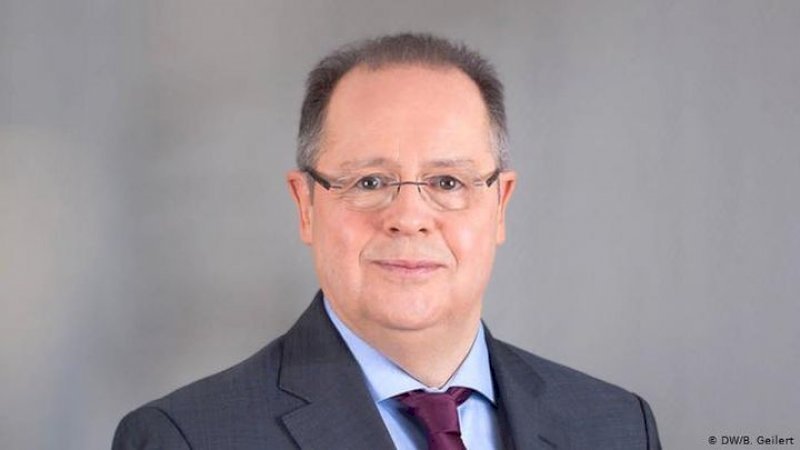
Dr Christian Trippe, who headed the Deutsche Welle team of journalists working on the film "Minsk Murders", talked to the portal tut.by.
Christian Frederik Trippe is a television journalist. He works for Deutsche Welle, lives in Berlin, writes about Eastern Europe, in particular about former Soviet Union countries. In 1999-2000s he worked in Moscow.
Together with a team of five people he worked on the film "Minsk Murders," which was based on an interview with Belarusian Yuri Garavsky. He claims that he participated in the kidnapping and murder of famous opposition politicians Viktar Hanchar, Yury Zakharanka, Anatol Krasouski in the 1990s.
Yury Garavsky contacted the Russian service of Deutsche Welle. This was mid-September 2019, says Christian Trippe. According to him, in his letter Garavskysays that he has "relevant insider information about events that took place in Belarus 20 years ago".
- Then my colleagues from the Russian service contacted him and met with him. The first time they did not talk for camera just to understand what kind of person he was and whether he was trustworthy. After that, we decided that his information was relevant and trustworthy. Then we set up a group to investigate.
The initial group included five people: four Russian speakers and Christian. The film production took three months. The journalists met with Garavsky five times and had four multi-hour interviews.
- We also checked facts, made synopsis. We recorded the core in the form of a dossier, which we checked with many experts in Europe who are familiar with the case. Only then we decided to make a story about Yuri Garavsky.
Christian personally met with Garavsky in mid-October. They met only once then.
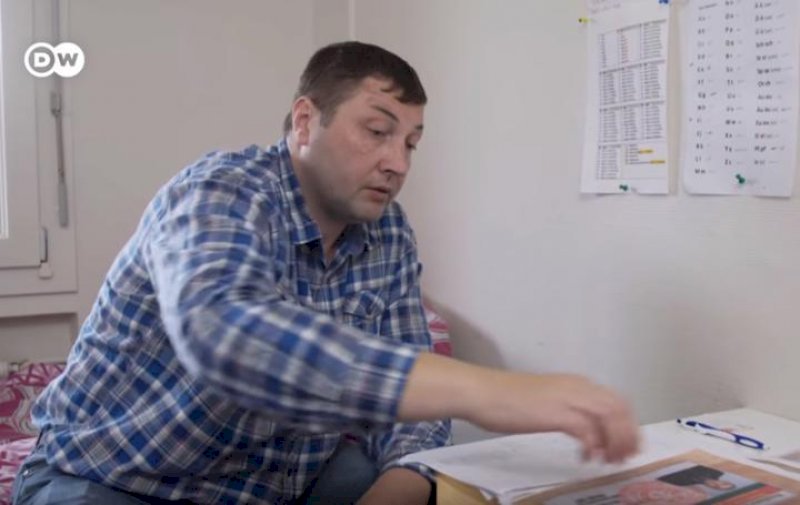
- It was Deutsche Welle's second joint meeting with him. That time we visited his shelter, were in the hospital [where he is being treated]. Yuri lives there now. We were with him in a big city and we talked to him for camera.
- What was your impression of Yuri?
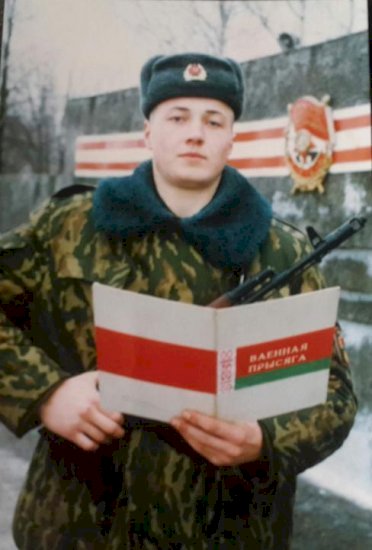
- I thought that's how people who served in special units of the Ministry of Internal Affairs look and behave. It doesn't matter what their name is: the riot police, Alpha or SWAT.
This is the kind of character that is required in such armies: rather unemotional, extremely disciplined. When filming, one can quickly realise whether the person standing in front of the camera is stable or not. After all, many people become irritated a few hours later, they get bored when the cameraman says, "Please, take this position" or something like that. I saw nothing of this kind in Yuri. One can easily recognise a former soldier in him.
Despite this self-control, he used when talking about his life and his involvement in the events of 1999-2000, it was clear that there was some kind of psychological struggle in him.
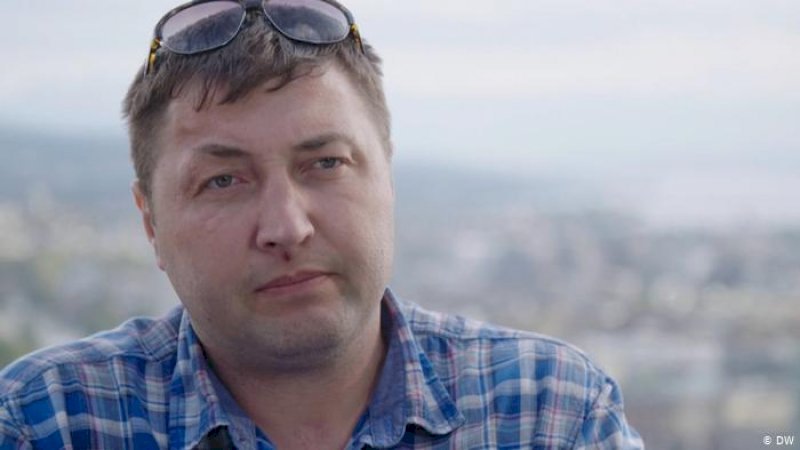
Yuri controlled himself. He was very reserved. One may think that he doesn't have any emotions or only a few. I guess this is not quite true.
If one looks closer, one can see how his eyes work. We have repeatedly asked him how he lived with it, with this guilt, with the knowledge that he had done such things. But he didn't want to answer. He only said: "I have psychological problems, but I do not discuss them with anyone". Then we asked him, "Do you get psychological aid?" - "No, I can handle this on my own." Then he also added that he came to ease his conscience.
At first glance, this is not the man who cries, weeps or shows his emotional stress. But there is an emotion, and I felt it all the time while we were filming.
- In what conditions does Yuri Garavsky live now?
- I can't say anything but that you can see in this video. He sought asylum in a Western European country. He lives in a place that we haven't filmed. The authorities didn't want that. I can say it's a simple and clean place to live.
- Yuri claims to have been involved in kidnappings and killings. What consequences may it bear in the country he resides in? Can the police arrest him?
- I don't think that's possible. We have checked what legal consequences his statement of involvement in the killing of people will have.
In Germany, abetting murder is a criminal offence. That means that if anyone finds it out, one has to call the police immediately. But in the legislative system of the Federal Republic, where he is now, it's not a criminal offence. It means he can make a statement without being arrested.
I don't know if Yuri knew about this. Or those who helped him escape from Belarus told him about it. I guess it can be true, but I cannot prove it yet.
We wondered if he felt safe. He said he wasn't. Now he's applied for asylum. This procedure may take months.
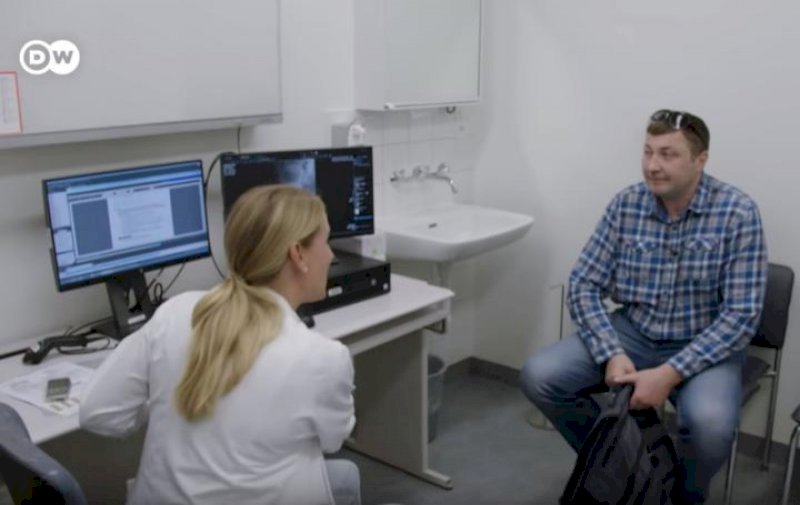
- Your film says that Yuri is currently under treatment at the clinic. Social networks say that it probably costs much and wonder where he gets the money from for it.
- The system of many Western European countries is designed in such a way that those who apply for asylum and are sick get treatment at the expense of the state. It's the same for Germany. You can find thousands of people from Syria in our hospitals who are treated at the expense of the state.
- After three-months work with the information provided by Garavsky, do you believe in what he told you?
- It's not a matter of faith. We have published the information that we have either directly verified or it initially was credible. But I stress that we're the media, not an investigator, a prosecutor and a judge. Only they can now determine whether this information made public is true. Only a court can determine who's really to blame.
- You mentioned ways to check information and data about Garavsky - databases, specialists. Could you tell us more specifically?
- To be honest, I wouldn't like to. However, we had much work done. We didn't say, "Wow, this is the key witness to the events of 1999." We always remained sceptical of what he said. We kept checking all the time. Including in Minsk, which was not as easy as you can imagine.
- How exactly did you check it out? That's a fundamental question.
- Using professional methods our journalists know.
For example, in his interview, he focused on specific actions: detention, kidnapping, murder. Therefore, we asked him the same questions during three interviews taken at different times and in different places. Then we made a synopsis, a summary.
The contradictions in his statements we tried to resolve through our investigation, questions, additional information.
We compared all the evidence. Completely new information, we verified as thorough as possible. For example, he gave one detail about one of the victims that hadn't been published anywhere. Later, we interviewed that victim's friends. Everyone said, "No, we don't know that and we can't confirm anything." But then the family said it was true.
That detail wasn't so important to him, he told it incidentally. It turned out to be true. The family said: "How does he know that?" It increased his level of credibility.
- Social networks say that Yuri was tested for a truth/deception device. Is this true?
- No, Deutsche Welle doesn't do that. They also wonder how much money we paid him. We didn't do anything like that. That's what other media can do, but not in Germany.
- Why did you decide not only to do interviews but also to make a film?
- Because I'm a TV journalist. (Christian laughs.) A film is the media that can affect more people. A written interview makes it harder to imagine the context. The written interview is never translated into other languages. Our mission as Deutsche Welle is to broadcast in as many languages as possible. That's why this film is translated into English, Spanish. By the way, South America raises a major topic now, because during the regime of 1960-1970s many people were kidnapped there and have not been found yet. The topic of the "firing squad", the opposition, which was suppressed, is important in South America.
If the written interview had simply been translated into Spanish, it would not have been understood. The film presents the full context.
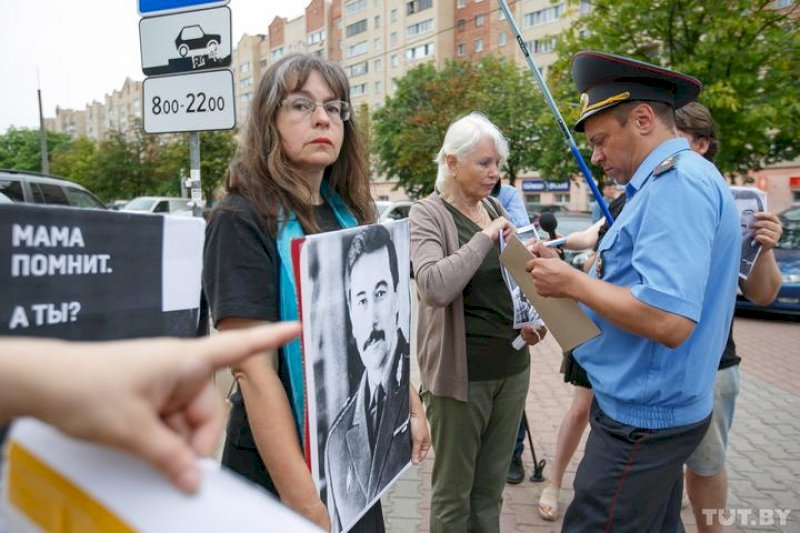
Besides, it is not always clear from the text how a person reacts, how he says "I am sorry", whether I, as a reader, can believe him. This film allows us to address people who have never heard of Viktar Hanchar, Anatol Krasouski and Yury Zakharanka and might not know that Belarus exists.
- Almost all the information that Garavsky provided was known even before his statement. Except for the detail that Viktar Hanchar missed two toes.
- As far as I know, no one has ever stood up as a witness to speak out: "I was there, I was involved in the kidnapping and murder." Plus, this is the first time when one says how these three politicians passed away. We knew nothing about what happened to their corpses. Rumor has it Zaharenka's corpse was burned, but that's just a rumor.
- Why did you decide to publish the story on December 16 - four days before the negotiations between Lukashenka and Putin? The social networks assume that this is not just a coincidence, and see a "Kremlin trace" in it.
- There is even a tweet of Mikhail Saakashvili; he says the same. This interview has a clear Russian trace and that we have a negative impact on Belarus' independence.
In mid-September, we got Yuri's contact. The work with his information, personality took much time and efforts. It took about three months to produce the film. We decided to release it on December 16. I wanted to do it in 2019 because this is the year of the 20th anniversary of the disappearance of politicians. It's a completely trivial journalistic reason.
It would have been better to work on the film for a few more days, but it is a bad idea to publish such a story at Christmas time.
We decided to release the film on the 16th - Monday - before Christmas. That's the reason.
Is there a Russian trace we are suspected of? No. All the colleagues who worked on the film are Belarusians. The cameraman was Ukrainian. I am German. There's no Russian trace, as far as you can see.