

Svetlana Alexievich: Lukashenka Is Losing Ground Under His Feet
33- 28.05.2019, 9:22
- 57,738
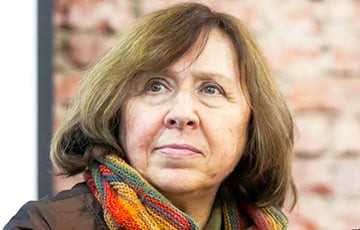
(updated) The latest events show that the dictator is at loss.
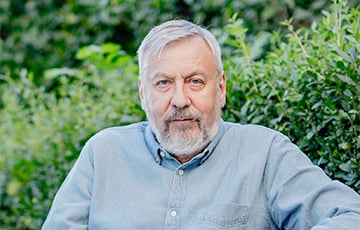
Belsat journalist Vitaut Siuchyk has talked to Nobel Prize winner Svetlana Alexievich about the Belarusian language, the Russian threat and repentance for Kurapaty.
- You are world famous for describing totalitarianism through people' lives. In recent weeks we have been witnessing the persecution of the Roma diaspora in Belarus. More than a hundred people were detained only because of their nationality. Are there any signs not of authoritarianism, but already totalitarianism?
- You recall that the authorities demolished crosses, referring to Kurapaty. You were offered to head the commission for the erection of the state monument, but you refused. Indeed, it's very painful to observe what's happening in the necropolis: demolition of crosses, detention of people. They destroy and persecute not only living people but also destroy the memory of victims. And may serve here as motivation? Is there any good reason why the authorities need this?
- These authorities need total control. It requires constant "support" to ensure obedience, fear, to assure that the "eye of Omniscience" remembers you, watches you, and any step aside ends in this way. It is a classical form of totalitarianism.
- It would seem how one can dare to demolish crosses today when this militant communism has been gone. After all, the authorities have wished such a violent conflict with the Christian community: the Catholic Church has been extremely against it. Still, it seems to me that if we evaluate this situation, then why do the authorities need these conflicts?
- On Friday, the press service of Lukashenka stated that he had stopped near Kurapaty and given a strict order: "Do nothing there without the authorization". One cannot erect crosses. Do the authorities take the initiative after decades of neglect? Although we see how they take it - they demolish crosses and destroy national memory. What do you think will happen next? Why did the authorities take action in the necropolis?
- Well, when you're besieged and lose ground, you need some kind of satisfaction. The person psychologically longs for some kind of statement. And Lukashenka feels like a master in the area, which is called Belarus and the Belarusian people. And it would be right to say "I am the master, nothing is missing". I am surprised that he is ready to humiliate his people, especially when Belarus is in great danger. Our relations with Russia are doubtful and we do not know the result. What does this huge state want, which only brings militarism and blood? I consider such behaviour odd for a big politician, to put it mildly.
- Do you perceive any threat in Russia's actions and intentions?
- Yes, sure. It serves its interests and corresponds to its imperial self-consciousness. The war in Donbas has failed, everything is quite contrary to Crimea, so it needs some "support".
- You say that the totalitarianism we have is only developing and there is no improvement. Is there any hope for improvement and what should be done to achieve it?
- The only hope is our Zelensky. He is a young man of a new generation, new ideas and other notions. He has no tanks or missiles in his head, he has a completely different idea of the future as it should be. And he is the only hope for that. No matter how much they play hockey and football, they cannot stop time.
- You remembered the threat from the East. We know that this year Belarus carries out a census survey and we will be asked again: who we are, who we think we are, what our native language is. May I ask you, what language you will call your native?
- Of course, I'm Belarusian. And my native language is Belarusian, though I don't speak it. I do not speak it because the whole of my life is the Russian language and Russian culture. But I feel like a Belarusian, the Belarusian land is my land, my father comes from here. This is the only life I know, even though I have lived in Europe as well. Belarus is my homeland.
- I remember 2015 when you were awarded the Nobel Prize, many people watched your speech (I was among them) and there was a thought in my head: "Will she speak Belarusian?" And you spoke Belarusian. It was a moment of national unity. It seems to me that the Belarusian language is an important factor for the security of our country.
- Of course, the sooner people's self-identification process takes place, each of us will say: "I am a Belarusian, this is my land, the land of my children, I will decide what to do here", the sooner our lives will change.