

Leanid Zlotnikau on Belarusian Economics: We Can Reach the Level of Venezuela
20- 25.06.2021, 10:31
- 23,678
Now the sanctions can only accelerate this process.
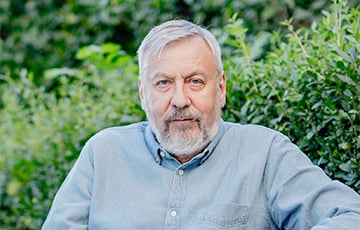
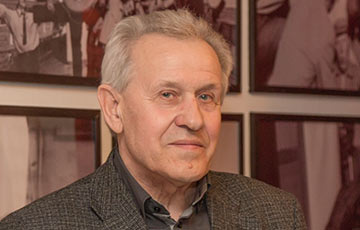
Economist Leanid Zlotnikau commented for Salidarnasts on Lukashenka's new promises on salaries.
- Even before Lukashenka came to power, just after the collapse of the USSR, when they tried to restore the state management of the economy, I wrote numerous articles explaining why any state-run economy would end up in failure. The Soviet Union was the most convincing example. But Lukashenka decided to restore the Soviet-based economy anyway.
Yes, Belarus prospered under the Soviet system. In terms of indicators, the republic was very beautiful, industrial. They produced cars, the light industry, and the first computers. But let me remind you why we used to prosper.
We supplied all of our goods to Russia, which bought them at inflated prices. In the Soviet Union, the "mark of quality" was invented to encourage manufacturers. Goods with this mark were considered of better quality, and they were allowed to raise prices.
What was the encouragement under the Soviet Union? A new bow on the shoes is an improvement, and the product receives a "quality mark". And it does not matter that these shoes cannot even be compared to imported ones.
Russia was supplying us with oil, gas and other raw materials. One can't sew a bow on it. That is why a pair of shoes "with a quality mark" used to cost as much as a ton of oil.
When the USSR collapsed and we ourselves began to enter the world market, we had to learn the real price of "stimulation within the socialist economy". It turned out that Russia used to sell raw materials in the Soviet Union, at prices several times lower than the world ones while we used to sell "quality goods" at much higher prices, recalls the famous economist.
He believes the initial course on the restoration of the Soviet model of the economy was wrong.
- Every place in the world that tried to build a paradise at the expense of public property failed. This is the Soviet Union, Cuba, and Venezuela. But Lukashenka still chose the same model; he wanted to bring back the USSR in all its manifestations. As a result, our economy is neither planned, nor private, but of an incomprehensible kind. For about ten years, our Ministry of Economy provided figures for the main indicators, e.g. oil production, tractor production, etc.
We analyzed and verified that there was no connection between the reported statistics and the actual figures.
Whether the sanctions come or not, one can easily use them to explain things. We have been steadily losing altitude in the economy for many years. Ever since we set the course for the Soviet Union.
Remember, Lukashenka used to say that we would strive for the market, but we are not in a hurry. Everybody rejoiced that, at least in words, they heard that. These were just words! Then, if I'm not mistaken, in 2017, he said, "We've had enough of the market, and we are all building socialism". But all of our private property turned out to be a sham according to the so-called "Asian model of capitalism," where private owners themselves are owned by the state. It is no better than socialism," the scientist analyzes.
He stresses that for the whole of the last period, the country's economy has been based exclusively on Russian and world subsidies, as well as production facilities left over from the Soviet Union.
- Without all this, we would have collapsed long ago. Meanwhile, we have been falling slowly. Now, the sanctions can only accelerate this process but not play a decisive role. We were steadily heading towards collapse, and even without sanctions, we would have followed this path," the interlocutor believes.
- So, if things don't change, we won't get salaries of $700-800, will we?
- No. While analyzing the Soviet model of the economy, I wrote an article titled "We'll chew on the windowsills". In late 2010, we reached the level of 560 dollars and, since then, we have been steadily declining. In my opinion, in another five years, we can reach only the level of Venezuela.