

Is Putin Really Dying?
80- 23.12.2022, 15:48
- 64,382
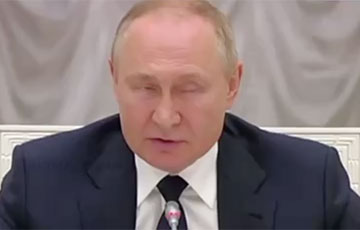
Who will replace the Russian ruler.
Recently, The New York Times reported that Vladimir Putin fell down the stairs and involuntarily defecated.
Witnesses also claimed that Putin's legs were shaking badly after the accident. Some sources close to him say that he is "severely ill", that he allegedly has terminal cancer and Parkinson's disease, which explains the tremors in his legs and involuntary defecation. However, if this was an isolated case and most of the time he can move independently with minimal or no assistance, then an early death does not seem inevitable.
But if rumors of Putin's imminent demise are true, what will his death mean in the context of the war against Ukraine? It is difficult to determine Putin's real condition, since the Kremlin deliberately keeps him at a distance from others for the sake of his health and so that others cannot get any clear information.
Two people are potential successors to Putin if he dies. Namely, Sergei Ivanov, a former Defense Minister, and former Russian Prime Minister Dmitry Medvedev, who has long been considered a close confidant of Putin.
There is an opinion that Medvedev would rather passively accept this position than actively seize it. He never had any real power, since several years ago he was demoted from the post of Prime Minister to deputy head of the Russian Security Council.
He tends to be subordinate to Putin and eschews more independent politics. However, he also made many "hawkish" statements about the war in Ukraine and even threatened that Russia would use nuclear weapons if NATO countries did not stop their efforts to help Ukraine or retreat from areas close to Russia's borders. It is difficult to say whether his saber-rattling was simply public support for Putin or whether it was his sincere independent stance. If these words were sincere, then he could continue the war if he believed that the Kremlin and Russian public opinion would support him.
Sergei Ivanov is also friends with Putin, but not as close. He was one of Putin's colleagues in the KGB and served with him in the FSB after the collapse of the Soviet Union in 1990. In 2001, he served as Minister of Defense of Russia.
During his time as Minister, he made efforts to make the Russian military more professional and, following Putin's example, tried to make it less public. His political orientation is more moderate and liberal. However, like Medvedev, he has the same hawkish attitude towards war. It is unclear whether his opinion will change if Putin ceases to be president. Although he enjoys popular political support, he is on the fringes of politics and is currently not part of Putin's inner circle, so his ability to take the top job in Russia appears questionable.
Some analysts believe there will be a power vacuum in Russia after Putin's departure. They are right, given Medvedev's apparent passivity and Ivanov's seeming lack of interest in becoming president. Consequently, the void that Putin will leave behind will be filled by a host of unknowns if neither Medvedev nor Ivanov steps in.
There is not much public opposition to the war against Ukraine or any broad support for it in Russia, so these entities may not be divided into pro- or anti-war factions to garner popular support for their own goals. Accordingly, they may not resort to violence to secure power.
However, some Russian Putinist generals may try to seize power and continue the war for no other reason than to try to hold on to the strategically important naval base at Sevastopol on the Crimean peninsula. This would be an unprecedented action, since the Russian armed forces, even in the former Soviet Union, have always been under tight civilian control.
Another possibility is that the Russian public may become more actively supportive of the war to help ethnic Russians in Crimea, the Donbas, and the Luhansk region of Ukraine create "independent pro-Russian republics."
One of Putin's goals in invading Ukraine was to use it as a springboard for his dream of resurrecting the former Soviet Union. Thus, the main question is not who will replace Vladimir Putin, but whether his successor will follow the same path or simply end the war. The future of Ukraine largely depends on what happens next.
Steve Strazers, Novoye Vremya