

Belarusian Farmers Refuse the Cultivation of Apples and Cabbage?
22- 21.02.2022, 11:21
- 15,706
What market regulation in Belarus can lead to.
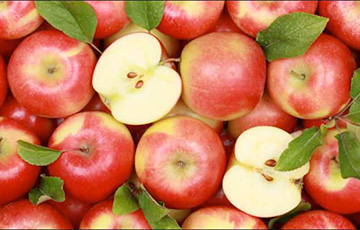
There is a shortage of some food products in Belarusian stores. For example - apples and cabbage. Why did it happen and what can we expect from the Belarusian economy in the near future? Economist Lev Margolin shared it in an interview with Charter97.org:
- The main reason for the deficit is three restrictions introduced in three months. The first was the limitation on the import of fruits and vegetables in the form of "counter-sanctions". The second restriction is a restriction on prices. The third restriction is the export of products, except for the EEU countries. In combination, it has affected the fact that the products began to disappear.
If we prohibit the import of goods from some countries, then it takes time until some circumvention routes appear. The logistics will change. During this time, the domestic supply decreases. Suppliers cannot compensate for it. When prices are limited, then suppliers start supplying products of poor quality, which they can sell at that price. The better production they try to export them somewhere. When exports are limited, it is still possible to send them to Russia, Kazakhstan. After `all, no one there will be able to track whether it will be redirected somewhere else if there is such a demand. Therefore, it proves once again a well-known fact that when the state begins to interfere in the regulation of the market, as a rule, it empties.
- Farmers are already saying that it is easier for them to destroy their crops than to sell them at the prices set by the state. What can this lead to?
- Sometimes it's easier for a farmer to destroy a product than to invest in transportation costs trying to sell it and end up making a loss. In the short term, farmers will lose a certain amount of their investment. In the long run, farmers will refocus on the production of some other type of product that is not subject to such restrictions. Who wants to invest money in seeds, pesticides, fertilizers, and agricultural machinery in order to then sit and think about what to do with the product. However, since one has to live, to survive, one will find some other kind of products, which are not subject to such restrictions.
- What can we expect from import restrictions in our country?
- It will lead to higher prices. If you can't import Polish apples, you will import apples from some other country. But they will be more expensive because when the market is free, it finds the cheapest product with the most convenient logistics. Moreover, our prices are regulated only on domestic products, but not on imports. Accordingly, many retail chains will simply be interested in buying imported goods.
If a product costs one ruble at the entrance and there may be a 30% markup on it, then it is 30 kopecks. If it costs two rubles, then the markup at the same cost will be 60 kopecks. Therefore, retail chains will be interested in buying higher-priced goods.
- What do you see as the main reason for the continuing increase in inflation in Belarus?
- There is no single main reason. There are several of them. There are external causes. Today inflation is on the rise all over the world, including economically developed and free countries such as the United States. But there are, of course, also external factors, the same "counter-sanctions". They lead to the import of more expensive goods, which leads to inflation.
There are a number of other reasons. There is no external investment, and one has to print money for domestic investment. Excess money in the market is again a source of inflation. The underlying cause of inflation is, as a rule, uncoordinated actions of the state in the markets. In the commodity, money, financial markets, and so on.
- What is your forecast for inflation at the end of the year?
- It's very hard to predict anything here. If we were talking about market processes, that would be one thing. But here everything depends, first of all, on the current authorities, the executive branch and the National Bank. The executive branch is interested in increasing the amount of free money in the market to somehow compensate for foreign investments.
One has to buy equipment; one has to keep it in good condition. And the National Bank impedes the issue because it is interested in lowering inflation. Which of them will win? If the National Bank wins, we may hold on to last year's inflation rate of about 10%. If the executive branch wins, we may overcome this level and reach 15%, even 20%, given the external sanctions.
- What does this say about the effectiveness of the built economic model?
- Everyone knows that this model is ineffective. Not only independent economists know it, but state economists know it as well. However, the economy in Belarus performs not only purely, so to speak, economic tasks. It is known that our state-owned enterprises also have a very serious social function. Although it is gradually dying out, no one will allow state enterprises to fire redundant workers at a time and, let us say, raise the salaries of those who stay.
The second point is political, when quite normal workers are laid off, and maybe even the best workers for political reasons.
In general, when the state tries to determine what is good for the economy and what is bad, nothing good ever comes of it. Such a model is not viable. And this has been repeatedly confirmed even over the past decade. This includes the renovation of the timber industry, the cement industry, the paper and cardboard industry and so on.

Bank's name: Bank Millennium S.A.
Address: ul. Stanislawa Zaryna, 2A, 02-593, Warszawa
IBAN: PL97116022020000000216711123
SWIFT: BIGBPLPW
Name of the account holder: Fundacja “KARTA ‘97”
Purpose/title of payment: Donation for statuary aims
You can contact us by the e-mail charter97@gmail.com