
Dmitry Bondarenko: Lukashenko Has Effectively Thrown In The Towel
- 17.11.2026, 8:08
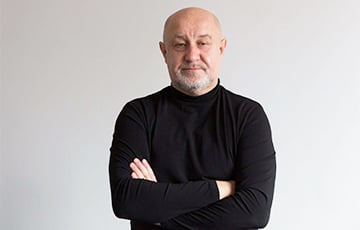
Photo: Charter97.org
The era of dictators is over; now the people have their say.
What can we expect from the new talks on ending the war in Ukraine? What does the Democratic Party’s victory in the U.S. Congressional elections mean for Putin? Why did Lukashenko “back down,” and how should we view the return to the media landscape of Sergei Tikhanovsky?
The website Charter97.org discussed this and more with the coordinator of the “European Belarus” civic campaign, Dmitry Bondarenko.
Russia is currently acting as a lapdog
— One of the major events of recent days has been the resumption of talks in Abu Dhabi. Why did the Kremlin agree to these talks?
— Moscow had predicted—and their prediction came true—that Donald Trump’s team and the Republican Party would lose the congressional elections. Starting in the New Year, the Democrats will hold the majority in both the Senate and the House of Representatives, which means the situation for Putin will worsen. There will no longer be an opportunity to influence the U.S. president in this way or to strike any backroom deals. Trump may simply not have the bandwidth to focus on relations with Russia.
Let’s recall Trump’s first term, when he also kowtowed to Putin and showered him with compliments, but in the end it all culminated in a local conflict in Syria, where the Americans killed several hundred “Wagner” militants.
The war in Ukraine, of course, has taken the most brutal form, and everyone would like to see a peace agreement—first and foremost, Zelenskyy. But I don’t see any prospects for that, because the war benefits Putin in maintaining his grip on power. He very much hopes that a change in the French presidency will weaken the positions of Europe and the West as a whole. Therefore, extraordinary diplomatic efforts are needed to create an opportunity for at least some kind of deal. Trump’s envoys and Putin’s inner circle would very much like to move on to specific business projects, but I think there will be major problems with that starting in the New Year.
— The Kremlin is actively promoting the idea of a “new Yalta” or a “new Potsdam.” What can we expect from the meeting between Xi Jinping, Putin, and Trump in China, scheduled for November 19?
— I don’t think we should expect anything. Even during bilateral meetings between the Chinese and American leaders, they failed to reach any agreement, and now Putin is in the mix as well. Trump needs at least some kind of diplomatic success after his crushing defeat in the U.S. election. As far as America is concerned, this is all just for show.
As for Russia, it’s playing the role of a lapdog today because, economically or militarily, it can’t compete with either the U.S. or China. Its economy is about one-fifteenth the size of the U.S. economy and one-tenth the size of China’s.
However, everyone fears Putin’s mental instability. After all, Russia still possesses nuclear capabilities inherited from the Soviet Union. Perhaps this is why Beijing and Washington are trying to keep Putin within certain limits.
It is clear that there can be no question of a redivision of the world, because the countries’ capabilities are completely different. And the situation, too, is generally different. After all, Yalta and Potsdam were negotiations among the Allies who had defeated Nazi Germany, Japan, and Fascist Italy. Today’s events are a parody of the negotiations that took place in 1945.
Lukashenko has thrown in the towel
— Where does Europe stand in all these processes, and who can take on a leadership role on our continent?
— Europeans, including Ukrainians, have realized that Trump’s time has passed. He instantly became not just a “lame duck,” but a “dying duck” in political terms.
There’s been talk that Vice President Vance might not run in the 2028 U.S. presidential election because he has virtually no chance of winning. Europeans understand that Trump has failed in Ukraine, in Iran, and—more importantly—within America itself. That is why Europe now wants to address security issues on its own, without looking to Washington.
Europeans are convinced that they know the situation on their own continent better and have a better understanding of the threat posed by a deranged Putin. We see that in recent years, EU leaders have shown considerable firmness both toward Moscow and toward Trump’s erratic actions.
The true leaders have been French President Emmanuel Macron, German Federal Chancellor Friedrich Merz, and Italian Prime Minister Giorgia Meloni have emerged as true leaders, not to mention the leaders of the United Kingdom, Poland, the Baltic states, and Scandinavia. Europeans have chosen the right policy of containing Russia and aiding Ukraine. Time has shown that this policy is correct. Europe is rearming at a very rapid pace, has sharply increased defense spending, and is constantly conducting military exercises, especially on NATO’s eastern flank. Even despite political turbulence, there is a clear willingness to act in unison at the level of defense ministers and military leadership across the European Union. And this is crucial, because today’s military leaders realistically assess the situation and are doing a great deal to strengthen security on the continent.
— You said that Europe has taken the right stance toward Russia. But when it comes to its stance toward Lukashenko in political and military terms, is Europe acting correctly?
— Ever since the NATO summit in Warsaw in 2016, it has been clear that the militaries of NATO countries do not distinguish between Lukashenko’s army and the army of the Russian Federation. To them, it is a single adversary, controlled from Moscow. It was precisely at that time that the reinforcement of NATO’s eastern flank began. It all culminated in the accession to the Alliance of traditionally neutral countries, such as Sweden and Finland.
This was also a response to the ongoing joint exercises between the Russian and Belarusian armies on Belarusian territory, where attacks on NATO countries were simulated. Therefore, European leaders responsible for security in the European Union, NATO, and individual countries are assessing the threat quite appropriately.
We are witnessing Lukashenko’s hysteria because he was told in no uncertain terms what would happen to him and his sham army if he continued to participate in Putin’s adventures. That is why the Shklov dictator has become a “peacemaker.” He has absolutely no chance of standing up to the modern weapons and modern armies of NATO countries and Ukraine. Today, Lukashenko has effectively thrown in the towel.
The Return of Tikhanovsky
— Blogger Sergei Tikhanovsky has made a loud return to the media landscape. In his weekly livestreams, he harshly criticizes Svetlana Tikhanovskaya, her campaign office, affiliated organizations, and the media. He accuses them of corruption and the inefficient use of funds. Tikhanovsky also proposes creating a new body—a supervisory board to oversee the campaign office. How should we view this development?
— Against the backdrop of what’s happening in the world—the war in Ukraine and the situation in our region—this certainly looks like a minor squabble.
Sergei’s assessments are probably credible because he knows his wife well and has been in contact with people from the office for quite some time since his release. He harbors resentment toward both his spouse (I don’t know if she’s his current or former wife) and her circle, because he did, after all, serve five years in prison and acted quite boldly in 2020, yet now completely random people have started calling themselves protest leaders.
I agree with Vadim Prokopyev, with whom I very rarely agree: it wouldn’t hurt for Sergey to study at an American university or some other institution. Just to learn a bit and hire an etiquette consultant. Speaking like a rude person on a tram costs him more in the long run, even if he’s telling the truth. Because presentation is often just as important.
A New Wave of Democracy
— Changes in the situation in Belarus have always been closely linked to developments in the region and around the world. Recently, we’ve seen changes in government in Hungary and Serbia, and most recently—the landmark U.S. elections. Do these processes affect us?
— I want to say that events in Belarus aren’t always closely tied to regional dynamics, because the 2020 revolution was a uniquely Belarusian phenomenon. And, unfortunately, our ally countries were unable to capitalize on this: neither the European Union nor Ukraine.
On the other hand, the changes in government in Hungary, Serbia, and the United States at the parliamentary level have shown that the people matter. If the people want change, they will achieve it. And these are very good and positive examples. Historically, when power changed hands in Hungary and Serbia, it had an impact on the entire region. Let’s recall the events of 1989–1991, when the collapse of the Soviet bloc and the breakup of socialist Yugoslavia set off processes of change, including in Belarus, which gained independence.
These events can also be viewed as an indicator of global change. In reality, both Putin’s and Lukashenko’s regimes are very weak. Even Trump’s tenure proved short-lived. But in America, institutions are in place and there is an independent media. Therefore, when the people saw that their leader was heading in the wrong direction, they were able to change the situation fairly quickly. It is clear that both Lukashenko and Putin are losing the information war, primarily on the internet. Today, that is the main battlefield. We see that even in the so-called elections in Russia, Putin’s camp lost outright online. It’s no coincidence, according to mathematical experts, that “United Russia” garnered only about 30% of the vote.
Even in Russia, people disagree with what is happening. They want a quick peace, even on any terms. This is also one of the reasons why Putin is forced to go through the motions of some kind of negotiations, in part to reassure people within Russia.
The time of Putin, Trump, and Lukashenko has passed. I think that, despite possible setbacks, this will soon become apparent in Minsk, Moscow, and Washington. A new wave of democracy is rising before our very eyes.

Bank's name: Bank Millennium S.A.
Address: ul. Stanislawa Zaryna, 2A, 02-593, Warszawa
IBAN: PL97116022020000000216711123
SWIFT: BIGBPLPW
Name of the account holder: Fundacja “KARTA ‘97”
Purpose/title of payment: Donation for statuary aims
You can contact us by the e-mail charter97@gmail.com