
Sergey Berezhnoy: The U.S. Made A Proposal That Was Humiliating For Russia
- 11.11.2026, 13:11
- 1,434
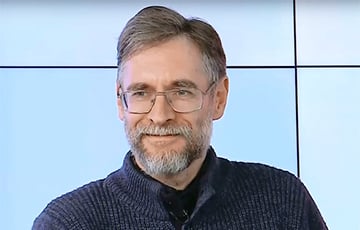
Photo: ATR
Russia is plunging into a dark abyss of mistakes.
Putin's war has reached a stalemate. Retired Colonel General Leonid Ivashov openly stated that Putin has lost, and called on him to stop the war.
What signals are the Russian elite and Putin’s inner circle sending him? Are there those among them who are ready to openly oppose him and his policies?
The website Charter97.org spoke with renowned Ukrainian journalist, editor, and political commentator for LIGA.net Serhiy Berezhny about this.
— It’s hard to say whether there are any figures in Russian politics capable of influencing the Kremlin’s truly important decisions. Signals from certain circles are certainly coming through. But these circles are very fluid, changeable, and heavily dependent on Russian propaganda of one sort or another. The thing is, their signals never get through.
The Kremlin’s inner workings, as I imagine them, are quite tightly controlled. Signals from the outside are very carefully filtered. The boss must not receive information that he cannot decipher, that does not fit into his system, and that contradicts his worldview. Even if Putin were to receive such a signal by accident, I don’t think it would lead to anything. To him, it would be nothing more than white noise. Just as a clever idea expressed in Chinese isn’t clever to someone who doesn’t know Chinese—because it isn’t a thought at all—so it is here.
The Kremlin’s language has long since diverged from both classical Russian and even the language of ordinary Russians. In linguistics, this is called pragmatics: the meanings of words and individual lexical units begin to change. The same word can have several different meanings. A clear example is the word “democracy,” which has long been a slur in Russia. In standard Russian, it is not a slur by definition, but simply denotes a political ideology or practice. The same thing happened with the Revolution of Dignity in Ukraine. In Russia, it was perceived as an attempt to escape Russian slavery only to fall into European slavery—that is, simply to swap one master for another—even though it implied nothing of the sort.
— In the U.S. midterm elections, the Democrats gained control of both houses of Congress. How might U.S. policy toward the Kremlin change now? Could the Democrats’ victory and Trump’s weakened position force Putin to enter into peace talks with Ukraine?
— First, I think Trump’s policy toward Putin will not change, despite the shifts in Congress. Congress does not have a very strong influence on the administration’s foreign policy. Foreign policy is the prerogative of the U.S. presidential administration.
Although Congress can still exert some influence on it. For example, it could demand the imposition of sanctions in accordance with the Graham–Blumenthal Act. These sanctions were not imposed in a timely manner, as many believe, for entirely fabricated reasons. Under the law, these reasons must not merely be listed but evaluated by Congress, which may accept or reject them. This was not done. Perhaps this will happen after the new Congress takes office in January.
Until then, Trump is entirely free to act within the existing framework. Since he doesn’t like any constraints at all—and tries to break the ones that do exist—I think he’ll continue along the same lines. Therefore, I don’t expect any changes whatsoever. If anything happens, I’ll be very surprised. The elected members of Congress will, of course, be preparing their initiatives for the start of the new session, but until then, they’ll mainly be making headlines.
As for the negotiations that are currently taking place in Abu Dhabi, as far as I can tell from the news, there are two key points.
The first is a joint statement by representatives of the U.S., Europe, and Ukraine outlining the basis on which the negotiations will proceed and the red lines that must not be crossed. All of that is pretty standard. But the very fact that this trilateral statement was adopted without Russia’s participation shows that a united front has emerged between the U.S., Europe, and Ukraine. This, to some extent, may be new.
The second point is that, following the first day of negotiations, an agreement was reached on a prisoner exchange. This, in fact, is exactly what was expected: humanitarian issues and a prisoner exchange. I think that, once again, this is where it will end.
As for the report that Ukraine was allegedly offered, in order to reach an agreement, redraw the administrative borders of the Donetsk region so that Putin could claim to have fully captured it, that is a ridiculous assumption. Moreover, it is downright humiliating for Russia. Therefore, I do not think this is the Kremlin’s idea. Rather, it is the idea of the American negotiating team, which has a poor grasp of both Putin’s ambitions and how unfavorable the situation on the front lines is for him.
Incidentally, the argument that the war has reached a stalemate strikes me as far-fetched, to say the least. Strategically, the situation is shifting in Ukraine’s favor. There is hope that this trend will continue for at least some time. This would mean that Russia’s negotiating position will continue to weaken. In fact, that is exactly what the Ukrainian Armed Forces are working on right now.
— Ukraine has resumed strikes on Russian oil refineries and continues to target logistics and key industrial facilities. Long lines have reappeared at Russian gas stations. How might these strikes affect the Russian economy? Are they capable of turning the tide of the war and ultimately leading to Russia’s defeat?
— Since I’m not an economist, it’s hard for me to predict that. As I see it, the course has been set for a strategy of attrition. This strategy is designed for the long term. It’s impossible to say at what point a breakdown will occur, because it’s practically unpredictable. Russia is a very large and uniquely structured system, including from an economic standpoint.
It would be easier if we could rely on the existence of some rigid system there, such as private property. But there isn’t one. Elements of private property are intertwined with elements of state ownership. The result is something akin to a socialist economy, to which elements of significant criminal ownership are added. These are various “communal funds,” both at the Kremlin level and at the regional level. All these systems overlap and create a very interesting dynamic that allows Russia to maneuver in the economic sphere. This is not the only mechanism of its kind, but merely one of them.
I believe this will continue for quite some time. The decay of this system—which is undoubtedly already underway—will also be a protracted process. Ukraine’s task is to hold out for as long as possible, because we, too, are going through some rather difficult processes, including economic ones.
It seems to me that the strategic calculation is not so much that Ukraine itself is making economic conditions more difficult for Russia. They are deteriorating due to processes set in motion by the Kremlin itself, and we are merely helping them unfold. The main cause of Russia’s economic problems is Putin’s policy. He makes important strategic decisions: whether to continue the war, take certain diplomatic steps, switch key international partners, or move eastward toward China. These are misguided decisions dictated by his worldview—the way he perceives the world. Since his worldview is largely flawed, the decisions he makes are poor and lead to a worsening of the situation.
But Putin is incapable of admitting this. It’s not just that he doesn’t want to; he doesn’t understand how he could be wrong when everything around him confirms that he is right. Bad decisions gradually accumulate and take their toll on the real situation, primarily in the economy. All of this turns into a black vortex of mistakes into which Russia is stubbornly falling. It will be impossible to pull it out of there while Putin remains in power. Ukraine is merely facilitating this process, trying to accelerate it and creating additional crises in the Russian economy. And so far, it’s working. But I view this more as a secondary process. The main forces destroying Russia are sitting in the Kremlin.
There’s even this heretical thought: let them stay in the Kremlin a little longer, make more mistakes, and drive Russia even deeper into the ground.

Bank's name: Bank Millennium S.A.
Address: ul. Stanislawa Zaryna, 2A, 02-593, Warszawa
IBAN: PL97116022020000000216711123
SWIFT: BIGBPLPW
Name of the account holder: Fundacja “KARTA ‘97”
Purpose/title of payment: Donation for statuary aims
You can contact us by the e-mail charter97@gmail.com