

"Ukraine Will Lay Its Cards On The Table"
- 10.11.2026, 13:07
A political analyst explained what to expect from the talks in Abu Dhabi.
A new round of negotiations to end the war has begun in Abu Dhabi. The meeting is taking place in a trilateral format involving the United States, Ukraine, and Russia.
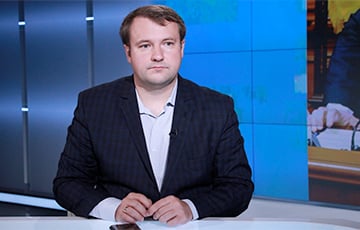
What can we expect from the meeting in Abu Dhabi? Will it bring peace any closer? The website Charter97.org spoke with Ukrainian political scientist and professor at Taras Shevchenko National University of Kyiv Petro Oleshchuk about this:
— It may bring us closer, but it is unlikely to in any way become the final step toward achieving that very peace. No one has particularly high expectations for this meeting. Everyone fully understands that, at this point, no breakthrough agreements should be expected. The parties are meeting for the first time since February and will lay their cards on the table. Whereas previously, for example, Russia emphasized that it was making gains on the front lines and therefore Ukraine should cede the occupied territory to it, it is now practically impossible to make such claims because there has been no Russian advance on a broader scale.
There are some localized advances, but on the other hand, Ukraine is also making gains. Right now, the balance on the front lines is more or less even, so Russia is obviously banking primarily on terror against Ukraine’s energy sector and economy and views this as its main argument to force us to accept Russia’s terms.
Ukraine also has its own “cards,” to use Donald Trump’s terminology. The congressional elections have undermined Trump’s position. He can no longer guarantee that he will be able to push any decisions through Congress and ensure their implementation.
On the contrary, he will face fairly serious pressure and scrutiny from Congress, where the Democrats have secured a majority. In particular, they are already promising to raise issues, including new military aid packages for Ukraine, which could also serve as a significant bargaining chip in these negotiations. In response to the attacks on its cities, Ukraine continues to launch long-range strikes against Russian oil refineries, and this, too, is a significant factor in this situation. It is clear that the parties will exchange such arguments.
There may be some new humanitarian agreements modeled after the Oleshky agreement. There may be a new prisoner exchange. But no one is expecting any breakthroughs. To be honest, the general consensus is that no breakthrough agreements should be expected until spring. Although, from the perspective of Russia’s rational approach, it might be advantageous to reach some kind of agreement before the new Congress begins its work in January.
But so far, there’s no sign of anything like that on their part. So that’s how it is.
— You said we shouldn’t expect a breakthrough until spring. What will happen in the spring?
— Russia’s plan to destroy Ukraine’s energy sector is focused on the winter. In the spring, you won’t be able to threaten to freeze Ukraine out. And if you can’t use your main arguments, the question arises: why continue all this at all? And this question may arise even among the Russian leadership.
So far, it’s simply not clear that they have any other model for victory besides terrorizing Ukraine’s energy sector.
— What would have to happen for Putin to truly feel the cost of continuing the war and be forced to reconsider his position?
— The solutions here are actually well known. It’s just that right now, it might be a little too late to use them.
But we remember that Putin became quite actively involved in the diplomatic track, and it all ended with the meeting in Anchorage, when Trump started talking about the possibility of supplying Tomahawk missiles to Ukraine. In other words, any potential strengthening of Ukraine triggers a major outcry from Russia. The leaders immediately start shouting about nuclear weapons.
Any new capabilities for Ukraine to strike at Russia have a significant impact on them. But if, for example, Putin knew that in response to an attack on Kyiv, Ukraine would strike at Moscow’s energy infrastructure and, say, cut off its power for a while, he might seriously consider negotiations not in the spring, but right now.
But, unfortunately, we can’t count on that from our Western partners. They’ll continue to wait for something to change somewhere, somehow, and they’ll, accordingly, find a way to get involved in it.

Bank's name: Bank Millennium S.A.
Address: ul. Stanislawa Zaryna, 2A, 02-593, Warszawa
IBAN: PL97116022020000000216711123
SWIFT: BIGBPLPW
Name of the account holder: Fundacja “KARTA ‘97”
Purpose/title of payment: Donation for statuary aims
You can contact us by the e-mail charter97@gmail.com