

Former Armenian Ambassador To Russia: Pashinyan's Demarche Is Part Of The Plan
- 11.11.2026, 11:26
Yerevan wants to be expelled from the CSTO.
Armenian Prime Minister Nikol Pashinyan declined to attend the CSTO summit in Moscow and will instead travel to the UN climate conference in Turkey. He had previously stated that Yerevan’s interest in the CSTO had run its course.
Can this move be seen as a sign that Armenia is finally writing off the CSTO and preparing to officially withdraw from the organization?
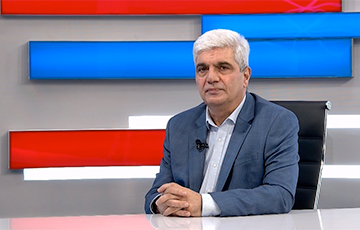
The website Charter97.org discussed this with one of the leaders of the democratic movement in Armenia in the 1990s, a former deputy of the Republic’s Supreme Council and ex-Armenian ambassador to Russia Stepan Grigoryan:
— Armenia has not participated in the CSTO’s work for two years now. And this applies across the board: neither in the Parliamentary Assembly, nor in the Council of Foreign Ministers, nor in the Council of Defense Ministers. It also does not participate in military exercises or other activities of the organization.
This move was welcomed in Armenia, because the CSTO has effectively failed to recognize the country’s territorial integrity. Of course, we have no business being in such an organization.
But there is an important nuance. The CSTO does not have the concept of “suspending participation.” Armenia has declared that it is no longer participating in the organization’s work, yet formally remains a full member. Article 20 of the CSTO Charter provides for the suspension or expulsion of a country, while Article 25 allows for the revocation of a state’s voting rights if it fails to settle its debt to the organization’s budget within two years. We supported the decision to freeze participation, but we have consistently told the Armenian government that it should simply withdraw now. However, Pashinyan’s latest move does not yet mean that Armenia is preparing to do so on its own. Rather, the authorities want the CSTO itself to expel the country from the organization.
It seems to me that Armenia is not withdrawing so that the responsibility for this decision lies with the CSTO. Then Russia will not be able to say: “You left the organization on your own; you are to blame for everything.”
At the CSTO summit on November 11, Russia may raise the issue of Armenia, which has not paid its dues or participated in the organization’s work for two years. Most likely, the other five countries will vote unanimously to strip Armenia of its voting rights. A consensus is required for such a decision. This does not yet mean expulsion from the organization. For example, Armenia cannot be expelled from the Eurasian Economic Union without its consent. But CSTO rules allow other member states to decide to suspend a country’s participation or expel it without taking its vote into account.
Therefore, I expect that, at the very least, Armenia will be stripped of its voting rights. At the same time, recent sharp statements by Nikol Pashinyan and the Secretary of the Armenian Security Council Alen Simonyan regarding Russia and the CSTO’s failure to fulfill their obligations to protect the country suggest that the Armenian authorities want to be expelled from the organization.
— Russia is losing ground not only in Armenia but also in other countries of the post-Soviet space. What consequences might the weakening of its influence in the region have for Moscow?
— The post-Soviet space cannot be viewed as a single entity. I would divide it into three regions: the European part, which includes Moldova, Ukraine, and Belarus; Central Asia; and the South Caucasus.
The loss of the South Caucasus will be particularly painful for Russia. Azerbaijan and Georgia have long since parted ways with Moscow. No matter how much people say that Baku is playing some kind of game, or that the current Georgian government is tied to Russia, neither of these countries is interested in hosting Russian military bases on its territory nor does it seek to build genuine strategic relations with Moscow.
The only country that remained more or less loyal to Putin’s Russia was Armenia. But Russia effectively handed Karabakh over to Azerbaijan. Azerbaijani troops then entered Armenian territory and reached the Jermuk area, advancing about seven kilometers into the country. Moscow, however, described the incident as a border skirmish. After that, Armenia finally realized that Russia is an unreliable partner and that it must sever ties with it.
It is very telling that Nikol Pashinyan chose other international meetings over the CSTO summit. First, he met with the Vice President of Iran, then traveled to Paris, and will next head to Antalya for COP31. Today, Armenia’s priorities are Europe and relations with its closest neighbors, including Turkey, Azerbaijan, and Iran. Armenian foreign policy is no longer oriented toward Russia at all.
Who is to blame for Moscow’s loss of influence? Russia itself—or, more precisely, Putin’s policies. The Armenians of Karabakh have always been loyal to Russia and felt a strong connection to it, but Moscow helped drive them from their homeland. Therefore, Russia is losing the region entirely deservedly. Its last remaining strongholds here were Armenia and Nagorno-Karabakh, but Moscow turned its back on them of its own accord. At the same time, the Russian authorities are pretending that nothing has happened: Russia supposedly wants to cooperate, while the blame lies entirely with the “bad” Armenian authorities, who are oriented toward the West. They’re simply shifting the blame from one problem onto another.
Armenia was bound to leave the CSTO. The decision to freeze its participation was the right one, but now it no longer matters whether Armenia leaves the organization on its own or is expelled. The main thing is that our country is no longer part of the CSTO. This will mean the end of Russian influence in Armenia.
In the near future, Russian border guards may be withdrawn from Armenia’s borders with Turkey and Iran. The visa liberalization process with the European Union is underway, which means we must control our own borders. If Turkey opens its border with Armenia, then eventually the Russian military base will also have to leave. Moscow’s misguided policies have led to Russia losing its last foothold in the region. As for Central Asia, Kazakhstan is indeed trying to pursue a more independent policy, and it seems to me that it is succeeding. But there are many complex issues there that require a separate discussion. Russia is already losing the South Caucasus, precisely because of its own policies.
— Given the Kremlin’s aggressive foreign policy, how might Russia attempt to regain its lost influence in the South Caucasus?
— I don’t think Russia will dare to take direct action against Azerbaijan. It actually helped Baku resolve many issues in its favor, including the dispute with Armenia over Karabakh. Furthermore, there is the Turkish factor, so Moscow simply won’t dare to escalate the situation militarily.
In the case of Georgia, direct military action is also unlikely. There has already been a war there, and Abkhazia and South Ossetia remain occupied.
Russia may take tough measures primarily against Armenia. It will try to use a fifth column within the country to restore its position. But I am confident that nothing will come of this, because Armenian society understands very well: Russia has betrayed us.
I do not expect direct military intervention, but Moscow will continue its hybrid war. It is already spreading propaganda and disinformation. Sabotage and other acts of violence, such as those we are seeing in Europe today, are also possible. But Russia will not be able to achieve its goals in Armenia.
— The CSTO is effectively ceasing to exist as an effective military alliance. Who could become the new security guarantor for Armenia and the South Caucasus in place of Russia?
— For Armenia, the primary guarantee of security is the Armenian-Azerbaijani dialogue itself. If we were to face serious problems, they would primarily be with Azerbaijan. There are no such problems with Turkey, Iran, or Georgia. The peace process with Baku is proceeding very slowly, but the likelihood of new military hostilities has already decreased significantly.
The second guarantee is the European Union observers stationed on the Armenian side of the border with Azerbaijan. They are unarmed but are monitoring the situation. I don’t think Azerbaijan wants any trouble with the European mission.
Another important factor is the TRIPP project. This is a U.S.-backed transportation project intended to connect Azerbaijan with Nakhchivan with Armenia’s participation. The Americans are also developing projects here in the fields of artificial intelligence and the mining industry. Their presence is becoming a significant guarantee of security.
With the mediation of the U.S. president, a peace treaty between Armenia and Azerbaijan was initialed. It has not yet been signed, but the very fact of dialogue between the countries is already reducing the likelihood of war. Azerbaijan has full control over Karabakh, and the Armenian population has been expelled from there. Baku currently has no reason to start a new conflict.
Thus, the main guarantees are the peace process between Armenia and Azerbaijan, European observers, and the U.S. presence in the region. European observers are also working in Georgia, and this is an important factor for stability in the South Caucasus. With such Western involvement, Russia will no longer be able to interfere so easily in the region’s affairs. The Russian military base in Armenia, I would say, is currently practically mothballed.

Bank's name: Bank Millennium S.A.
Address: ul. Stanislawa Zaryna, 2A, 02-593, Warszawa
IBAN: PL97116022020000000216711123
SWIFT: BIGBPLPW
Name of the account holder: Fundacja “KARTA ‘97”
Purpose/title of payment: Donation for statuary aims
You can contact us by the e-mail charter97@gmail.com