

Kalinousky Regiment Paramedics Work In Scene of Fighting
1- 6.06.2022, 13:43
- 5,140
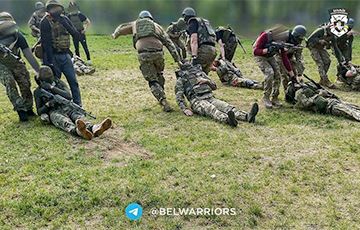
There were cases when paramedics provided assistance not only to fighters, but also to civilians.
There are now more than 20 paramedics in the Kastus Kalinouski Regiment. There are former doctors and volunteers with combat experience among them, according to nashaniva.com. The main task of a paramedic is to stabilize the condition of the wounded before transportation to a hospital.
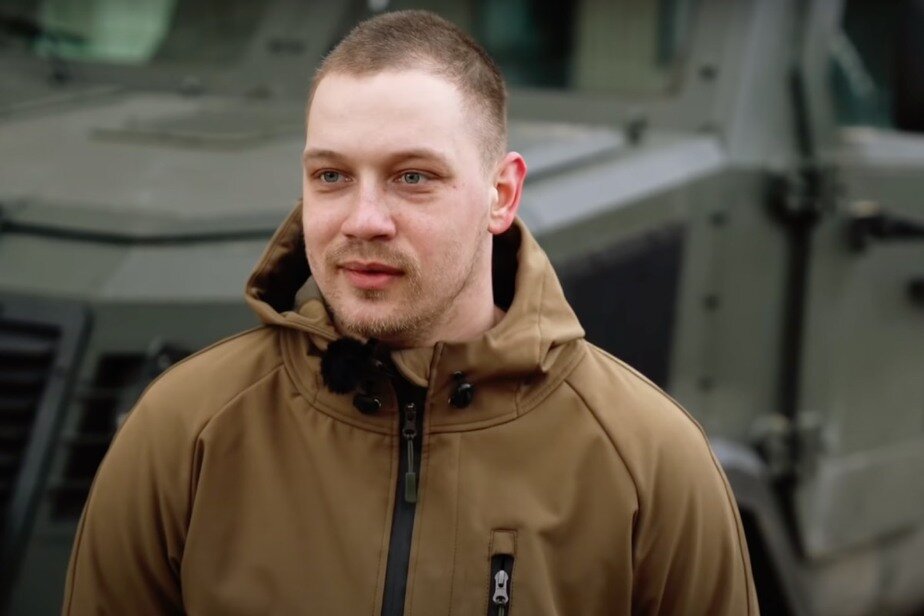
“They stop bleeding, stabilize breathing, fix fractures,” says Yan Melnikau, former head of the Kalinouski Regiment Medical Service. Now he is in charge of the regiment's artillery since they have enough paramedics to completely close this task.
The entire scene of fighting is divided into red, yellow and green. The first one is under fire, the task of a paramedic here is to pull the wounded out and stop bleeding. The second (the next street, for example, from the red zone) gives an opportunity to stabilize breathing and improve blood circulation. In the third, green zone, it is possible to call an ambulance and monitor the pulse rate, saturation and heart work.
“I was in charge of training the paramedics and making sure the fighters had everything they needed in first aid kits,” Yan says. There are standard rules for whom and in accordance with what priorities first aid should be provided. First, to stop severe blood loss, then to take care of the respiratory tract, after circulation, and only after hypothermia."
Paramedics from the Kalinouski Regiment were trained in the Hospitallers Ukrainian volunteer network, as well as in the Women's Veteran Movement.
“Any paramedic has tourniquets, various bandages, and napkins that are applied to the wound. As well as the tubes needed to ensure breathing - they are used when a person is unconscious.
There are also special stickers that are glued when the lungs are injured and pneumothorax, decompression needles, splints used to fix fractures, and various mixtures, for example, sodium chloride, which gives liquid in the system, replaces blood. This is almost a complete list of what a battle group paramedic has,” he says.
There were cases when paramedics provided assistance not only to fighters, but also to civilians. For example, in Irpin.
According to Yang, a person who wants to become a paramedic does not need to have a medical degree. The main thing paramedics are taught in the courses (they take two or three days) is to stop bleeding, pack wounds, and apply tourniquets and splints.
Now a graduate of a medical university is responsible for the medical direction in the Kalinouski regiment. She is a surgeon by profession.
“It should also be emphasized that we have six people who studied at a medical university or have already worked as physicians. We choose new ones and conduct classes as the number of people increases. Therefore, the number of fighters and those who provide assistance to them is proportionally growing.
We offer to become paramedics to those fighters who already have experience in combat operations. But this is whenever required and when we need to understaff the regiment. The fighters take courses and also begin to provide assistance directly at the frontline,” he explains.
Many of the volunteers want to go straight into battle. Yan recalls that it was the same for him.
“I'd been studying only weaponry until 2016, I knew only the basic principles of how to stop bleeding, and that’s all. Once our fighter died, I realized that if I had known more, I could have saved him. Then, I came to a personal decision to take an initiative and sign up for the Hospitallers' courses. Later, I became the one who was the first to run and help a wounded one,” says Yan.
Paramedic's job is psychologically difficult. Yang was shocked when he first saw how the explosion tore off a man's hand.
“In general, I was a person who was afraid of blood. I saw deep wounds with subsequent amputations on the Maidan for the first time. Since then, I began to somehow get used to it, now it does not scare me. Not even so, you just abstract from everything that is happening, and focus on the goal of helping. Later, you are starting to realise that you saw severe injuries."