
Navapolatsk Penal Colony Employee Who ‘Had Conversations’ With Babaryka Sent To Jail
12- 21.10.2023, 8:32
- 25,734
Revenge or abuse of power?
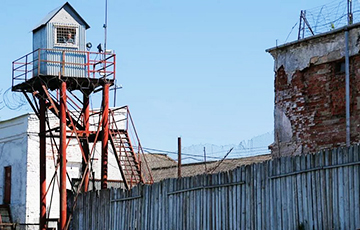
In June, the Vushachy court sentenced ex-employee of the Navapolatsk colony Ihar Piatrou to imprisonment. Nasha Niva reported the details.
According to Nasha Niva, the man was sentenced to six years in prison. The Dissidentby initiative, which helps political prisoners, reports that Piatrou was sentenced to 4 years in prison, a fine of 13 thousand rubles, and sent to serve his sentence in the Vitba colony.
33-year-old Ihar Piatrou is originally from Polatsk, but has recently lived in neighboring Navapolatsk. He studied at Polatsk State University. In 2014, after graduating from university, Piatrou joined the police and until December 2014 completed his studies to become an officer. After that, he was awarded the rank of lieutenant and appointed head of a detachment at the Navapolatsk labor treatment center #8.
In 2016, he was promoted to senior lieutenant. A year later Piatrou was transferred to penal colony #1 in Navapolatsk to take the position of head of the detachment.
At the turn of 2022 and 2023, Piatrou was arrested. He was accused of abuse of power. According to Nasha Niva, he beat a prisoner.
A case was opened against the prison warden under Part 3 of Article 426 — “Commitment by an official of actions that clearly go beyond the rights and powers granted to them in their service, involving violence, torture of the victim or the use of weapons or special means.”
“They brought him to the colony. Already in handcuffs"
“I was surprised when I found out that Piatrou was arrested. What he was accused of happens in the colony all the time,” a former prisoner of colony #1 told Nasha Niva. “They put a person on a stretch and hit his legs to stretch them in different directions. Piatrou did the same, and the prisoner suffered a tendon rupture — so they said. It happened in the dining room with an elderly man. After this, the prisoner was taken to the prison hospital. The prisoner was soon released after the end of his term, relatives wrote a statement, and Piatrou was suspended from work and then arrested. They brought him to the colony already in handcuffs for investigative actions. Not long before this, the correctional colony #1 had a “debriefing” about who was who, and the employees were even taken to a polygraph. There is such an atmosphere there that not only prisoners denounce, but also employees constantly rat each other out. After Piatrou was arrested, more people were fired. They say that some are for politics, who somehow spoke out or signed for alternative candidates.
“Experienced people said he was a good guy”
A former prisoner of the penal colony #1 described Piatrou’s character in the following way:
“First of all, he was arrogant with prisoners. Everyone who was in the penal colony #1 knows that he had a prejudice about clean shaving. He could write a report even if a person was clean and smooth-shaven, but there was something he didn’t like. And when they were waiting for Piatrou to check, everyone knew that they had to literally scrape off the skin. He could call a person from a row and even touch their face with his finger to check the shaving quality. People with black hair especially suffered from this.
But there is another side. For example, when I first arrived at the colony, still in “quarantine,” I knew a little about how things worked there. The [former] head of the colony, Palchyk, immediately put me “on the toilet” — this is a shameful duty that automatically transfers me to a low caste. So, when Piatrou took me to work, he immediately told me that I was in trouble, gave me a pen and a piece of paper: “Write a refusal.” He didn’t even ask whether I knew or not what this would lead to.
It was possible to come to an agreement with Piatrou; in many cases he treated people humanely. For example, you go to the bathhouse to wash, but it is only once a week, and you are afraid that you will not have time for the assessment for preventive accounting. You go up to Piatrou, explain the situation, and he says that there’s nothing wrong.
What is distinctive is that Piatrou was relatively loyal to political prisoners. He didn't do anything mean to them. In front of me, he even gave one of the political figures a good reference. There were rumors that he even tried to defend some of them when they were going to be “closed” in a punishment cell.
He liked to invite people for conversations. He asked why I was imprisoned. In personal conversations he did not express his political views, although he always presented himself to the public as a “patriot” and praised Lukashenka. He summoned political figures to such conversations, including, they said, Viktar Babaryka, the top prisoner of the colony.
Experienced prisoners then said that it didn’t matter that he had that thing about shaving, “Piatrou is still a normal guy.”
The Nasha Niva interlocutor emphasized that the beating of prisoners in the colony was carried out by “controllers” — that’s what the guards are called. Officers like Piatrou usually did not participate in this. He did not rule out the possibility that someone had just revenged on Piatrou for something.