
Political scientist: There Are Enough Tools To Hurt Lukashenka
23- 2.04.2024, 22:54
- 30,366
It can reach the complete blocking of railway transit.
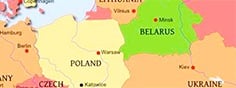
Trucks are halted on the border of Belarus and the EU. Representatives of importing companies say that the situation with other goods is the same as with the import of cars, when European customs officers refer to the decisions of the EU Council as part of the 13th package of sanctions.
Charter97.org asked political scientist Anatol Kotau to comment on the situation on the border between the European Union and Belarus:
— It means several things at the same time. First: finally, the customs authorities of the EU member-states bordering Belarus have begun to more or less strictly control the sanction decisions made earlier. Because in fact, during these two years that the Belarusian regime has been living under increased sanctions, in reality, it was not strongly felt by those engaged in not quite legal business. In general, they don't care and they are ready to take risks.
Goods that were prohibited from importing either Belarus, or Russia, or both countries at the same time, simply crossed the border with some fake documents or without documents at all. Accordingly, now we are talking about simple tightening of control, which should be carried out in accordance with previously adopted decisions.
The fact that this is happening now is another signal to Minsk that not all measures of pressure on the regime have been exhausted. The most serious measure regarding transit, in general, does not even require the adoption of any additional decisions, which is shown and proved by this example. It simply requires the introduction of full-scale customs control over goods that move across the border of Belarus and the European Union.
— How painful can these measures be for the Lukashenka regime?
— Unfortunately, for the Lukashenka regime, in fact, the consequences of controlling road transport are felt to a lesser extent when compared with ordinary business and citizens. First of all, this doesn't apply to very large consignments of goods, these goods are not the main thing for the regime.
The only thing it can hit quite well is two schemes. Firstly, it is the circumvention of sanctions against Russia with the help of the Belarusian offshore. That is, these are schemes when Belarus bought something very actively, first of all, some technical equipment that is prohibited from being imported into Russia, some computer chips, computers, machines, and resold it all with a margin to Russia.
The second thing on which this can hit to some extent is the smuggling of cigarettes, because the flow of trucks leaving Belarus will decrease — accordingly, the number of opportunities to hide smuggling will decrease.
But first of all, the consequences will be felt by carriers and suppliers engaged in small and medium-sized businesses, who are still trying to somehow legally trade. For them, at least, the downtime at the border will increase in one direction and in another. Accordingly, this is a matter of profitability of the business. So it will hit the regime, but first of all it will be felt by those who are engaged in small and medium-sized businesses related to some import operations. The railway is not yet affected, but it can be said that it was saved for last.
— Part of the cargo was sent in transit through Belarus to Kazakhstan, Uzbekistan, Turkey, and the United Arab Emirates. What could be the reaction of these countries, as well as China, to the situation on the border of Belarus with the EU?
— Again, we are talking about trucks, and this is not the best route in case of China, it does not carry many goods by trucks. The UAE has approximately the same logistics chain, it is rail and sea transportation, that is by trains to the nearest seaport.
Kazakhstan is somehow interested in the overland route, but it can safely carry its goods around. This may complicate the logistics a bit, but nevertheless it is not fatal for them. In general, they will feel almost nothing from such a measure, but the Belarusian business will, as well as the regime, to some extent.
— What steps of the EU, within the framework of the adopted sanctions packages, would be the most effective to put pressure on the Lukashenka regime and what else can be done?
— If we are talking about the regime, then we need to talk about mass transportation of goods, and this is the railway. There, the field for using tools is as wide as on the highway, first of all, it is enhanced customs control of documentation. A journalistic investigation was recently published. It reads that the documents that are used to confirm the alleged legality of transportation are of rather dubious quality. It can also reach the actual gradual closure of railway transit.
It is enough to start more thoroughly checking, firstly, the documents, and secondly, the compliance of the goods with the declared transportation quotas and the real state of affairs in the documentation. Because objectively, the volume of transportation of separate goods not only to Belarus, but also to other countries of the EAEU, in one direction and in another, has increased tenfold or even hundreds of times. They have never traded such volumes, this should at least raise questions among controlling bodies. There are enough tools even within the accepted packages to hurt the regime. Because that's not enough to impose sanctions, it's also necessary to execute them.

Bank's name: Bank Millennium S.A.
Address: ul. Stanislawa Zaryna, 2A, 02-593, Warszawa
IBAN: PL97116022020000000216711123
SWIFT: BIGBPLPW
Name of the account holder: Fundacja “KARTA ‘97”
Purpose/title of payment: Donation for statuary aims
You can contact us by the e-mail charter97@gmail.com