

ISW: Putin Has Started Having Problems With The Army
7- 13.10.2025, 8:49
- 16,402
Even money doesn't help.
The number of those willing to sign contracts with the Russian Defense Ministry and go to war against Ukraine is decreasing in Russia. Even significant monetary incentives are no longer helping: recruitment is declining even in regions that offer the highest payments for signing contracts.
Russian recruiters complain that most "volunteers" are now either old or sick, and they are primarily interested in how much money and what benefits they will receive and whether their debts will be forgiven. The situation and whether the Russian authorities will be able to remedy the situation by further increasing remuneration for new recruits were discussed by the Institute for the Study of War (ISW).
Money no longer helps
A recent publication by the independent Russian-language publication "Idel Realii" shows that the Russian authorities are less and less able to "buy" new recruits for the occupation army. On October 12, the authors of the article said that they had talked to employees of Russian military recruitment centers and they complained about a permanent decrease in the number of Russians signing contracts with the Russian Defense Ministry.
The trend is observed even in the regions that offer the highest payments for signing contracts.
Russian recruiters themselves explained the reduction in the flow of "volunteers" in a conversation with Idel Realia simply by saying that everyone who wanted to "make money in the war" has already signed contracts.
The rest are less and less likely to be tempted even by multimillion-dollar payments, which, according to Idel Realia, periodically increase by about 500,000 rubles (about $6,100) every 3-4 months. The highest lump-sum bonus for signing a contract is now offered by Khanty-Mansiysk Autonomous District - 3.2 million rubles (about $39,300).
The Sverdlovsk region of the Russian Federation also increased its lump-sum payment to 3.1 million rubles (about $38,100) from March - but they never waited for the queues of "volunteers" there.
The quantity and quality of the occupation army continues to fall
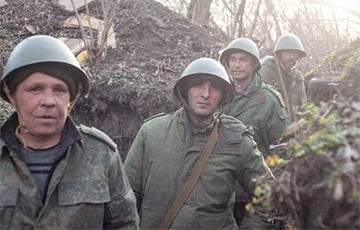
Russian recruiters from two unspecified Siberian regions told the publication that recently only recruits of "extremely old age" and with chronic diseases have been enlisting in the Russian army.
Sources in a town in the north of the Irkutsk region stated that recruitment problems have existed for several months, and that recruits are mainly interested in financial payments and benefits such as education for their children, loan deferment and debt forgiveness - which, the interlocutors complained, demonstrates that the "volunteers" are motivated solely financially.
Another source from the Irkutsk region said that the Russian Defense Ministry is trying to recruit people through advertisements that state that the war is supposedly a "war". This rhetoric was used especially actively on the eve of the US-Russia summit in Alaska on August 15.
The same source noted that the Russian Defense Ministry deceives Russians with stories about the "earnings" of contract workers for the year, indicating the maximum "bar" - salaries on the front line. However, the source noted, the matter may not be a lie: the Russian command usually throws new recruits straight to the front, where they rarely live up to a year.
The ISW noted that it had expressed doubts back in February that ever-larger financial incentives for recruits were unlikely to lead to a dramatic increase in enrollment in the future, since a significant proportion of Russian citizens who could be "bought" with the money Russia is able to pay on a large scale have probably already voluntarily agreed to join the army.
"Growing financial incentives for recruits and social benefits for military personnel suggest that recruitment levels are declining and that Russia has had to find new incentives to stimulate them. ISW continues to assess that reducing recruitment in Russia to levels where Russia cannot compensate for its high losses may in part force Russian President Vladimir Putin to choose between conducting a forced reserve mobilization, which he is very reluctant to announce, or beginning real negotiations to end the war," the analysts concluded.

Bank's name: Bank Millennium S.A.
Address: ul. Stanislawa Zaryna, 2A, 02-593, Warszawa
IBAN: PL97116022020000000216711123
SWIFT: BIGBPLPW
Name of the account holder: Fundacja “KARTA ‘97”
Purpose/title of payment: Donation for statuary aims
You can contact us by the e-mail charter97@gmail.com