

Russia's Largest Titanium Producer Has Imposed A Four-day Shutdown
- 20.10.2025, 11:44
- 3,418
Following the Russian car factories.
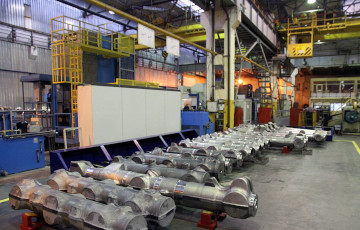
Russia's Urals-based titanium giant VSMPO-AVISMA will switch some of its employees to a part-time mode - a four-day work week - starting December 1. This is about those who are not involved in key production processes - mainly administrative staff, the company's press service told Interfax.
VSMPO-AVISMA called the decision "not easy" but necessary to maintain "operational stability." "It allows us to retain our team and prepare for market recovery... During this regime, we will offer employees additional opportunities for professional training," the press service explained. They added that, despite the new realities, the company will continue to fulfill all obligations to customers and partners, "maintaining its position as the leader of the world titanium market". The part-time employment regime will last until May 31, 2026 for employees whose workplaces are located in Verkhnyaya Salda, the order says. Factory workers have complained that they have not had jobs since October.
In June, Russian President Vladimir Putin inquired about VSMPO-AVISMA's affairs. He asked Sergey Chemezov, head of Rostec, the state corporation that controls the company, about the current state of titanium production. The latter admitted that it is not fully loaded. "Mostly, of course, we work for our enterprises - aviation, helicopter enterprises. But since the Americans left, our joint venture with Boeing, unfortunately, is frozen, so the volumes have decreased," Chemezov explained.
"VSMPO-AVISMA" is the world's largest titanium producer, which also provides 90% of the output of this metal in Russia. The company has a full technological cycle: from processing raw materials to the production of finished products with a high degree of machining. The majority shareholder of VSMPO-AVISMA is Mikhail Shelkov. In the first six months of 2025, the company's revenue fell to 49.33 billion rubles, down from 59.61 billion rubles a year earlier. Net profit collapsed almost six times - from 12.39 billion to 2.14 billion rubles.

Bank's name: Bank Millennium S.A.
Address: ul. Stanislawa Zaryna, 2A, 02-593, Warszawa
IBAN: PL97116022020000000216711123
SWIFT: BIGBPLPW
Name of the account holder: Fundacja “KARTA ‘97”
Purpose/title of payment: Donation for statuary aims
You can contact us by the e-mail charter97@gmail.com