

Business Activity In The Russian Economy Has Hit A 3-year "bottom"
3- 3.10.2025, 12:36
- 2,244
Two factors coincided.
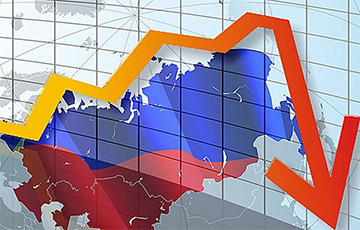
Business activity of Russian business continues to decline rapidly. The PMI index, which is calculated by S&P Global based on the results of surveys of companies, fell from 49.1 to 46.6 points in September (more than 50 - growth, less - decline).
In the manufacturing industry, this is the fourth consecutive month of decline in business activity, and in the services sector the decline in September was the strongest since December 2022, notes S&P Global. And the composite index, which measures business activity in manufacturing and services, was at its lowest since October 2022.
Two factors combined: the acceleration of the decline in manufacturing overlapped with its resumption in the services sector. In August, the services PMI was still on the borderline between growth and contraction - exactly 50 points.
The fall in output in September was helped by a decline in new orders for the third consecutive month, at the fastest pace since December 2022 (and in manufacturing since May), S&P Global said. Businesses noted a decline in the number of customers, their caution, as well as a deterioration in their purchasing power.
Rising costs for suppliers, salaries and utilities drove up operating expenses for service companies. Costs rose at the fastest pace in five months. Passing them on to consumers is increasingly difficult for companies. Output prices grew slower than costs - both in services and in industry.
Monitoring of more than 10 thousand enterprises, conducted by the Central Bank, shows a slowdown, but not a decline in business activity. The Business Climate Indicator (BCI), calculated by the surveys, fell to 1.8 points in September from 2 in August (the Central Bank has a zero value separating growth from decline). "The PMI survey probably covers exclusively the private sector without the MIC/allied industries, so it may show the state of the civilian part of the industry," argues economist Dmitri Polevoy. - And here we see the strengthening of negativity, including due to financial problems of companies".
The civilian part of the industry is rapidly shrinking. CMACP, a think tank close to the authorities, has calculated that output in most civilian industries has been steadily declining this year, with the overall decline reaching 5.4 percent and 6.3 percent over the past 12 months. The shock of high interest rates to industry is comparable to the shocks of the pandemic and the outbreak of war, CMACP estimated: profitability in many industries has fallen below rates on loans and risk-free financial instruments. This makes investments meaningless (the Ministry of Economic Development forecasts a 0.5% reduction in investments next year) and undermines the financial stability of companies. According to the calculations of the Central Bank of Russia, the industries that generate 33% of the real sector's revenue are at risk.
The civilian economy has fallen victim to the rapid growth of the military. High interest rates, which the Central Bank uses to fight military-induced inflation, are contributing to the flow of resources from civilian industries to the military, explained economist and co-founder of the CASE Dmitri Nekrasov think tank. "Back last year, at the end, we said - yes, in order to beat inflation, we have to sacrifice ... growth rates. And the Central Bank raised the key rate ... I hope it will not re-freeze the economy," Vladimir Putin reasoned the other day. The lags of the Central Bank's tight policy continue to work in the civilian part of the economy, Polevoy notes, ironizing that "everything is according to plan."
The authorities have already resigned themselves to stagnation in the economy. According to the government's updated forecast, it will grow by 1% this year and 1.3% next year. This may even be optimistic. T-Investments chief economist Sofia Donets predicts that GDP growth will be below 1% this year and next year.

Bank's name: Bank Millennium S.A.
Address: ul. Stanislawa Zaryna, 2A, 02-593, Warszawa
IBAN: PL97116022020000000216711123
SWIFT: BIGBPLPW
Name of the account holder: Fundacja “KARTA ‘97”
Purpose/title of payment: Donation for statuary aims
You can contact us by the e-mail charter97@gmail.com