

The Economist: Trump's Peace Plan Is Bad For Ukraine, Europe And America
3- 3,662
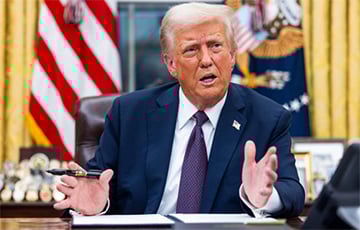
Photo: Bloomberg
A mixture of opportunism and shortsightedness.
Donald Trump's 28-point peace plan is so poorly drafted, so vague, unbalanced and impractical, that in a more normal world it would never have appeared, and if it had been leaked it would have been quietly abandoned, according to an article in The Economist.
The publication, meanwhile, suggests that Trump will insist that Ukraine accept the plan or something similar before Thanksgiving, and if President Vladimir Zelensky refuses, Trump could cut off Ukraine's access to U.S. intelligence and advanced weapons systems, as he has already done.
Among the odd provisions of Trump's peace plan, The Economist cites a ban on Ukraine firing missiles at Moscow or St. Petersburg without mentioning any other locations in Russia and any restrictions on Russian strikes.
"Russia gets rewarded for stopping its invasion by retaining all the territory it has seized and more, that it has not seized; it is welcomed back into the international community, including the G8; and it is freed from sanctions and given generous opportunities to make money. Ukraine gets a ceasefire, its own chance to make money and an American guarantee that Russia will not attack it again," the article describes the essence of Trump's proposal.
The publication notes that the details of the plan envision a highly unreliable future for Ukraine, including handing over to the aggressor country "big cities full of people" and large fortifications that Ukraine has been building over the past three years.
The Economist also draws attention to a cap on the size of Ukraine's army of 600,000, a number that would make it more difficult for Ukraine to retake the territory it has seized. Japan and South Korea will take notice. China, which threatens Taiwan, will also pay attention," the publication states.
Trump team officials argue that such a vision ignores the security guarantees America is offering Ukraine, because clause 10 states that if Russia invades, America will provoke a "coordinated military response."
"If that were plausible, it might make even this deal bearable. But it isn't. ... Under Trump, it is unclear whether America will even start a war with Russia over NATO. The plan for Ukraine is entirely at Trump's whim, and his promise will not even be backed by America's Congress," the article says.
Paragraph 10 also stipulates that America will be paid for agreeing to support Ukraine, The Economist adds.
Proof that this agreement is a bad one, the publication calls the fact that it is actually an ultimatum.
"Just ask yourself, if he offered Ukraine a bailout, why would Trump impose it on Zelensky? If America's European allies consider it (Trump's peace plan - ed.) wise, why are they now trying to find a way - any way - to stop it?" the article says.
Read also: Ukraine's European allies have sent a counterproposal to Trump's peace plan to Washington - Spiegel
The publication emphasizes that Trump acts as if America is not an ally of Ukraine and its weaknesses are something to be exploited rather than fixed. It also points out that under Trump's plan, frozen Russian assets would have to come under US control for profit.
"European leaders, who are meeting in panic today, are paying bitterly for their failure to seize the initiative. This is an indictment of their shortsightedness," writes The Economist.
The article suggests that Ukraine needs to avoid a confrontation with Trump and Zelensky should negotiate improvements to the peace plan, hoping Putin will object and try to squeeze more out of the agreement.
"If the talks stall, Trump will eventually lose interest," The Economist predicts.
The publication also advises Europe's leaders to immediately contact Republican supporters in Congress to warn Trump against concluding the agreement in its current form, or, if the talks fail, to prevent him from attacking Ukraine.
"Despite Europe's serious financial problems, its leaders must find the money to keep Ukraine in the fight, which may well mean continuing to fight without America. The fight will be desperate and the bill will be high, but far below the cost of defending NATO against an intensified threat from Russia if Ukraine breaks up," the article explains.
The Economist suggests that Europe's leaders must move from outrage to action because Trump's plan threatens Europe as well, and they have "already spent too much time wishful thinking".
"There is no doubt that this is a dangerous moment. When a president is not even bound by America's interests, but instead is motivated by - who knows? - by visions of huge profits for American companies, personal hatred for Zelensky, delusions about Putin, and a false sense of what it means to be a statesman, then anything can happen," the publication concludes.

Bank's name: Bank Millennium S.A.
Address: ul. Stanislawa Zaryna, 2A, 02-593, Warszawa
IBAN: PL97116022020000000216711123
SWIFT: BIGBPLPW
Name of the account holder: Fundacja “KARTA ‘97”
Purpose/title of payment: Donation for statuary aims
You can contact us by the e-mail charter97@gmail.com