

The Speaker Of The Russian State Duma Made A Crazy Statement
15- 26.11.2025, 13:30
- 9,742
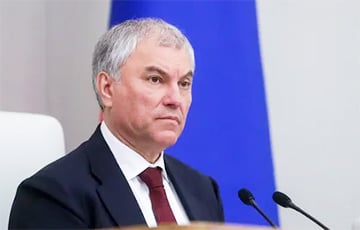
Vyacheslav Volodin said that Europeans are allegedly moving to Russia by the thousands because of "freedom of speech."
Europeans are "increasingly" choosing Russia as a new place of residence, Russian State Duma Speaker Vyacheslav Volodin has said. He noted that about 150 citizens from "unfriendly" countries apply for relocation every month. "According to the Interior Ministry, as of the end of October 2025, 2,275 applications were submitted to the Russian services. Most of all those wishing to move are from Germany, Latvia, France, Italy, England, Estonia, Lithuania," the speaker specified.
He added that one of the key motivations for such a decision is "freedom of speech" in Russia. Also, Volodin claimed, Europeans go to the country at war with Ukraine for "security," "traditional values," and "free medicine and education." "Growing economic problems at home" are forcing them to look to Russia for "a better life for themselves and their children," Volodin summarized. Russia ranks 151st or 11th from the bottom in the Global Expression Report's world ranking of freedom of information. Above it in the list are all African countries except Eritrea and all post-Soviet republics except Turkmenistan and Belarus. Moreover, Russia is in the group of states where the situation of freedom of speech is assessed as "in crisis". Below it in the list are Afghanistan, China, Myanmar, Nicaragua, North Korea and Syria.
The deterioration of the state of freedom of speech in Russia is also evidenced by the research of Reporters Without Borders. In the rating of this international organization, the country has fallen by 9 lines over the year to a record 171st place or 10th from the end, scoring only 24.57 points out of 100. Egypt and Nicaragua were next to Russia.
In both cases, the ranking's compilers pointed out that the war with Ukraine was used by the Russian authorities as a pretext to further suppress freedom of expression and "clean up" the media field inside the country. Since the invasion began in February 2022, "almost all independent media outlets have been banned and blocked or given the status of 'foreign agents' and 'undesirable organizations,'" Reporters Without Borders noted. The organization itself was declared "undesirable" by the Russian Prosecutor General's Office on July 23, 2025.
Russian authorities have consistently restricted the use of the Internet since the invasion of Ukraine. At first, censorship affected independent media and popular foreign social networks (Instagram, Facebook), then messengers and other messaging services (Signal, Viber, Discord) began to be blocked. YouTube video hosting was also critically slowed down, making it impossible to use it in Russia.
Since May 2025, the authorities have started to shut down mobile Internet, formally explaining it by the need to counter Ukrainian drones, although the blocking also occurs in regions that have never faced such attacks.
Since September 1, fines for searching for "extremist materials" on the Internet began to take effect in Russia, with the use of VPNs becoming an aggravating circumstance.

Bank's name: Bank Millennium S.A.
Address: ul. Stanislawa Zaryna, 2A, 02-593, Warszawa
IBAN: PL97116022020000000216711123
SWIFT: BIGBPLPW
Name of the account holder: Fundacja “KARTA ‘97”
Purpose/title of payment: Donation for statuary aims
You can contact us by the e-mail charter97@gmail.com