


Satellite Photos Show Real Condition Of Russian Submarine After SBU Drone Strike
10- 17.12.2025, 14:44
- 9,454
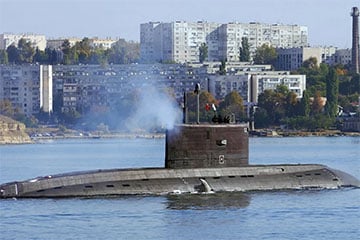
"Varshavianka" has lost her fighting ability and cannot sail on her own.
A satellite has taken new photos of the bay in Novorossiysk, which came under the attack of Ukrainian Security Forces drones. The photos showed what real damage the Russian Federation's Project Varshavyanka submarine suffered as a result of the Sub Sea Baby hit. Analysts explained why the submarine, which is called a "black hole", has lost combat capability and can not sail on its own.
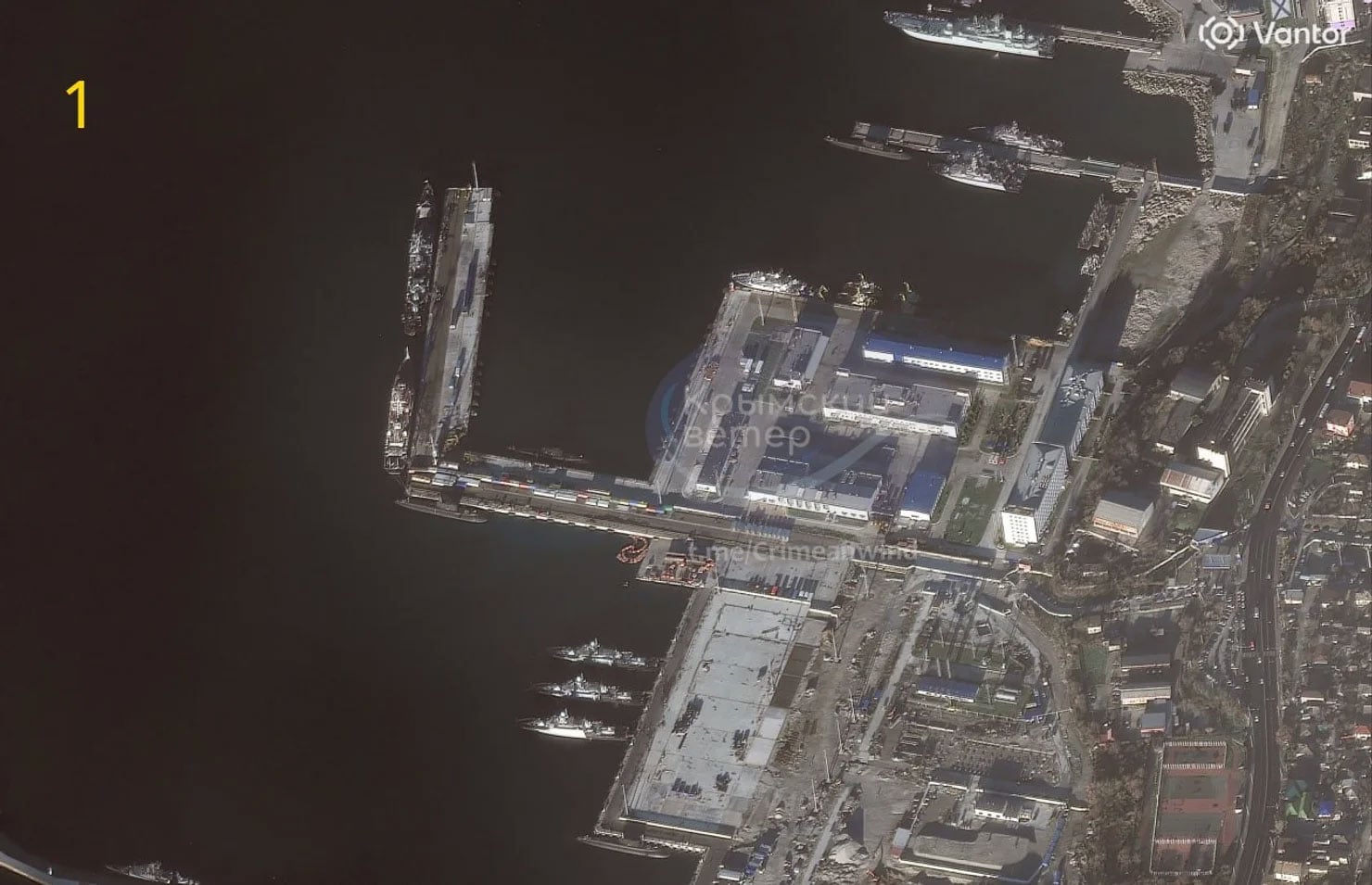
The effectiveness of the attack on the submarine of the project "Varshavyanka" and the degree of destruction is evidenced by the other still intact submarine, which is standing nearby, wrote in the Telegram channel of the resistance forces "Crimean Wind". There were three submarines in the Military Bay of Novorossiysk before the SBU's Sub Sea Baby drone attack, and now there are two submarines left, one of which has indeed lost its combat capabilities, as well as its ability to sail.
On the morning of December 17, the channel published a satellite photo in good quality with a panorama of the Military Bay in Novorossiysk. Conclusions about the condition of one of the three "Varshavyanka" were made on the basis of information from their own sources, satellite photos and OSINT-intelligence.
The first image is a general panorama of the Military Bay. There are approximately 10 warships of the Russian Armed Forces in the frame, two of them are submarines (dark elongated spots near the horizontal part of the L-shaped pier). Earlier there were three submarines stationed here, and after the attack on December 15, one was withdrawn, the second was transferred to the other side of the pier, and the third, which was hit by drones, remained in place. The memo summarized that this indicates "undoubted damage" to the boat.
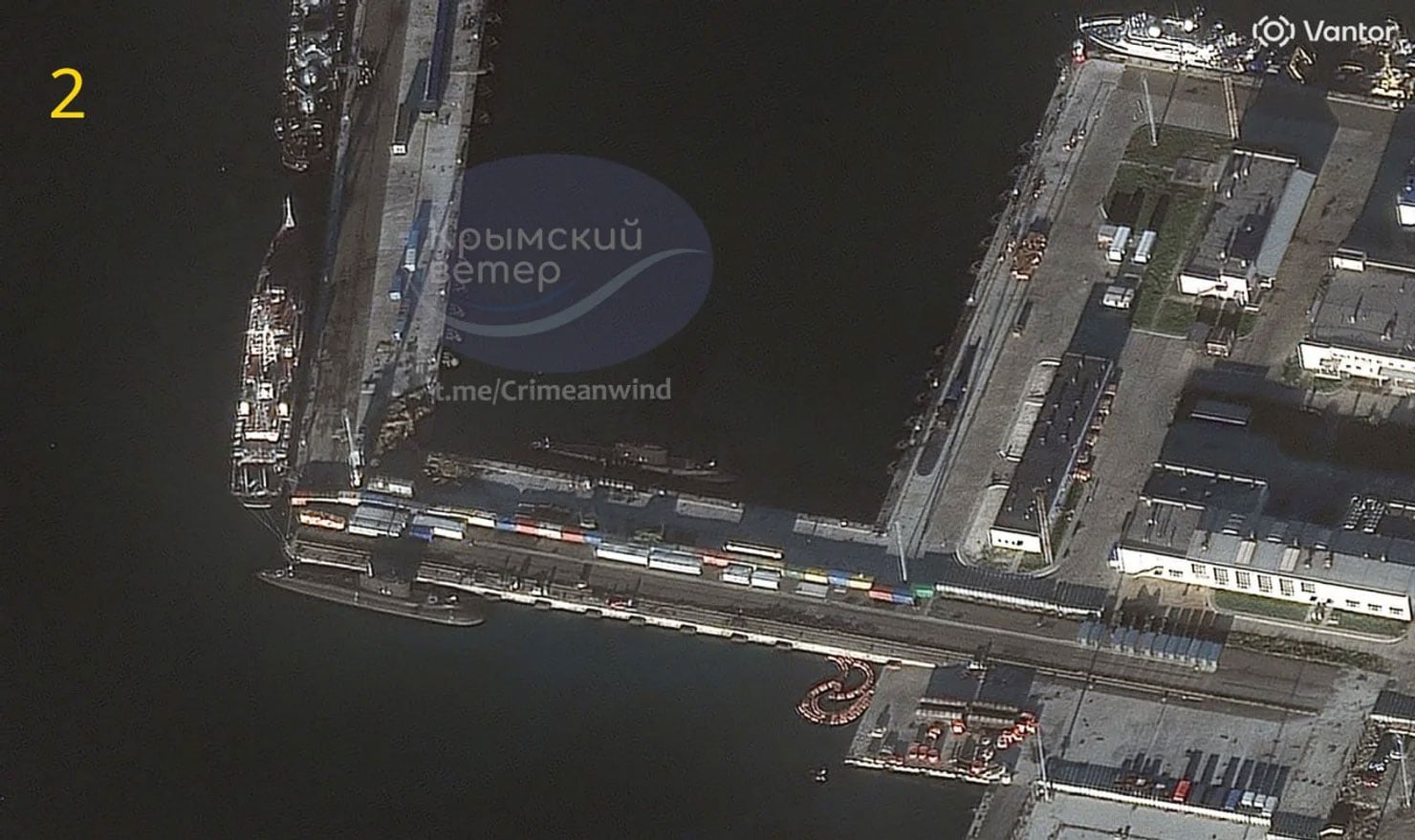
The second image is an enlarged fragment of a photo of the pier with the submarines. We can see that the one that remained inside the bay is visually darker than the other, and part of the hull is not visible due to probably being submerged (the left side of the hull).
The third image is the same submarines, but it is highlighted which part of the hull to look at.
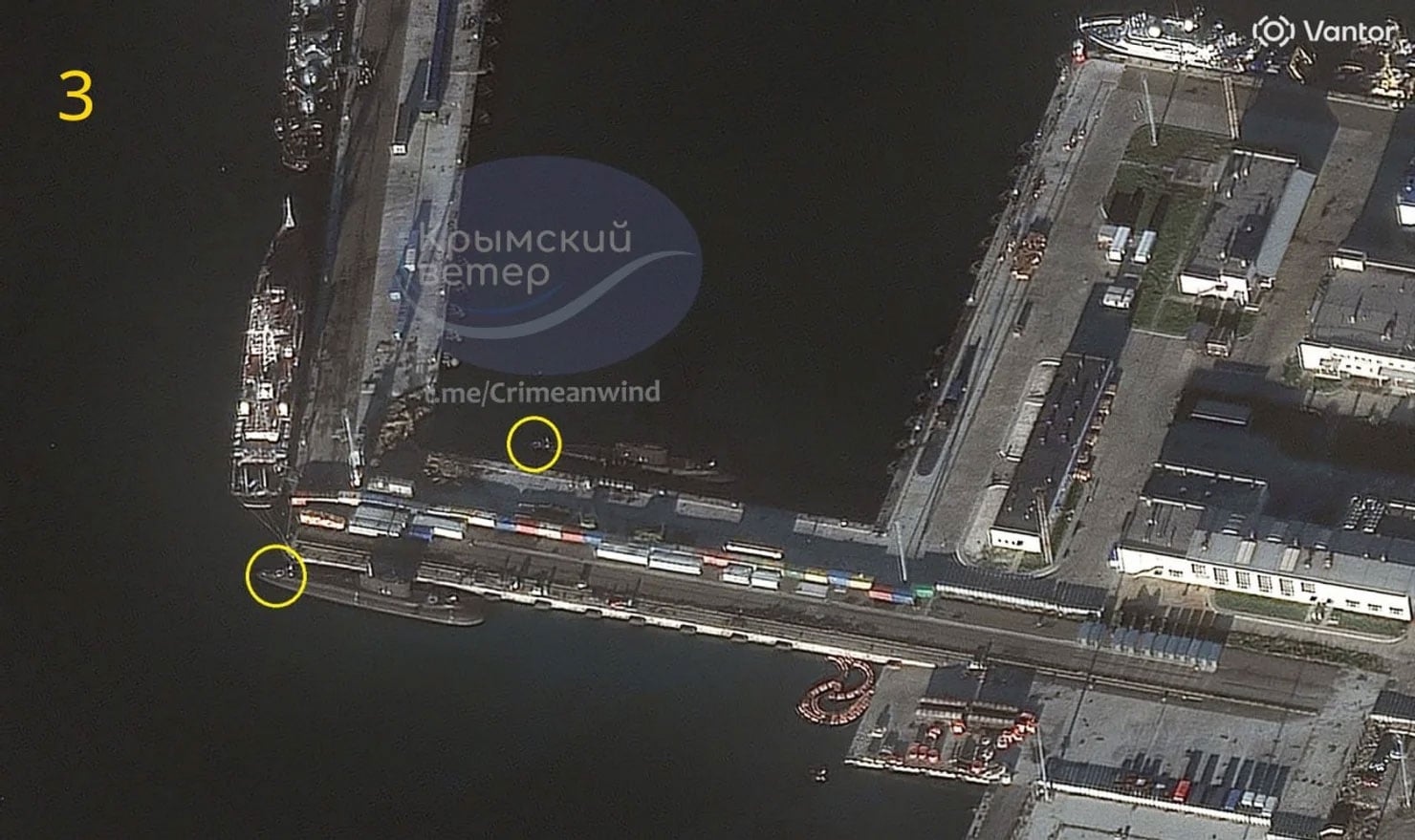
The memo explained what the difference between the submarines means. First, the damaged boat is submerged above the waterline and the stern is in the water. Thus concluded that there is damage to the propeller, rudder, propeller shaft. There is also flooding of the tail compartments. Sources of the resistance forces reported that the Russian command is solving the problem of transporting the submarine to the dock [it will probably not be able to get there on its own - ed.]. In addition, if the propeller shaft is indeed damaged, it requires serious repairs at the shipyard, as it must be dismantled by disassembling the aft compartment.
"Our experts believe that the submarine is out of commission for a long time, if not forever," the post summarized.
Russian submarine strike - what analysts say
Alexander Kovalenko, a military and political observer of the Information Resistance project Alexander Kovalenko, reacted to new satellite photos of the Russian submarine of the Varshavyanka project. On his Facebook page, the observer noted that the damaged submarine is still submerged below the waterline ["Crimean Wind" indicated that it is higher - ed.]. The submergence of the stern indicates damage to the stern rudder and vertical stabilizers. In addition, there is probably a through hole in the hull and therefore flooded, tentatively, the sixth compartment in the tail. The seriousness of the damage is also evidenced by the fact that the boat was left at the pier and not taken to a new location: thus, the Russian Federation's statements about the absence of consequences are "lies."
Kovalenko believes that the submarine may be taken to a dry dock for repairs. The nearest one is in Sevastopol, but then there is a threat of an air strike. The Russians may try to drag the boat to the Zvezdochka shipyard in Severodvinsk by inland waters, he explained.
Observer Kirill Danilchenko clarified the details of the explosion in Novorossiysk when the SBU drones hit. First of all, he drew attention to the 12-15-meter column of water and sand that rose after the hit, and to the torn out piece of concrete pier. He estimated that the Ukrainian maritime drone could have carried "300-400 kilograms in TNT equivalent" and that the explosive was hexogen with aluminum. For comparison, figures are cited for a Harpoon anti-ship missile with a 221 kg warhead and 100 kg depth bombs, which penetrate the hull at 10 meters and damage at 20 meters.
"In an incompressible medium (water) at such a distance (about 20-25 meters) - this is terrible damage," Danilchenko specified, referring to the impact on the waterline, on compartments 5 and 6 and damage to "the shaft, the glands of the deadwood, the batteries, the rudder, the steering post, the electric motor and its shock absorbers."

Bank's name: Bank Millennium S.A.
Address: ul. Stanislawa Zaryna, 2A, 02-593, Warszawa
IBAN: PL97116022020000000216711123
SWIFT: BIGBPLPW
Name of the account holder: Fundacja “KARTA ‘97”
Purpose/title of payment: Donation for statuary aims
You can contact us by the e-mail charter97@gmail.com