
Ales Bialiatski: Belarusians Are Simply Fed Up With Lukashenko Already
14- 20.12.2025, 13:54
- 6,794
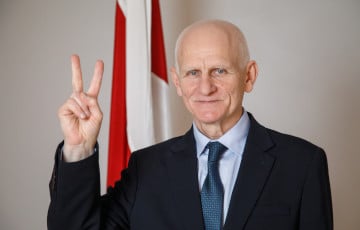
Support for the dictator in the country is minimal.
Another three years after the awarding of the Nobel Peace Prize, the head of the Human Rights Center "Viasna" Ales Bialiatski spent in the Goretsk colony. He was released only after the U.S. lifted sanctions on Belarusian potash. How does the ex-political prisoner himself assess this deal, what he thinks about the lifting of sanctions and Babariko's answers about the war in Ukraine and Crimea? About this and more - in a great interview with "Zerkalo".
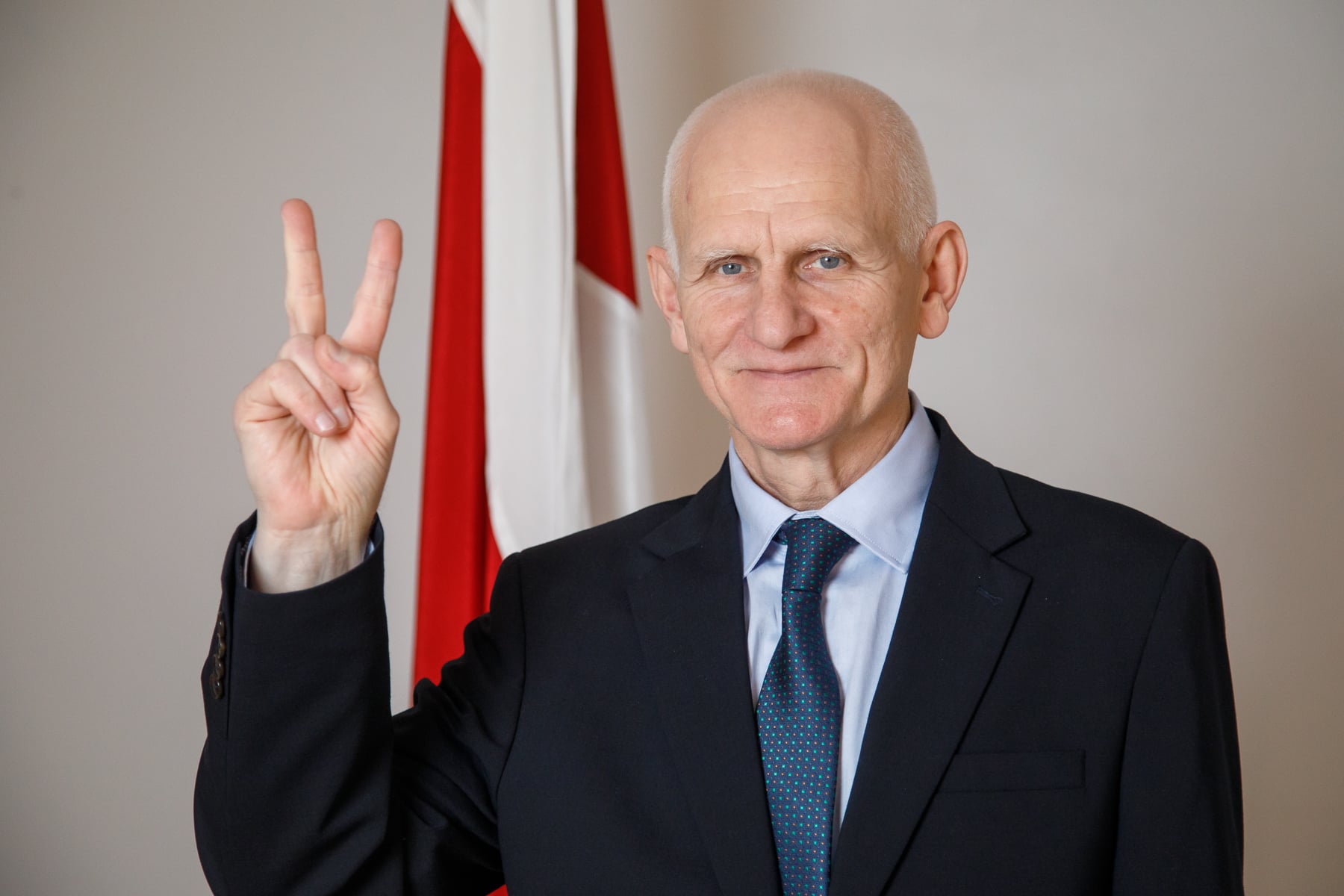
"How much am I worth? A ton of potash? A thousand tons?"
- How did you in the colony learn about the U.S. negotiations with Belarus? And did you hope that mass releases would begin?"
- Here it is worth starting with how I got to the prison hospital. It was quite a long epic - they couldn't get me out for a year. In the end I ended up in Kolyadichi (we are talking about the Republican General Somatic Hospital at the pre-trial detention center-1 in Kolyadichi. - Editor's note). It was in June. I underwent surgery on my leg there. I spent the night in intensive care. In the morning (it was Saturday, as far as I remember, a day off) they brought me to the ward - and I could reach the radio. I turned it on and heard the news that the first group had been released, that Tikhanovsky and other political prisoners had been released.
It's not the first time we have encountered such things, when political prisoners are recruited, then some kind of bargaining takes place, and then someone is released. The first time I was released in 2014 also in this way (in 2011, Ales Bialiatski was sentenced to 4.5 years in a reinforced regime colony. - Editor's note). And now, when I heard that the first group went, I realized - apparently, the process has begun. After all, Sergei Tikhanovsky was most likely perceived by Lukashenko as a personal enemy, whose release was very serious for him. This was the first signal.
And when after the hospital they brought me back to the Goretskaya colony, I felt that the pressure from the administration had decreased. If I used to get some kind of violation every month, it was as if they forgot about me for a while. This did not apply to other political prisoners: there were people in our colony who were convicted [after Tikhanovsky's release] under Article 411, for "gross violation of the internal order". Political prisoners were also sent to BURs (barracks of reinforced regime, now its analog is PKT, cell-type premises. - Editor's note). They were also put in SHIZOs.
In September, when the next group was released, it was a confirmation that some process had really started. All the more so because before that Lukashenka had appeared on Belarusian TV and said that he was ready to exchange them [political prisoners]. And then he said that we were preparing a "big deal."
We actively discussed with political prisoners that, apparently, there would be the next group. Although there was no special faith in it. I was more of an optimist, I tried to watch the news, analyze. First, back in November, I read that an American delegation of diplomats was going to come again in December. We began to wait.
But the release itself was very unexpected for me. We didn't know that the Americans had arrived, that negotiations had already taken place on the first day. We didn't know anything. It was just an ordinary day for us (we are talking about December 12, 2025 - Editor's note). And when they woke me up at four o'clock in the morning, told me to take my things and took me to the inspection, it became clear - this must be it. Although, again, until you are finally free, it is very early to rejoice. They could have been transferred to another colony, somewhere in Minsk, to some lagoon, to a pre-trial detention center, somewhere else, and kept there for some time. There could be various variants. Therefore, until we were at the Lithuanian border, I did not believe it.
- Did you manage to communicate with the Americans from the delegation, perhaps they told you something and you have an understanding of their sentiments and requirements from the Belarusian authorities?
- The head of the delegation, Special Envoy John Cole, said that the Americans were not going to stop at our release, that the work on the release of political prisoners in Belarus would continue. For which I thanked them and said that yes, of course, this is task number one - to release everyone and try to ensure that no new political prisoners are recruited. Some pretty tough requirements have to be met. Otherwise, this is just a trade, which may, on the contrary, encourage the Belarusian authorities to recruit new political prisoners. After all, they need to lift sanctions, improve economic and political relations. That's all that was said.
At the time of the meeting, we were still in such a semi-conscious state. Here you are still driving blindfolded, and three officers are traveling with you in a car, I don't know what services they represented there. Here you get into a minibus and you're being transported across the border. And, of course, there was almost nothing to talk about in a meaningful way. It was important to realize that you were finally free and that the prison epic was over.
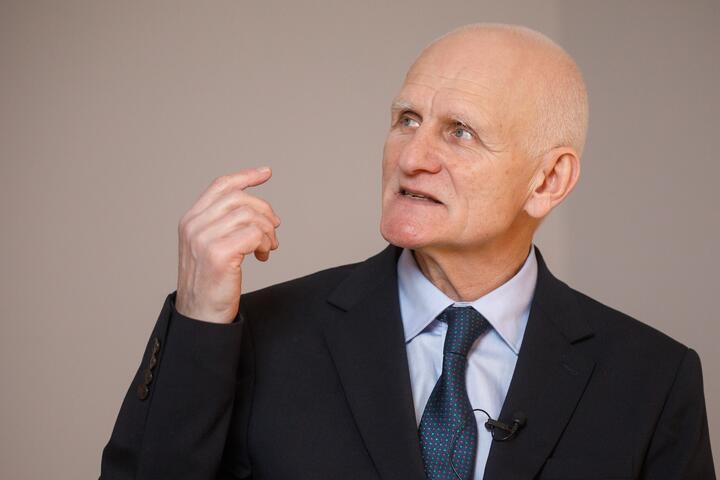
- Do you think the deal - sanctions in exchange for the release of people - is a good thing?
- I have contradictory feelings. On the one hand, I am really happy and relieved to be free. I can see my family, wife, acquaintances, friends, I can really live in a free country, no matter how banal these words sound. As they say, "the heady air of freedom" and so on - all these platitudes are about me now. The first day, when I came out of prison in Vilnius, I was really intoxicated by this air.
But on the other hand, there is a feeling, of course, of certain annoyance, because it is just an exchange, trade. Here we've been traded for potassium. How much am I worth? A ton of potash? A thousand tons? You become an exchange commodity. I emphasize once again: I hope very much that this is the first step, that after the release of all political prisoners there will be the next steps to democratize the situation in Belarus. Because otherwise this exchange, which is pleasant for me personally, has no sense. We need to stop political repression so that people could live more or less freely in the country.
- In your opinion, the EU can also join and should do it together with the U.S.? After all, the most painful sanctions for Lukashenko are still EU sanctions.
- I think the sanctions policy and political statements of the European Union, which does not recognize Lukashenko's power as legitimate, the elections in 2020 and 2025, the changes in the Constitution that have taken place during this time - this is extremely important so that we do not lose our bearings, and what we are building. If we want to live in a normal democratic country, we cannot close our eyes to all these transformations for the worse and start lifting sanctions. Because where are the reasons for lifting them? The fact that political prisoners were released? They will hire others. The laws are the same. Is it difficult to recruit the next thousand in Belarus out of the millions who live now? It is necessary to achieve fundamental changes in the structure of state administration in Belarus. It is necessary to achieve free elections. Without this, the disasters that happened in 2020 will be repeated. Therefore, the EU's principled policy of recognizing that Belarus is now unfree, undemocratic and under illegitimate power is extremely important.
It may be unpleasant, it may be hard now. But listen, we held on for decades until the Soviet Union collapsed. Do we need to hold on for more? Then we will. Let's see clear prospects of how it may end, and make clear steps, and not look for some compromise with actually scoundrels. People who have committed so many crimes and are in no way responsible for them. I think that the policy of our neighbors - Lithuania and Poland - towards Belarus, and the whole European Union in general, is the most optimal now.
- It seems that Lukashenko gets out of any situation and has been doing it for years. Is it possible to achieve the goals you are talking about?
- First of all, it is impossible to compare the situation he is in now with the one he had 30 years ago. Because then he had real support, legitimacy, the elections that made him president in 1994 were more or less fair. And indeed, we still had such a Soviet-Belarusian society, when many people were nostalgic for the Soviet Union. These people also supported the changes that Lukashenko offered them. We worked in a society where people with a democratic mood were in the minority. But the situation has changed. In 2020, we saw that generations have changed, and young people are mostly oriented towards Europe. These are people who go to rest, to study, on some other business to European countries, who would like to live a normal, calm and civilized life, who are not afraid to say what they think, who value their dignity very much. And we heard it very clearly, especially from 2015 to 2020, when, I believe, the majority of Belarusians began to orient themselves towards Europe.
This is thanks [among other things] to the fact that our neighbor is the European Union, thanks to the work of our public activists.
The contacts of hundreds of thousands of Belarusians who have been to Europe have borne fruit. People began to simply not understand the authorities, and Lukashenko became not their president. And that's what we heard in 2020. Then it became clearly understood that if you retain power in such a dramatic way, as he did, then everything simply turns into a dictatorship - the minority holds power, you can call it a gang, a corrupt part or a pro-government mafia. But in fact the majority of people do not support them and Lukashenko. I will say this unequivocally. We saw this at the elections.
And being in the colony, communicating with thousands of people during this time... The support is like this (shows the minimum level with fingers). That's how many people somehow say something good about him. You won't hear a kind word about Lukashenko now. There is no authority, no respect. They look at him as a man who just holds on to this power with his blue fingers.
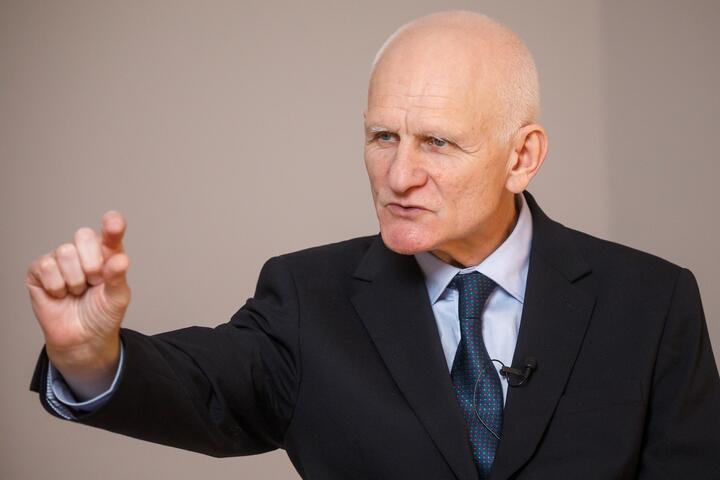
Many people voted for Svetlana Tikhanovskaya. Even from those sit-ins, from people very far from politics, who are from villages and towns in Belarus. They don't want him. Everyone is simply fed up with him. Therefore, there are no prospects for this regime.
Well, we'll see how it will change. I think there can be a variety of options. There was an attempt at a peaceful revolution in 2020, which was met with rejection and hostility. I think Lukashenko put an end to his political career with this. And in general, I would say, even the memory of him. Because there are not so many people who approve of repressions and support them, even among his supporters. What will be his legacy after the end of this period? I don't think it will in any way be evaluated positively.
"Maybe some other reasons made him say that. I don't know everything"
- There is an opinion that if the Belarusians had won in 2020 and the power in the country had changed, then perhaps there would have been no war with Ukraine. Do you think this is a correct idea?
- I think you should be careful with the conditional inclination. Because you can never take all factors into account. It's as if we don't remember the Russian Guards who stood on the border with Belarus and were just waiting for the signal to come in.
- It's very likely that there would have been a Russian occupation of Belarus. Just like when they tried to forcibly take over Ukraine. But history cannot be rewritten. What happened can be analyzed, reasoned, what mistakes were made. By and large, there were none. There may have been some ignorance, inexperience of people who were at the head of changes. Somewhere, perhaps, there was procrastination, somewhere there was a lack of determination and courage.
But I am afraid to make any predictions that if we had done so, we would have won. This is too self-confident assessment, taking into account the fact that in many respects our political future and life in Belarus in general depend on what is happening in Russia. No matter how unfortunate, no matter how paradoxical, we depend on it. And that is why I am very worried about what is happening with the Russian-Ukrainian war. I would very much like it to end, and somehow, in the long run, transformation will come also in Russia. Because it is our neighbor. The Lithuanians say: "We would very much like everything to be fine with you, because we need a stable Belarus". Yes, and we need a stable democratic Russia, we need stable eastern borders. Although no one talks about it now.
- Now the words of Viktor Babariko during the press conference are being discussed very heatedly. He gave an interview to Ukrainian blogger Volodymyr Zolkin, where the latter also asked about Crimea. Babariko did not say unequivocally whose it is, he also gave a streamlined answer about the war. How did you feel about his statements?
- I am in no way going to condemn any of the political prisoners. The most significant thing is that the absolute majority endured. It was a very serious blow, and it was very easy to break a person, to convince him morally that there were no prospects, no point in holding a position, to force him to cooperate. Very few people went for it. And this is a great honor for Belarusian political prisoners and for democratic forces in general. We have few defectors. There are some, we won't name them. But they are really few. Thousands, tens of thousands of people, who fell under the shaft of repressions, withstood them with dignity.
What about [Babariko's] political future... We'll see. People jumped out of a very limited space. Maybe they have unbalanced political accents, having little previous political experience, as they were engaged in quite other things. Perhaps it is too early to demand some mature statements from them.
Although I am also disappointed about Crimea and the war with Ukraine. This case is absolutely understandable. Even there, in prison, you could get enough information by watching "60 Minutes" and the same Skabeeva (we are talking about the Russian propagandist Olga Skabeeva. - Editor's note), sifting out propaganda nonsense, foam, based on factual materials, to make your decisions. We discussed this in the colony. There are not one and not ten people there who take the right position on this conflict, perceive Russia as an aggressor and are worried about Ukraine. Moreover, some of those released from our colony joined the military resistance on the side of Ukraine after they were released. We have heard reports that these people are already fighting in Belarusian units of the AFU.
It is hard to say [why Babariko put it this way]. Maybe some other reasons made him say so. I don't know everything. These are more, I think, questions that can be asked of Victor himself. Maybe a little later, not now. Let him recover, come to his senses.
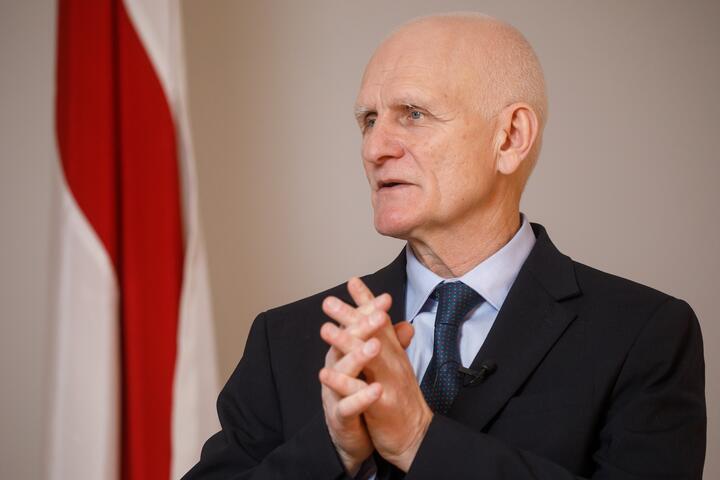
- "Zerkalo" chose the Man of the Year. It was Nikolai Statkevich. I think you know what he did. What do you think?
- Highly courageous. And not everyone could go for it, of course. But knowing Nikolai for more than thirty years, knowing his firm position, I realize that only he could do such a thing. I appreciate that. It is his personal choice to continue the struggle in this way. After all, if there are political prisoners in the country - politicians, public figures, human rights activists - it is a clear indicator of what is happening in the country, that there are huge problems with human rights, that there is a dictatorship that keeps political opponents in prison. That kind of path is hard. You have to have incredible toughness to endure it, I [have] deep respect for that. And I think that the question about Ukraine and Crimea was never a question for Nikolai. Because this is a man with a clear firm position. I very much hope that sooner or later, preferably sooner, he will still be at liberty.
- You also returned to Belarus in 2021. Svetlana Tikhanovskaia's counselor Denis Kuchinsky told me how you came to Vilnius in the spring and met with her in a hotel. When you said you would go back to Belarus, she asked if you were not afraid. You replied: let the regime be afraid - and went. And soon you were detained. Why did you make such a choice? Do not regret it?
- Not that I came back, there were short trips on business. It was a conscious decision to continue working in Belarus. At that time, when mass repressions were already in full swing, we, human rights activists, were involved in helping, assessing the situation, collecting information, where who is sitting, what terms, who should be sent where - a huge amount of work. It was impossible to drop everything and run away. Part of the organization left - it was our decision to be able to continue working in case of arrests.
In the end, when they happened in July 2021, they left three people in detention - me and my friends Valentin Stefanovich and Vladimir Labkovich.
Then it was necessary. To run away we could not. We had to take this blow from the authorities. The conclusion of the human rights defenders was a very strong signal to the European Union, to the entire international community that something wrong was happening in Belarus. Mass repressions are going on, journalists, human rights activists, political and public activists are imprisoned. We couldn't run away. So we decided to stay. In the end, I received ten years in prison, of which I served four and a half. I don't regret that we made that decision then.
- If you had such a choice now, would you go to your homeland?
- Now? Right here in this situation? Probably, it would be better for me to be here, if only because I need a break, because I have endured this time of constant pressure - moral, psychological and physical. A person's strength is not unlimited, you have to calculate your strength and carry as much as you can, let's say. You can't go back now. You'll be back and arrested in a few days. I think I'll do more here now, but with the firm belief that we'll be back there sooner or later. But preferably sooner, of course.
"I would like to see a trial of Lukashism and the people who built this system get their due."
- In an interview with Deutsche Welle, you compared your first and second terms and noted that the system has become tougher. Do you have an answer as to why it is the way it is now?"
- If you compare all the previous detentions that took place [in Belarus] since 1995 non-stop, there was not a single year when there were no political prisoners. But there were five, thirty of them, after the 2010 elections - about a hundred. But not thousands, like now. Now a political decision has been made to finally massacre the sprouts of democracy, democratically-minded activists, journalists and civil society of Belarus. The decision is unambiguously criminal. It is a crime against its own people, which in no way strengthens neither the authority, nor the possibilities of these authorities. Yes, they will stay for some time. However, I am convinced that they have no serious prospects.
- It is clear with the authorities. But, for example, the performers are ordinary Belarusians. We are all from the same country, why do they go for it?
- People, first, adapt to different situations. Secondly, not everyone is a sadist in the colony, there is a part of those who are looking for specific benefits for themselves. Three or four people who do this make a career, and the repressive system of treatment of political prisoners is built on them. The rest of the staff treat them neutrally or even sympathetically.
Ideologically convinced, who would beat their chests that I am for Lukashenko... No, I have not seen such people, strangely enough, even there, in the very east of Belarus. Goretskaya colony. Fourteen kilometers from the border with Russia.
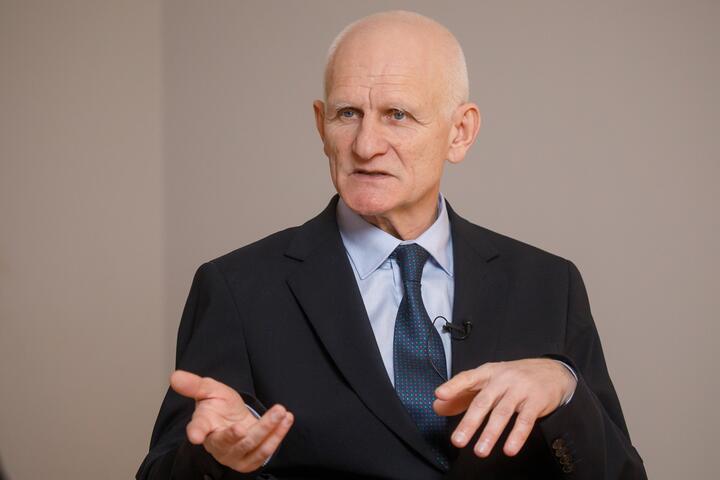
- Repressions were carried out by thousands. It's not only Lukashenko, Tertel and so on. What do you think, if there will be democratic changes in Belarus, what should be done with such people? Lustration, just reconciliation or another way?
- Certainly, the process of lustration should take place, as it seems to me. After all, if we want to achieve justice, it should concern not only political prisoners, who will be rehabilitated, but also executioners. This is very important. And in what form it will be - a question of the future, there are different options for resolving the situation.
I would like to see a trial over Lukashism. And that the people who built this system would get what they deserve. In my opinion, it would be fair. And in what form, if anything, is already a nuance.
"I had a very emotional reaction"
- Who first told you that you were a Nobel laureate, and how did you take it?
- It was a very domestic situation. I was sitting in a pre-trial detention center at the time, and I went to familiarize myself with the criminal case. We have 210 volumes there, we went every day for a month. And on one of these days in October [2022] I was walking - a number of prisoners were standing there. And one of them says: "Ales, you seem to have become a Nobel laureate." I didn't believe it, but I got suspicious - what is this, what kind of rumors are going around? And I went into the office, where the lawyer and investigators were already sitting. Then the lawyer said: yes, indeed, you have become a Nobel laureate. Yes, everyone is writing about it, talking about it. She did not say this from herself, but that she had read it in the media.
I had a very emotional reaction. I was there almost shouting that it was unbelievable, impossible. The investigator sat there smiling, looking a little silly. That day I was definitely not reading any volume of the next one, but was trying to somehow make sense of what had happened.
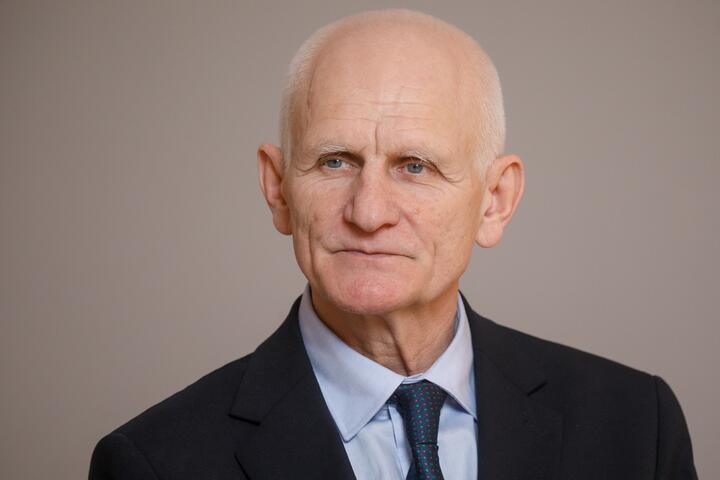
If you look at the chances [of getting the award], they were slim. That's the way the situation worked out. And the prize itself - this is very important - was given to people who fought for freedom. It was not my prize personally, it was to draw attention to the tragic situation with human rights, with democracy in Belarus.
- At the moment when you realized that you were a Nobel laureate, did you think how Lukashenko would react to it? Was there any fear that he might intensify repressions, or, on the contrary, optimism that a Nobel laureate would be released from prison?
- No, I was absolutely calm. You can fantasize a lot of things. It is better to live on the basis of the situation you are in. That's why I treated it like this: "Well, there is and there is". As for the position of Lukashenko and the authorities, they tried not to pay any attention to it in order to reduce the weight itself.
Factually, three more years after I became a Nobel laureate, I had to spend in prison, and on general grounds. There was no VIP cell for me. On the contrary, they tried to minimize the significance of the prize and show that it meant nothing to them. To what extent they succeeded - I don't know, because the time while a Nobel laureate is in prison is a challenge to the whole civilized society. And in the end it was another reason why I was released, because keeping a Nobel laureate in prison is not a good thing.
- What will you do with the prize money?
- I haven't received the money yet, but I know that it will be used to strengthen the capacity of my human rights work.

Bank's name: Bank Millennium S.A.
Address: ul. Stanislawa Zaryna, 2A, 02-593, Warszawa
IBAN: PL97116022020000000216711123
SWIFT: BIGBPLPW
Name of the account holder: Fundacja “KARTA ‘97”
Purpose/title of payment: Donation for statuary aims
You can contact us by the e-mail charter97@gmail.com