
Rebecca Harms: Germany’s Future Is Being Decided in Ukraine
1- 23.12.2025, 11:50
- 1,776
Berlin and the EU have taken a major step forward.
What is the German perspective on the U.S.–Lukashenka arrangement for releasing Belarusian political prisoners? Can Berlin and its allies close the sky over Ukraine? How does the German political establishment assess the policies of U.S. President Donald Trump?
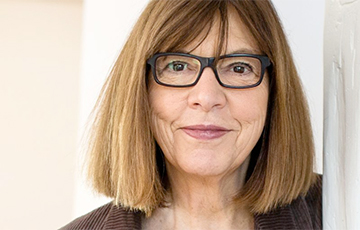
German politician Rebecca Harms, Vice President of the European Centre for Press and Media Freedom and former co-chair of the Greens–European Free Alliance in the European Parliament, spoke with Charter97.org to address these and other issues:
— Since the moment when Maria Kalesnikava decided to stay in Belarus, when she jumped out of the car at the border and ran back to her country, since that very moment, I have her picture on the wall above my desk. It also helped me never forget about Belarus — despite other events that came up in the world in these years. The moment when I heard that she and Ales and all the other 120 brave pro-democratic fighters were released from Lukashenka's Gulag I was so happy for them. It was a moment of very, very deep joy.
But I cannot deny that I felt also the conflict in me when I saw that they were bought free because of United States' interest in buying potash fertilizers from Belarus, by this strengthening Lukashenka dictatorship, his alliance with the Russist regime in Moscow and turning this against the very good western ally, Canada. But for me the freedom of the 123 democracy fighters from Belarus counts in this very moment much more.
I think this issue has to be dealt with by the citizens of the United States. They will go to vote, and judge whether all intentions from Donald Trump and his entourage will be supported, also in the midterm elections.
People who should never have been incarcerated, who survived very awful conditions in prison with unspeakable experience of torture and threats (also to their families outside of the prison) — it is good that they are out and this is my dominant feeling.
— At times, statements by the US president sound eerily similar to Putin when talking about "peace" in Ukraine. How Europe and Germany in particular can navigate through this complicated reality?
— The German government (the second during the lasting Russian war) had to develop the navigation. The Germans alone cannot deliver what is necessary - they have to navigate with the Europeans and within NATO. We, NATO member states, are discussing whether the United States are still with us or whether we have already to face the moment (at least, to come) that the United States is not a reliable ally anymore.
I try to be fair with our German and western governments, especially in Europe, where you have always find common ground towards big challenges — it was not easy to adapt to Russia's full scale invasion. And it took them too long to get where we are now. Probably, because of the clear leadership of the German chancellor on how to deal with the necessary funding for Ukraine and thanks to his readiness to take over the lead in this discussion for the next two years 90 billion euro will be available for Ukraine, for the army and the state. It is less than we hoped for but it is a huge step forward. It is a proof of serious solidarity. The European Union goes into obligation to enable these funds.
There is hesitation on how to deal with and how to use Russian frozen assets in European states but if the EU cannot solve that, it is better to move on with this agreement. This is Europe, I had to deal with this reality for 15 years: once you have a compromise, it works. Mertz stood up for Ukraine and against De Wever and Orbán. It is the second-best solution for the moment, but still a very good solution.
The future of Europe and the security for our states and citizens will be decided in Kyiv and in Ukraine. We have to make sure that Ukrainians are trying to regain momentum against the Russian army at the frontlines. We have and can and must do more to support them.
The first version of the so-called "peace plan" (which looked more like a plan to destroy Ukraine) showed the readiness of some Americans, close to the presidential administration, to help Russians with what they could not achieve militarily (because this "small" Ukraine stands for four years against a nuclear power with one of the biggest armies in the world). Some US dealmakers were prepared to help the Russians achieve at the negotiating table the successes they could not achieve militarily: the destruction of the sovereign Ukrainian state.
We need to help Ukraine to regain momentum and to prepare for a better possible ceasefire and the end of this war. The people who want peace the most are Ukrainians. The Europeans sometimes do not recognize that the nation, which suffers from the war, wants peace, but peace they can trust. To get there we have to invest much more in the Ukrainian army, in arms delivery, in ammunition. If you speak with German soldiers, they always ask, "Why do we not go all in with what we have, to turn the development on the battlefield around?" It would be possible. For me this is the first thing we have to do. We need a decision on how to close the sky above Ukraine. The bomb terror against the cities of Ukraine must end and we have the possibilities to protect Ukrainian citizens.
Security for Europe begins anew with stopping the Russian aggression in Ukraine. I think in all EU countries, you see adaptation to the new situation. It is maybe too slow but nations need their own experience to adapt to new threats. In many of the European states we see good preparations. It is slower than some Ukrainians want to see it — they argue in favor of more speed in preparing our armies. But we see in Germany the new army drafting approach, huge investments in our army equipment, very intense exchange and preparations for defense with other NATO partners, the Baltic States, for example — a lot of things are going on. What Russia did not manage to achieve for our resilience and readiness to defend ourselves was achieved by Donald Trump. Most of our citizens now again understand that the readiness to defend means more security.
— When you talk to military experts — does Europe have the capacity to go all in in supporting Ukraine and to close the Ukrainian skies without the United States?
— I am not an expert, but there are certain sectors where we need some weapons before we have our own production capacities in Europe. In Ukraine we see major investments happening. The latest figures say that Ukraine can already produce 60% of the needs of the army at home from the next year on. But we see that European armies for reasons which are connected to history and development in NATO depend on the United States. So, we will have to buy weapons from the United States. I see, so far, no real risks that the United States won't sell the weapons. They will. Intelligence from the United States is another and very, very important issue.
The moment we can get a ceasefire and an entry into peace for Ukraine is thinkable for me only if we have robust and reliable security guarantees. I would prefer the United States in this, but we can and we have to prepare this with our European armies in a central role. I cannot believe when I hear that we should trust the Chinese or other clear allies of Russia in this war, to guarantee a ceasefire or possible peace in Ukraine — that is unthinkable.
The readiness to go all in with the deliveries of weapons and ammunition to the Ukrainian army is one thing. To go all in also means getting serious about our soldiers on the ground to protect a possible compromise, based on what President Zelensky now had proposed just another time. I do not believe that this porcupine idea of investing only in the Ukrainian army is the ultimate solution. If we really think about the security of the continent, if we say that this is also our war, if our words are true then we cannot escape the necessity and cannot refuse to send our soldiers to protect the compromise because this is about avoiding another war and about the security on the continent.
— As there are doubts about the reliability of the United States, in the long run, what are growing responsibilities of Germany for security of Europe?
— I think Germany has to play a leading role but also we have allies with other EU and NATO states. At the beginning of the full-scale invasion the Germans were so weak that many in Europe lost trust in us again. And clearly, we have to work on the trust of the EU states in central Europe. We ignored their advice on Russia in 2008, in 2014 and in 2022.
We have the huge challenge of establishing a trusted nuclear deterrence. We can do that but only with the French and British in the lead.
So, there are challenges, but what I see as debates between the different governments is promising. There are no miracles happening but if you look into the decisions on how to develop the armies of the EU member states, how to develop the European battle groups, how to find agreement on which country delivers which capabilities. I think we are moving ahead and I would not share skepticism and the impression that Europeans need to have more fear. I think we need trust in ourselves and also in our armies. And we have finally chosen this path.
— In the very beginning of Putin's reign, there was a war in Chechnya, then there was Georgia, then Donbas, then Syria. What will be the next Putin's war after this Russian aggression against Ukraine is somehow paused?
— In 2008 the European Union refused a membership perspective for Ukraine and established an alternative with association agreement. They did it likewise for NATO with the idea of not provoking Russia. Today we see the results of the appeasement
strategy every morning in the news in the pictures from Odesa, Kharkiv, kyiv, from all Ukrainian cities, where people have to survive winter without light and heat. Mostly, Ukrainians are paying the bill for ignorance. I say “mostly” because even with Belarus - what was the result of the appeasement? It was probably not the right way to get the country out of the Russian empire of terror. The half hearted opening towards
Ukraine was not really convincing.
Our failed appeasement strategy makes us responsible for what happened with the Russian aggressions in Europe. The appeasement was not successful. That fact has been understood by the majority of people in the West, citizens and politicians, but not all the consequences of the failures of Western governments are drawn yet. Understanding that Russia is an enemy, not a competitor but a real enemy, must guide us through the next decade.

Bank's name: Bank Millennium S.A.
Address: ul. Stanislawa Zaryna, 2A, 02-593, Warszawa
IBAN: PL97116022020000000216711123
SWIFT: BIGBPLPW
Name of the account holder: Fundacja “KARTA ‘97”
Purpose/title of payment: Donation for statuary aims
You can contact us by the e-mail charter97@gmail.com