

Scientists Have Made An Important Discovery About The Fate Of Troy
- 4.10.2026, 9:11
- 1,216
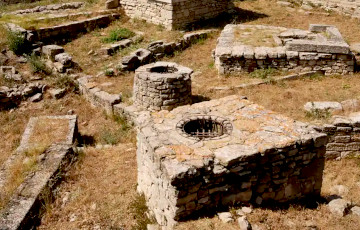
Excavations are underway near the south gate.
Archaeologists working at the ancient city of Troy in Turkey, where a sunken city lies, have uncovered the remains of a 2,800-year-old agora, providing new insights into the settlement’s transformation following the Bronze Age. This is reported by The Daily Galaxy.
Excavations are underway near the southern gate of Troy VI—an important part of the Bronze Age city. The research focuses on the connection between Bronze Age Troy and the later settlement of Ilion, which flourished during the Archaic and Classical periods.
The history of Troy spans about 5,000 years: the city was repeatedly destroyed and rebuilt as a result of military conflicts, fires, and earthquakes.
It is noted that this site gained widespread fame due to its connection to Homer’s *Iliad* and was inscribed on the UNESCO World Heritage List in 1998.
The Lost Marketplace of Troy
The recently discovered agora (marketplace) is located in front of the southern gate of Troy VI. Archaeologists have been studying this site since 2014, seeking to better understand how the early Bronze Age settlement was connected to the later city of Ilion.
According to Reihan Körpe, deputy director of the excavations at Troy, researchers believe that during the Late Bronze Age, this area served as a marketplace. She noted that this same site was later used by settlers who arrived here approximately 80–90 years after Bronze Age Troy was abandoned by its inhabitants. She said:
“We believe that a marketplace was located here during the Late Bronze Age. This agora was revived by settlers who arrived here approximately 80–90 years after Bronze Age Troy was abandoned.”
Importantly, this discovery indicates that the site retained its significance for subsequent inhabitants, who built new structures on top of the older remains. It appears that they did not completely replace the earlier settlement but rather integrated elements of the former city into the structure of their own settlement.
An Ancient City That Survived the Bronze Age
During the excavations, fragments of walls, residential buildings, and a paved road leading from the lower city to the southern gate were discovered. These findings help researchers determine what activities took place at this site after the end of the Bronze Age.
According to Körpe, the pottery shards and amphorae found alongside the architectural remains have been dated to the Early Iron Age. These findings indicate that after the end of the Bronze Age era of Troy, the city was not abandoned for a long period of time.
The remains of the structures also suggest that parts of the walls of Troy VI were reused. New houses were built on top of these earlier structures, suggesting that subsequent communities adapted the surviving urban structures to their needs. Körpe explained:
“This means that Troy was not abandoned for long after the Bronze Age.”
He added that the new settlers built their houses on top of the old ruins and may have reused some of the surviving walls.
The findings provide archaeologists with additional insight into the transition between different phases of Troy’s history—a period that has remained understudied until now.
The name “Troy” has been preserved for centuries
Interestingly, the excavations also shed light on the connection between the ancient names associated with this site. Researchers believe that later inhabitants called their settlement Ilios or Ilion, thereby maintaining continuity with the city’s former appearance.
Körpe noted that the settlers were aware of the city’s former name—Vilusa—and that the later name helped preserve the memory of the ancient settlement.
The current excavation project is led by Rüstem Aslan, who heads the Troy Excavation Committee. As the expedition members explained, the work is being conducted in greater detail and over a smaller area compared to previous studies, including those initiated by Heinrich Schliemann.
Scientists will continue to study the remains discovered near the southern gate to better understand the relationship between Bronze Age Troy, the Early Iron Age settlement, and the later Ilion. The ongoing work adds new insights to the long and complex history of one of the most famous cities of the ancient world.

Bank's name: Bank Millennium S.A.
Address: ul. Stanislawa Zaryna, 2A, 02-593, Warszawa
IBAN: PL97116022020000000216711123
SWIFT: BIGBPLPW
Name of the account holder: Fundacja “KARTA ‘97”
Purpose/title of payment: Donation for statuary aims
You can contact us by the e-mail charter97@gmail.com