
A Belarusian Woman Who Served Time In The "Zeltser Case" Has Published Shocking Details About The Detention Center
1- 4.10.2026, 13:28
- 2,112
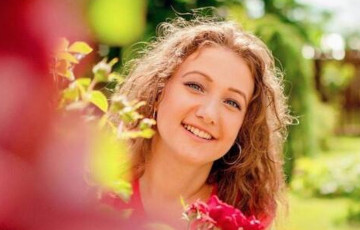
Photo: Viasna Human Rights Center
The post was viewed nearly 20,000 times in seven hours.
Belarusian Olga Skrashchuk was sentenced to two years in prison in the “Zeltser case.” However, she never actually went to prison: her sentence expired while she was in pretrial detention. After her release and departure abroad, she refrained from posting about political topics on social media for some time and did not speak with journalists very often. Now Skrashchuk has resurfaced on Threads, where she has begun discussing the “mentality of the Belarusian repressive apparatus,” writes “Zerkalo”.
Threads user Olga Skrashchuk described her story about the “mentality of the Belarusian repressive apparatus” as follows: “One comment. 50 days of torture. Two years in prison.” As the Belarusian woman notes, she became “one of the hundreds who were rounded up for expressing their opinions online.”
— The first 10 days — Okrestina. Six-hour interrogations at the KGB without food, water, or access to a restroom. Fifteen women in a two-person cell. No mattresses or warm clothes. In the midst of the COVID-19 pandemic, everyone had lost their sense of smell and had sore throats. Women on their periods, who were denied hygiene products, slept piled on top of each other on the freezing floor, huddling close to keep from freezing—this is how Skrashchuk describes the conditions in captivity.
According to the Belarusian woman, they were given food only once a day. And even then, it “made her want to vomit.” And if they were brought back from interrogation later than expected, there wouldn’t even be that much food.
“There were others in my cell who had it even worse than I did,” the former political prisoner notes right away. “One woman was brought in, her body as blue from bruises as electrical tape. They pulled a T-shirt over her head and brutally beat her in one room, while in the next room her husband and son were being beaten in exactly the same way.” Another was transported in chains: her hands and feet in handcuffs, with an iron chain between them, just like a dangerous criminal. For what? For her words and her stance.
Skrachuk believes that all of this is not a series of isolated incidents, but “a system built on the abuse of women, mothers, and families.”

The post resonated with Belarusians: in just seven hours, it was viewed nearly 20,000 times and received over 200 likes (this can be explained by the fact that people inside Belarus are afraid to engage with “political content”).
After her release in January 2023, Skrashchuk left for Poland, where, together with another political prisoner Olga Ritus, she opened hostels. In essence, as the latter explains, they became “dormitories for migrant workers.”
Before her imprisonment, Skrashchuk worked at the National Bank. She previously told Deutsche Welle that nine masked and armed security officers came to arrest her because of a comment she made, and that conditions at the Zhodino pretrial detention center, where she was initially held, were immediately “extremely harsh.”
“It was a ‘re-education quarantine,’” Skrashchuk told Deutsche Welle. “They didn’t give us anything: no toothpaste, no toothbrushes, no sanitary pads, no change of clothes. We sat on bare bars; they wouldn’t let us sleep. The only clothing we had was a sheet, which eventually became completely soaked in blood.” They told us, ‘This is because you didn’t mourn the murdered KGB officer.’
It is precisely these first 50 days after her detention that the former political prisoner considers to be torture. In 2025, Skrashchuk spoke in more detail about the conditions of detention at the Zhodino pretrial detention center to the media project “White Coats.”

Bank's name: Bank Millennium S.A.
Address: ul. Stanislawa Zaryna, 2A, 02-593, Warszawa
IBAN: PL97116022020000000216711123
SWIFT: BIGBPLPW
Name of the account holder: Fundacja “KARTA ‘97”
Purpose/title of payment: Donation for statuary aims
You can contact us by the e-mail charter97@gmail.com