
Xi Jinping Has Decapitated The Chinese Army In Three Years
7- 3.02.2026, 21:25
- 7,116
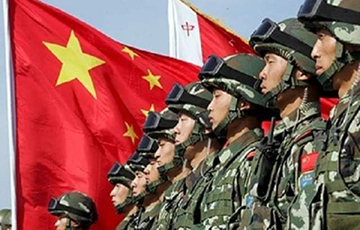
This is an unprecedented step in the history of the Chinese army.
Purges in the ranks of China's generals have left virtually no one in the top ranks of China's armed forces. This calls into question Beijing's readiness for a military operation against Taiwan.
By 2023, Si Jinping, after a decade in power, had built up a top military command of loyalists who were supposed to turn China's People's Liberation Army (PLA) into a world-class army. But in the years that followed, Xi, who in defiance of tradition remained at the helm after 10 years in power, staged a purge of the military leadership unprecedented in modern Chinese history, writes The New York Times. Of the six members of the Central Military Council (CMC), the top military body of the Chinese Communist Party, only one remains in office. And of the at least 30 generals and admirals in charge of branches of the military, theaters of operations, etc., only seven remained in office. The rest have been retired or simply disappeared, including many of those appointed to replace them.
The latest and most impressive episode was the January 24 announcement of an investigation into Colonel General Zhang Yuxia, Xi's right-hand man. The Chinese leader heads the CIA, and Zhang was his deputy. Along with Zhang, Liu Zhenli, Chief of the Joint Staff of the CBC, fell into disgrace; they are "suspected of serious violations of discipline and the law" (the wording usually used in corruption investigations). At the same time, it was Zhang and Liu who were in charge of preparing troops for combat.
Although many less senior officers are also involved in the practical planning of major military operations, the loss of the two most important "operational" commanders at least temporarily calls into question the PLA's combat readiness, the NYT notes.
The 75-year-old Zhang was close to Xi; their fathers fought together during the civil war in the 1940s. Zhang remained one of the few generals with combat experience as he participated in the Sino-Vietnamese conflicts in the 1980s. But that hasn't stopped authorities from accusing him (though not publicly reported) of also passing information about China's nuclear program to the United States, according to people familiar with the contents of a private briefing at which senior Chinese leaders were briefed on the allegations, The Wall Street Journal has learned. Zhang and Liu are also suspected of taking bribes from subordinates in exchange for promotion to top military posts.
Christopher Johnson, a director of the consulting firm China Strategies Group who previously worked for the CIA, including as a top China analyst, told the WSJ, "This is an unprecedented move in the history of the Chinese military, and it means the complete destruction of its top commanders."
The purge affected virtually every branch of the military, including the missile and navy forces, the NYT noted. As well as the leadership of all five theaters of operations, including the Eastern Theater, responsible for operations in the Taiwan area. Xi appointed a new commander of the Eastern Theater at the end of 2025.
The reasons why Xi decapitated the armed forces remain unclear. Johnson notes that while running his anti-corruption campaign, he had long tried not to touch the military leadership, but eventually "realized it was impossible." Lyle Morris, a senior fellow at the Institute for Asia Society Policy Studies, sees Xi's actions as evidence of his strength, not weakness: "He is confident of consolidating his power over the armed forces."
But in any case, the question of the PLA's military readiness comes up, experts say. Xi has ordered the military to prepare the army to take over Taiwan by 2027, then-CIA Deputy Director David Cohen said in 2022. Perhaps the Chinese leader wants to reach an agreement on the Taiwan issue with Donald Trump: they were planning to meet this year after they concluded a trade truce in October. In this situation, Xi may be removing people who might be superfluous in reaching such an agreement.
Zhang, for example, has played a central role in relations with Russia, deepening military cooperation with it and meeting with Vladimir Putin, notes Dennis Wilder, an expert on the Chinese military and former head of China analysis at the CIA.
Because of the scale and complexity of running any large and complex military organization, the current leadership vacuum in the Chinese military makes it unsuitable for the

Bank's name: Bank Millennium S.A.
Address: ul. Stanislawa Zaryna, 2A, 02-593, Warszawa
IBAN: PL97116022020000000216711123
SWIFT: BIGBPLPW
Name of the account holder: Fundacja “KARTA ‘97”
Purpose/title of payment: Donation for statuary aims
You can contact us by the e-mail charter97@gmail.com