
The Ghosts Of The European War
- 30.09.2026, 15:07
- 1,036
Is history repeating itself when it comes to preparations for an invasion?
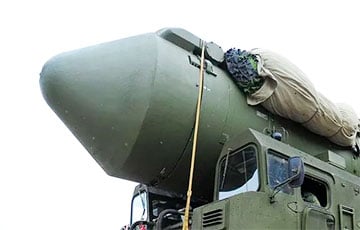
In Europe, warnings are being issued about a growing Russian threat: intelligence agencies are reporting on sabotage and other operations by Moscow, while politicians are discussing possible attempts to “test NATO’s resilience.” The state-run RIA Novosti news agency published—and then removed a few hours later—a column titled “Another Special Military Operation Awaits Russia. It Will Be Very Short,” in which the author speculated about missile strikes on Lithuania, including the use of nuclear weapons.
But what do the real signs of preparations for a major war look like—and is it possible to spot them in advance? The experience in Ukraine shows that a lot can be seen. As early as 2021, Russia was moving troops and equipment to the Ukrainian border, conducting large-scale military exercises, and in the fall began a new buildup of forces. All of this was documented and discussed publicly several months before the full-scale invasion on February 24, 2022. "Novaya Gazeta Europe" reports on how this unfolded.
Troop Deployment to the Border
By early April 2021, Ukraine had reported a buildup of Russian forces along its eastern border and in annexed Crimea. The Commander-in-Chief of the Armed Forces of Ukraine Ruslan Khomchak spoke of 28 battalion tactical groups, meaning 20,000–25,000 troops in these areas.
On April 13, Russia itself acknowledged the scale of the redeployment. Sergei Shoigu announced that, as part of a “routine inspection,” two armies and three Airborne Forces formations had been deployed to the western borders. According to the minister, they were carrying out combat training missions; he described the situation as a response to NATO’s military activity. The inspection was scheduled to be completed within two weeks.
On April 20, Volodymyr Zelenskyy addressed the Ukrainian people:
“Does Ukraine want war? No. Is it ready for it? Yes. Will Ukraine stop fighting for peace through diplomatic means? Never. Will Ukraine defend itself if necessary? Always. Our principle is simple: Ukraine does not start a war first, but Ukraine always stands its ground to the end.
At the same time, the possibility of war was already being discussed publicly back then. On April 21, *Novaya Gazeta* published an interview with military planning expert Vladimir Denisov about scenarios for escalation in the Donbas, along with satellite images of Russian military deployments. In the article, journalist Valery Shiryaev noted that the author could not, “due to corporate ethics restrictions,” write literally about the details of a possible invasion of Ukraine. Therefore, the article used phrases such as “may suddenly intensify,” “the emergence of counteroffensive capabilities,” “the use of forces from neighboring territory,” and “all available means will be used.”
On April 21, Putin delivered an address to the Federal Assembly. Most of the speech focused on domestic policy, but at the end, the president turned to international issues. He stated that Russia would determine its own “red lines” in relations with other states, and that the response to those who crossed them would be “asymmetric, swift, and harsh.”
On April 22, Shoigu announced the completion of the inspection. The troops were supposed to begin returning to their permanent bases the next day and complete the return by May 1. However, the weapons and equipment of the 41st Combined Arms Army were left at the Pogonovo training ground south of Voronezh. The deployment turned out to be prolonged. According to a CSIS study on military exercises and troop movements, the equipment remained in Pogonovo until the end of July.
What’s Happening Now
In 2026, analysts at the Institute for the Study of War warn that preparations for a possible Russian operation will not necessarily be accompanied by the same noticeable concentration of troops as was observed around Ukraine in 2021. The ISW notes that many signs will be difficult to detect if the Kremlin begins preparing for a potential attack on Estonia slowly and gradually. Therefore, analysts suggest paying attention to small changes in the deployment and composition of Russian forces, rather than just signs of preparation for a large-scale invasion.
Military Exercises
The 2021 exercises constituted a separate line of military activity. In preparation for “Zapad-2021,” Russia and Belarus conducted preliminary activities starting in the summer, rather than only during the announced main phase in September. In August, engineering, military police, and logistics units conducted training exercises, including drills on logistical support. Analysts also noted the rehearsal of a field hospital airdrop and the participation of units from the 41st Army, which had been involved in the April exercise. In the “West-2021” scenario, Russia and Belarus presented their actions as a response to an attack by a hypothetical adversary. Experts drew attention to the large-scale offensive operations envisaged by the scenario.
By fall, a new buildup had begun. Researchers at the Digital Forensic Research Lab compared satellite images and video footage of military transport. According to their observations, equipment from the 41st Army—which had previously been spotted in Pogonovo—appeared near Yelnya in the Smolensk Region in October. In the weeks that followed, other units and weapons continued to arrive there. Researchers also documented an increase in military presence in Crimea.
In November, CSIS published its own satellite analysis of new deployment sites for personnel and equipment. This time, the buildup of forces was not linked to the announced large-scale exercises that Moscow had cited to explain the April redeployment.
By mid-December, these developments had prompted an official warning. On December 16, the North Atlantic Council stated that there was a significant buildup of Russian forces near Ukraine’s borders and called for de-escalation.
What’s Happening Now
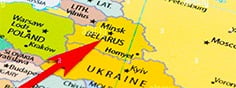
In 2026, military exercises were also held near NATO’s borders. In September, Belarus began four-day maneuvers near the borders of Poland and Lithuania. The military practiced border security, countering sabotage groups, and defending against drones and light aircraft.
Part of the exercises took place near the Suwałki Corridor—the section of the Polish-Lithuanian border between Belarus and Russia’s Kaliningrad Oblast. This corridor connects the Baltic states by land to the rest of NATO. One of the training grounds was located near the border with Lithuania, while others were approximately 15 and 60 kilometers from Poland. The Belarusian Ministry of Defense stated that the exercises were defensive in nature.
Exercises were also held in the Kaliningrad Oblast. On August 6, the Baltic Fleet reported on a training exercise involving coastal missile units. Crews of the “Bal” missile systems moved into position and conducted simulated missile launches at ships representing the enemy. According to the Baltic Fleet, more than ten naval targets were simulated as having been hit during the exercise.
Army Supply and Reserves
It is not enough for a large army to bring in tanks and soldiers: it needs fuel, communications, medical care, and ammunition. DFRLab analyzed video footage of a convoy from the 34th Motorized Rifle Brigade heading toward Crimea in November. Along with self-propelled artillery, researchers identified fuel and other support equipment. There was also a significant amount of artillery equipment in Crimea following the spring deployment.
In August 2021, Russian media reported on the rapid expansion of the Army Combat Reserve (BARS) program. *Nezavisimaya Gazeta* quoted a representative of the Southern Military District regarding plans to increase the reserve to approximately 38,000 people (previously, according to the publication, the reserve consisted of 400 people).
What’s Happening Now
In 2026, Russia expanded the scope of military reserve operations. Since the beginning of the year, reservists who have voluntarily signed a contract with the Ministry of Defense can be deployed to special training sessions for the protection of critical infrastructure. Vladimir Putin signed a decree on holding such training sessions in 2026 on December 30, 2025.
In July 2026, Volodymyr Zelenskyy stated that, according to Ukrainian intelligence, Russia was preparing for a significant mobilization of reservists in the fall. According to him, between January and July, the Russian army recruited about 221,000 people, while Ukraine estimated its losses during the same period at approximately 222,500 killed and wounded. The ISW noted that Russia had been laying the groundwork for new reservist mobilizations since at least the fall of 2025.
At the same time, Ukraine reported the possible arrival of new foreign troops. According to Zelenskyy, Russia had been preparing bases in the Voronezh region since June to accommodate approximately 30,000 more troops from North Korea.
Sabotage
Throughout 2021, Ukrainian and Russian intelligence agencies repeatedly reported on thwarted sabotage attempts and espionage operations. For example, the SBU stated that in February 2021, it exposed an FSB spy network operating in several regions of Ukraine, which, according to its information, included former Ukrainian special forces soldiers. According to the SBU, members of the network gathered intelligence on the Armed Forces of Ukraine, attempted to recruit military personnel, and planned sabotage operations, including against military aircraft at the Kulbakino airfield. Ukrainian authorities opened criminal cases on charges of treason, terrorism, illegal possession of weapons, and espionage.
In September, the SBU announced the discovery of a cache of anti-tank mines and explosives near the Druzhkivka railway station in the Donetsk region. According to the security service, it was set up by members of the “DPR” armed groups to carry out sabotage.
In 2021 alone, Ukrainian counterintelligence identified more than 80 suspected agents and spies and opened over 130 cases under articles related to treason, espionage, and terrorism. More than 60 people received various prison sentences, and over 20 suspected agents of Russian intelligence services were detained in connection with the preparation or attempted acts of sabotage.
What’s Happening Now
In 2026, European countries continued to investigate acts of sabotage linked to Russian intelligence services. In August, a building belonging to the defense company Milrem Robotics—which manufactures military robotics and supplies them to Ukraine—was set on fire in Tallinn. On September 29, Estonian authorities stated that they believe the arson was an operation ordered by Russian intelligence services.
On September 23, a Starlink satellite ground station was set on fire in Poland. Polish prosecutors believe the goal was to disrupt communications in Poland and other countries in the region. Investigators suspect that the perpetrators were acting on orders from Russian intelligence agencies.
Another incident occurred in August at the Leipzig/Halle Airport in Germany. A drone carrying explosives crashed into the wing of a Ukrainian An-124 cargo plane but did not explode. German authorities investigated the incident as an attempted act of sabotage, and the German government later linked it to Russia.
Political Climate
In parallel with the military buildup, Russian authorities intensified pressure on independent media and the opposition. Throughout 2021, “Meduza,” “Dozhd,” and “Vazhnye Istorii,” among others, were designated as “foreign agents.” “Proekt” was declared an “undesirable organization.”
In September, a list of unclassified information regarding military and military-technical activities was approved; the authorities considered the disclosure of this information to foreign recipients to be a potential threat to Russia’s security. The list included, among other things, data on troop deployments and equipment, weapons storage locations, and procurement
What’s Happening Now
In 2026, Russian authorities continued to expand the “foreign agent” registry. According to Human Rights Watch, 197 individuals, organizations, and projects were added to the registry between July 2025 and July 2026. In September, the Ministry of Justice added, among others, *Novaya Gazeta* to the registry.
In addition, the authorities expanded their blocking of VPN services and other methods of circumventing internet censorship. Human rights activists also noted an increase in criminal cases against journalists, activists, and other critics of the Russian authorities, including those located outside the country.
Propaganda
The most vivid source for reconstructing the propaganda groundwork for the aggression is Putin’s own statements. On July 12, 2021, Putin published an article titled “On the Historical Unity of Russians and Ukrainians.” In it, he contested Ukraine’s independent political path and described its rapprochement with the West as a problem for Russia.
The text stated that “modern Ukraine is entirely and completely a product of the Soviet era,” and that the country “was created to a significant extent at the expense of historical Russia.”
Meanwhile, Russian state media sent mixed signals. On April 11, 2021, RT Editor-in-Chief Margarita Simonyan stated on the program “Evening with Vladimir Solovyov” on “Russia 1” that in the event of a “hot war,” Russia would defeat Ukraine “in two days” and spoke of suppressing Ukrainian “firing positions.”
By the end of the year, as the West warned of a possible invasion, Russian officials denied this on television. On December 3, Konstantin Kosachev, deputy speaker of the Federation Council, stated on “Russia 24” that Russia “has no plans whatsoever to attack Ukraine.” He also said that Russia was “not preparing to carry out any kind of offensive operation.”
What’s Happening Now
In 2026, threats against the Baltic states continued to be aired on Russian television. On January 20, on the program “An Evening with Vladimir Solovyov” on “Russia 1,” former Latvian Member of the European Parliament and participant in Russian propaganda TV shows Andrei Mamikin suggested using the Baltic states as targets for an “Oreshnik” missile strike: “If we’re going to practice with the ‘Oreshnik’… let’s target the Baltic states. Because we don’t care about them.” Solovyov replied: “Oh, really!”
At the same time, Russia denies any desire to attack Europe. On July 8, Margarita Simonyan stated that claims that Russia is preparing for war with Europe are “untrue.” On August 27, Dmitry Peskov said that reports of a possible Russian attack on a NATO country “have nothing to do” with Moscow’s intentions.
Foreign Policy
By December, the rhetoric had become more strident. At a meeting with the Human Rights Council on December 9, Putin compared the events in Donbas to genocide. On December 21, speaking at a meeting of the Defense Ministry’s leadership, he described the possible deployment of U.S. and NATO missiles in Ukraine as a serious threat to Russian security.
Also, on December 17, Moscow published draft agreements with the U.S. and NATO. Russia demanded, in particular, a halt to the alliance’s further expansion and restrictions on its military activities in Ukraine.
Ukraine responded that Moscow cannot make decisions regarding its relations with NATO. Volodymyr Zelenskyy noted that the issue of Ukraine’s membership in the alliance must be decided by the Ukrainian people and NATO member states, not by a third country and not under the threat of “red lines” set by that country.
What’s Happening Now
On September 1, 2026, Russian Deputy Foreign Minister Alexander Grushko stated that Russia has no reason or plans to attack NATO countries.
“Why would Russia attack NATO? That’s the question. Even the USSR recognized the independence of the Baltic states. And they left peacefully. Why attack them now?” he said.
According to him, the West demonizes Russia and “attributes all sorts of intentions to us.”
“And if we look at military strategies, military-building practices, military-strategic objectives, procurement programs, and the logistical development of the eastern flank, then, of course, one cannot help but conclude that the West is preparing for a military confrontation with Russia. And in this sense, this policy does not involve seeking a new balance in relations with Russia,” Grushko noted.
At the same time, in the Ankara Declaration of July 8, 2026, NATO designated Russia as a long-term threat to Euro-Atlantic security and stability. In response to this threat, the alliance’s member states announced increased defense spending, new arms purchases, and the development of air and missile defense systems, unmanned systems, and capabilities for delivering long-range, high-precision strikes.

Bank's name: Bank Millennium S.A.
Address: ul. Stanislawa Zaryna, 2A, 02-593, Warszawa
IBAN: PL97116022020000000216711123
SWIFT: BIGBPLPW
Name of the account holder: Fundacja “KARTA ‘97”
Purpose/title of payment: Donation for statuary aims
You can contact us by the e-mail charter97@gmail.com