
Head of European Democracy: We Will Completely End Cooperation With the Lukashenka Regime
27- 28.12.2020, 14:04
- 54,468
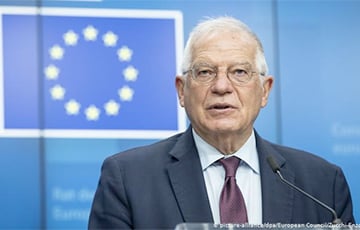
Photo: DPA
Belarusians deserve that their struggle is in the EU's current priorities.
How does Brussels see Belarus? How will the European Union act if the situation in Belarus does not improve? Belsat journalist Ales Silich recorded an interview with Josep Borrell, the EU's high representative for foreign policy and security, that is, in fact, with the EU foreign minister. The Spanish politician is also vice-president of the European Commission - one of the most influential figures in a united Europe.
- The crisis in Belarus must be overcome exclusively by peaceful means, with the obligatory preservation of Belarusian sovereignty and independence and in accordance with the democratic aspirations of the Belarusians. Democracy and the rule of law sometimes require a long-term struggle, and this process is slow. But Europe is even better aware than other regions of the world that this process will succeed in the end.
- How can the European Union help Belarusians survive this night of repressions and dictatorship?
- First of all, let me emphasize the fact that the EU's support of the Belarusian people has nothing to do with our geopolitical preferences or interests; it is a simple desire to support the Belarusians in the exercise of their right to choose whoever they will entrust the leadership of the country to: not to "fall," so to speak, towards the European Union or, on the contrary, Russia, but firmly and democratically to stand on our own feet. Belarusians deserve that their struggle for freedom and democracy be in the current priorities of the European Union, on its agenda. So, from our side, we are trying to increase pressure on the Belarusian authorities, we freeze relations, we impose sanctions, and we are ready to go this very path in the future if the situation does not improve. We will completely stop cooperating with the regime. If necessary, we will stop it in many directions. At the same time, we will increase the level of cooperation with the Belarusian people, civil society while preparing a plan to support democratic Belarus, which will begin to be implemented at the moment (I emphasize that I say "at the moment," not "if suddenly") the time comes.
- Can Belarus count on solid assistance from the European Union if changes do occur? The process of democratization will begin in Belarus. Can we talk about a certain kind of "Marshall Plan"? Some experts talk about amounts of several hundred million euros, even several billion.
- You know, the European Union is not a magician with a magic box in his pocket. But I would like to note that the heads of the EU countries, at the highest level, expressed their determination in practical support for the process of a democratic and peaceful transfer of power in Belarus. For example, the European Union has already decided to mobilize a rather large package of support for Belarus's democratic community, which is 33 million euros, to strengthen this community and help it get through difficult times. These funds will be directed, in particular, to law enforcement organizations, victims of repression - to help them with medicines, legal, financial, and medical support.
As for the next stage in this process of the so-called "comprehensive plan of economic support for Belarus," it is now at the stage of preparation and will be publicly available if Belarus takes the democratization path. And therefore, at the moment, and this is understandable, I cannot tell you any specific figures for the Marshall Plan for Belarus, but you can believe that it is being developed in accordance with the needs of Belarus. This support, I have no doubt, will be significant and essential. In addition to financial support to Belarus, the EU hopes for much deeper political, social and economic cooperation with your country. Perhaps for an association agreement, which we, for example, have with Ukraine.
We can also start negotiations on a bilateral agreement between the European Union and Belarus, on the more active participation of Belarus in many EU programs and projects, the involvement of Belarusians in the implementation of regional programs of the European Union in the fields of culture, research, digital energy within the framework of the Eastern Partnership and beyond. Expand various contacts between the EU and Belarus citizens, offer Belarusians European scholarships, thus drawing them into the pan-European processes. European Commission President Ursula von der Leyen has already announced the allocation of "the first package for Belarus" - four million euros, which the EU member states can instantly mobilize, and we are going to prepare further parts of this support package for Belarus as quickly as possible. I hope the next part of the help package will be ready at the beginning of 2021.
- The most popular word that we hear in Brussels, from your lips, from the lips of your colleagues, is the word sanctions. What is the main purpose of the sanctions? What do you want to achieve with their help?
- Sanctions are just part of the "diplomatic toolbox," so to speak. And apart from other tools, they never make sense since they are introduced temporarily to end something. In the case of Belarus, put an end to humiliation and disrespect for fundamental values that we all share in the EU. The introduction of sanctions demonstrates that the European Union is ready to go beyond the usual statements and take certain measures. Not only us - other countries also apply sanctions to the Belarusian authorities: Switzerland, Norway, Iceland, as well as Canada and the United States. Thus, we are all together sending a message of our support for the democratic rights of the Belarusian people, as well as a sign of condemnation of the actions of the Belarusian authorities that we have seen.
- About the third package of sanctions. What are the exact names on the blacklist?
The European Union has already imposed earlier sanctions on 55 people responsible for repression and intimidation of citizens of Belarus, as well as violations in the conduct of the electoral process in Belarus. We, as you noted, have already adopted the third package of sanctions, in the lists of which there are not only 29 new names, but also 7 names of enterprises (I will emphasize separately - this time we extend sanctions not only to people, but also to businesses) supporting Lukashenka's regime and receiving dividends from it. Those on the European Union's sanctions lists will no longer be able to travel to any EU member state, and all their accounts in these countries, if any, will be frozen. I believe these are strong restrictive measures that define our strong message to the Belarusian authorities aiming to induce them to a broad national dialogue.
- If these sanctions do not work, what will be the next step of the European Union?
Targeted sanctions are just one of the tools that the European Union has. And we have not yet applied other instruments, made other efforts, or used our other capabilities. Of course, we can continue with the sanctions, continue to use this instrument in the future, and with a much stronger intensity. If Belarus's situation continues to deteriorate, we will continue to add more and more people and business enterprises to the sanctions letters. More and more businesses will be sanctioned. The sanctions themselves include various measures: diplomatic pressure, international mechanisms for the promotion and protection of human rights, and financial support of the Belarusian people. We cooperate with the most international structures and organizations to ensure the investigation of human rights violations in Belarus. I will repeat at the end of the conversation: the main goal of our efforts is to overcome the crisis in Belarus peacefully, ensuring respect for the Belarusian people's rights. And we would all like to see this happen as soon as possible.