

AFU Liberate One Settlement After Another
7- 27.06.2023, 8:10
- 29,376
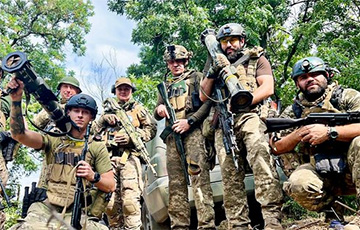
The situation on the front is changing rapidly.
Ukrainian forces have launched an offensive, active operations have been underway for three weeks and there have been real gains in some areas. RBC-Ukraine reports on developments on the fronts.
Eastern front. Defence forces march towards Bakhmut
On the eastern front, troops continue to advance towards Bakhmut. Offensives are taking place in the area of Orekhovo-Vasylivka, Bohdanivka, Yahodne, Kleshchyivka, Kurdyumivka and indeed Bakhmut itself.
Deputy Defence Minister Anna Malyar said that in the last few days the forces had advanced from one to two kilometres in each direction.
"Now the troops are consolidating on the lines they have reached and continuing to destroy the enemy," she said the day before.
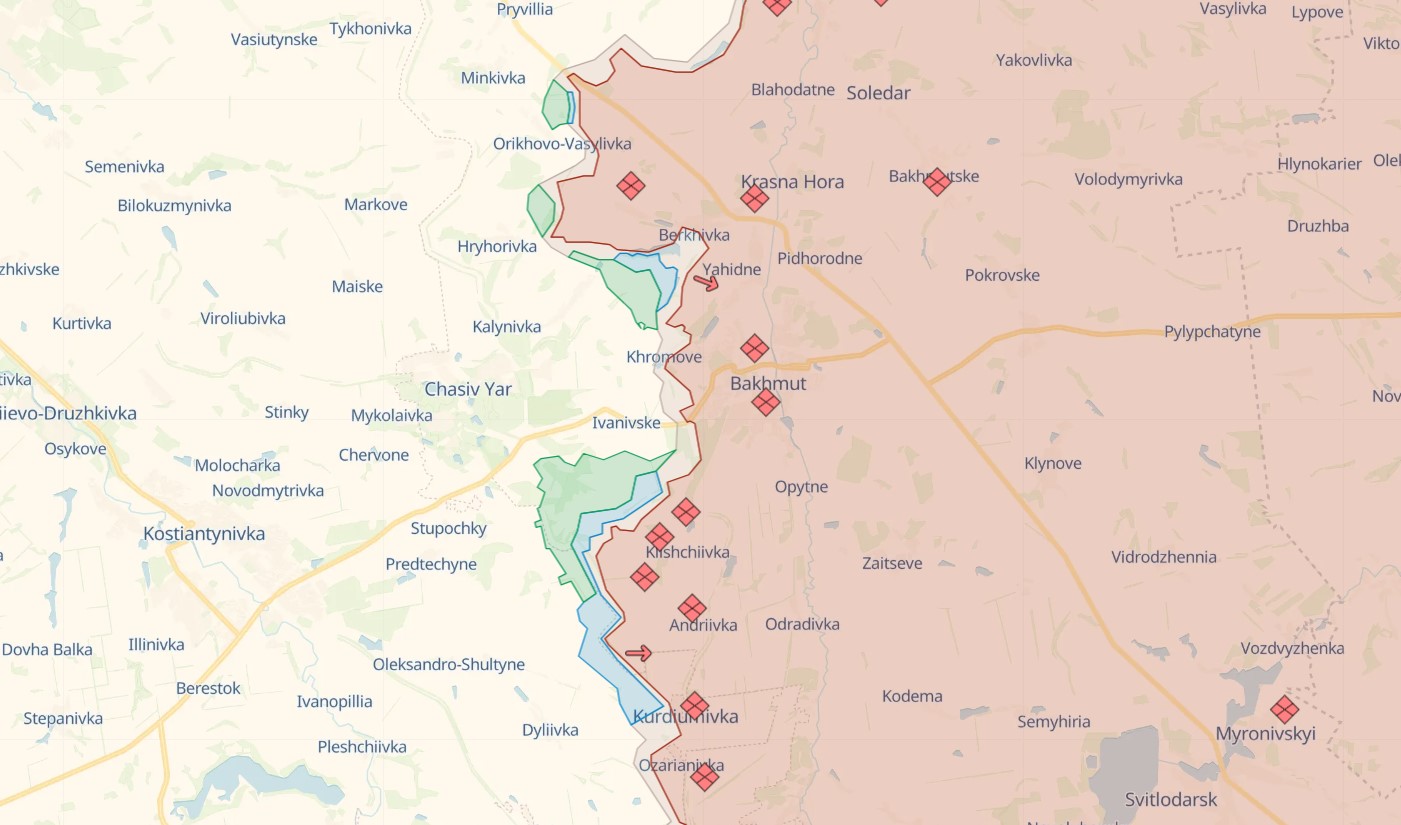
According to DeepState's map service, the Ukrainian military is gradually pushing back enemy positions to the south and north of Bakhmut. British intelligence estimates that there are gains on both flanks in a multi-brigade operation. And at the moment there is no evidence that Russia has any operational reserves to deter the AFU.
The 3rd Independent Airborne Assault Brigade defeated units of the 57th OMsBr of the Fifth Army of the Russian Eastern Military District near Bakhmut. Ground Forces Commander Oleksandr Syrsky also confirmed the clearing of the occupiers' bridgehead on the western bank of the Seversky Donets-Donbass channel between Mayorsk and Kurdyumivka (this area is closer to occupied Horlivka).
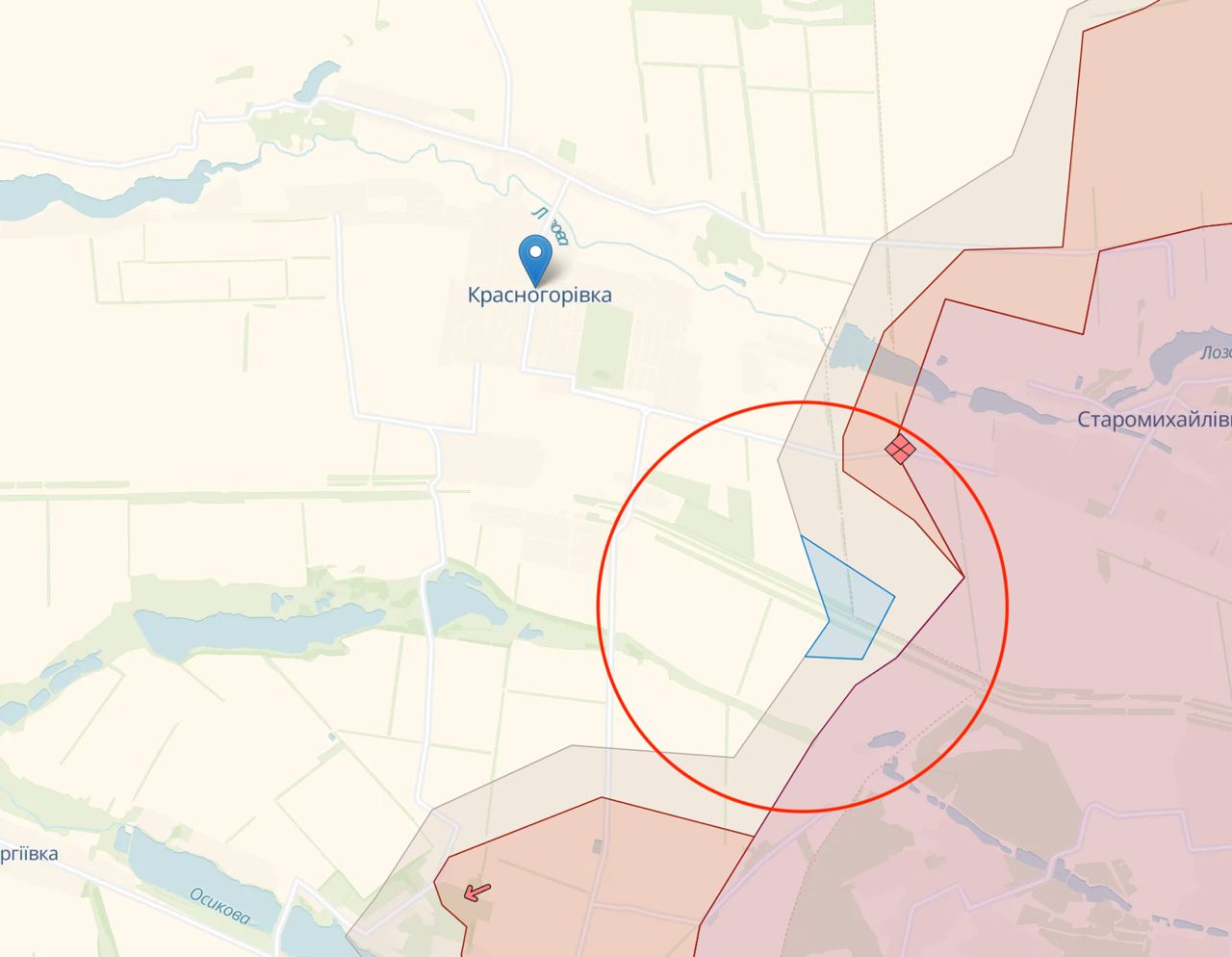
They also managed to retake positions near Krasnohorivka (Donetsk region), which had been occupied since 2014. The press centre of the Tavria Defence Forces said this was the result of a well-planned counter-attack. Moreover, the enemy had been driven out a week earlier, but the news was not announced for tactical reasons.
Despite this, the enemy continues to advance towards Lyman, Bakhmut, Avdiivka and Mar'yinka, where heavy fighting is taking place. Last week alone, there were about 250 clashes here, but our fighters are repulsing all attacks.
Speaking to RBC-Ukraine, Serhiy Cherevaty, spokesman for the eastern group of forces, stressed that the AFU had the initiative in the direction of Bakhmut, which was able to counterattack due to better training of units and commanders, without having an advantage in manpower and equipment.
"In the past 24 hours (25 June - ed.), we have destroyed 153 occupants and taken six more hostages. We destroyed two SAUs - Acacia and Gvozdika - 13 guns, an amphibious assault vehicle, four drones, a UAV control post and an anti-tank missile system," he said.
In the direction of Lyman-Kupyansk, the enemy is trying to advance, but all attacks have been repulsed. The enemy's losses totalled 99 killed and 152 wounded, while two more were captured. Two APCs, a BMP, an Msta-S self-propelled gun, a D-20 howitzer, a mortar, a truck with ammunition and six kamikaze drones were also destroyed.
Cherevaty notes that the defence forces defeated the Wagner PMC in Bakhmut, and now our troops are facing units of the Russian airborne troops, infantry, the combat reserve of the Bars army, some private military companies such as Fakel, Patriot and Veterans, as well as the so-called "Z-companies" with prisoners of war.
"Numbers are probably the only serious indicator that prevents us from maximising our success. But it is not an advantage because we are basically levelling it. Their numbers and equipment are still quite high, but they are not trained, motivated or properly equipped," Cherevaty added.
Southern front. Ukrainian forces liberate village after village
The defence forces are advancing most rapidly on the southern front. Some 130 square kilometres of territory have been liberated since the start of the offensive, including 17 square kilometres in the past week.
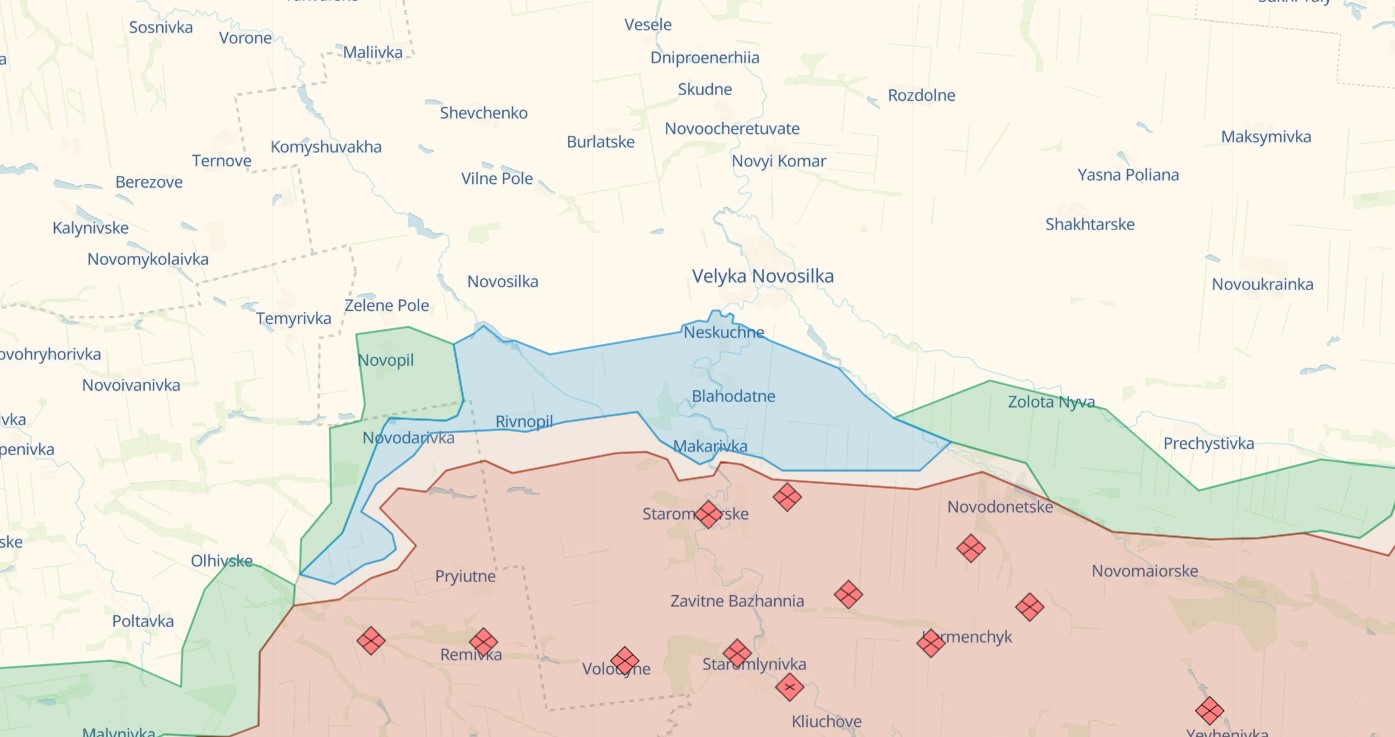
In total, control has been regained over 9 settlements in the south. These are the villages of Lobkove and Pyatykhatki near occupied Vasylivka (Zaporizhzhia region), Levadne and Novodarivka, and Neskuchne, Storozheve, Makarivka and Blahodatne near Velyka Novoselka (Donetsk region).
Yesterday it was announced that Ukrainian forces had also liberated Rovnopol in the Donetsk region. Soldiers of the 31st separate mechanised brigade even recorded a video to this effect.
The liberation of Rovnopol indicates that the defence forces are stepping up pressure and offensives in the area. According to Olexander Musiyenko, head of the Centre for Military and Legal Studies, fighting in the direction of Berdyansk has been going on for several days since the start of the operation.
At the same time, he stresses that the enemy is continuing to put up resistance, and that it is unlikely that other populated areas will be quickly retaken. Much will depend on the progress of our troops in the offensive.
"But so far there is no tendency for the enemy to retreat very quickly, shall we say. We have to push them back by fighting. But it is not excluded that it will appear in the future if further successful actions are taken in this direction," he added in an interview with the newspaper.
There have also been some successes in the direction of occupied Melitopol. Serhiy Telyatitsky, head of the Joint Centre of Defence Forces in the Tavria direction, told RBC-Ukraine that Ukrainian troops had advanced 1.5 kilometres here in recent days.
As for Mar'yinka and Avdiivka, the enemy is trying to attack in small groups of 10-15 people, but each time they are repulsed and retreat. On 25 June alone, a total of 146 occupiers were killed, another 229 wounded, and 15 pieces of military equipment and weapons destroyed in the Tavria direction, he added.
Ukrainian forces crossed the Dnipro River near Kherson?
The other day, so-called Russian "war correspondents" reported the landing of Ukrainian landing troops on the left bank from the side of the Antonovsky Bridge. The "Ostashko! Important" released a video purporting to confirm the crossing of the Dnipro. There is heavy fighting in the area.
Some reports say that the Ukrainian military has held a small bridgehead for several days. And the Russians have withdrawn with losses due to the threat of encirclement.
Propaganda channels are spreading information about an alleged landing on the left bank of a group of up to 50 people, who are building up their forces and expanding their zone of control. A video of the fighting has also been posted online. Noelreports and GeoConfirmed OSINT projects have confirmed its veracity. The footage includes an APC which is believed to have provided cover for the Russian units as they withdrew.
A cable channel close to the Russian Ministry of Defence, Rybar, writes that Ukrainian forces have allegedly dug in at the bridgehead and are using the structures of the Antonovsky Bridge to protect themselves from attack by the occupying forces.
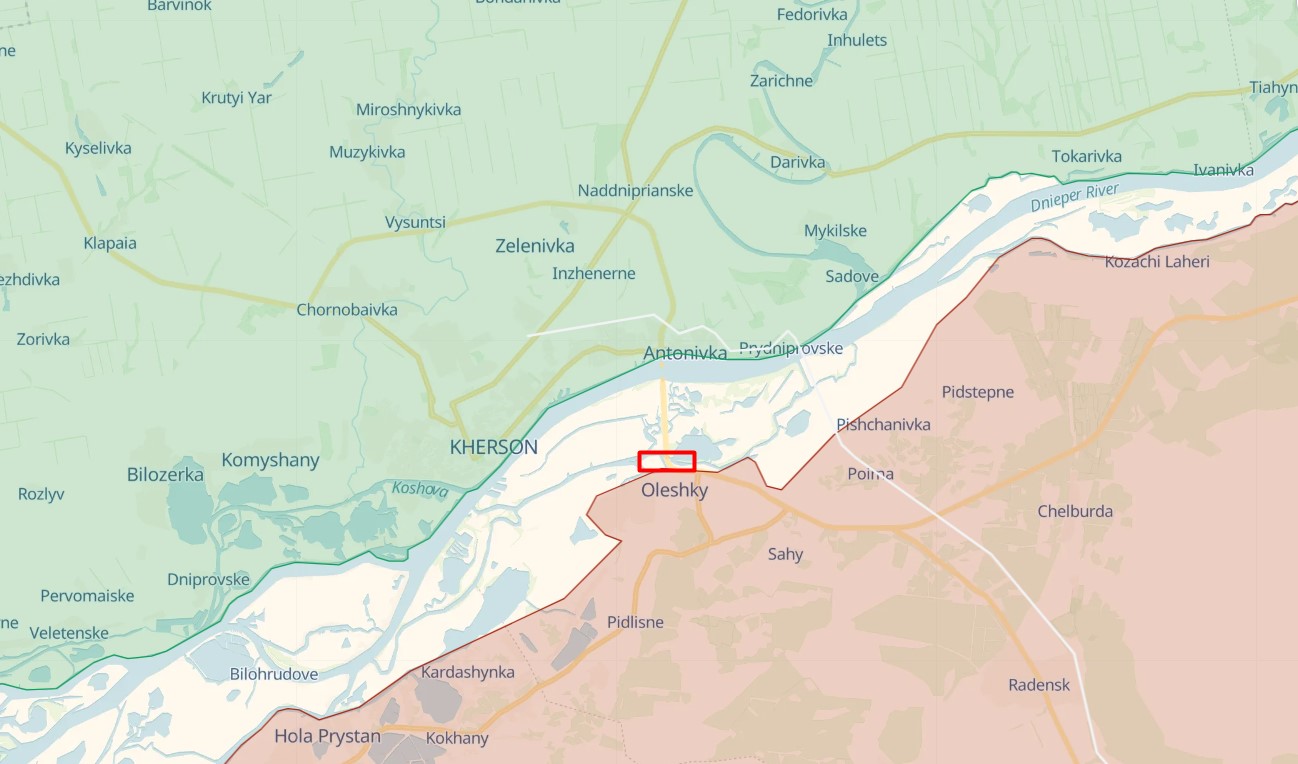
It should be noted that the Ukrainian side did not report the landing of fighters on the left bank until the evening of 26 June. Experts are also reluctant to comment on this episode, waiting for official data.
Oleksandr Musiyenko points out that if there really was a landing, it would prove that the bridgehead on the left bank of the Kherson region had been explored.
"So the defence forces are advancing on several fronts. And most importantly, they are operating on their flanks. This is what really matters," the interlocutor said.
What the West is writing about the Ukrainian offensive
The American edition of The New York Times believes that despite the use of Western weapons, the Ukrainian defence forces are encountering difficulties. In particular, the advance is being slowed by minefields, open steppe, artillery and Russian warplanes. The publication quoted a senior US military official as saying that after the loss of at least 17 Bradley fighting vehicles, Ukrainian troops had paused to assess new breakthrough methods.
In addition, the pace of offensive operations is slower than desired. But he warns against hasty judgments. According to the NYT, Ukrainian forces are trying to divide the occupied territory in the south into two zones by cutting the land bridge to Crimea and creating a bridgehead for further action. This would require a distance of about 100 kilometres to the south.
The paper also notes that Ukraine has advanced where the troops have received the least Western weapons. And the pause in the Zaporizhzhia region may be because Bradley and Leopard 2 tanks were allegedly "deliberately deployed in areas where Russian defences were stronger".
Experts interviewed by RBC-Ukraine said that the information published in the Western press should not be completely trusted. It is better to rely on the official statements of the same defence minister, Oleksiy Reznikov, who said that, by and large, the counter-offensive had not yet begun and that the events of recent weeks were only the first steps.
Military expert Oleksiy Hetman points out that "talk about successes and failures in the Western media is the opinion of individual representatives of individual media, not the military and political leadership of Ukraine's partner countries. And it is possible that the opinion of journalists is fuelled by some interests from Russia, so one should take the publications with a pinch of salt.
"It seems that the Russians are trying to put pressure on our partners to reduce aid to our armed forces. It is said that the aid is useless, that the Ukrainian army is incapable of launching strong offensives, that it is better not to arm us, but to make us think about peace talks. What should we negotiate? To leave the territories occupied by Russia and then peace will come. They do not agree to withdraw their troops from these territories. They think it is impossible because their constitution already says that these territories are part of Russia. Complete nonsense," he said in comments to RBC-Ukraine.
Musiyenko believes that the Ukrainian command has two plans: the first is for the Russians' defences to collapse under the fire of the Ukrainian armed forces, while the second is for an offensive under heavy fighting.
"Everything is going according to the second scenario. Is it a disaster? Not at all. The logic is as follows: cut into the enemy's defences, break through them, create corridors to bring in more reserves, tanks and armoured vehicles, and then continue the offensive," he said.
The important thing is that the Ukrainian troops will carry out flanking operations. It would be easier for the West to understand this, the expert believes, if the British, fighting against Erwin Rommel in North Africa during the Second World War, defended the Suez Canal and passed through German minefields.
"We are trying to do almost the same thing, only in our conditions. I can say that the goal of the Ukrainian Armed Forces is to minimise losses. In the future, with the help of flanking operations and the use of more equipment, we will be able to put pressure on the enemy and achieve the objectives of a counterattack," Musiyenko concluded.