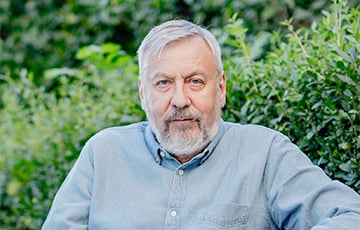


Alexei Melnik: The Resource Of Those Willing To Fight For Putin Is Exhausted
12- 14.10.2025, 21:18
- 18,610
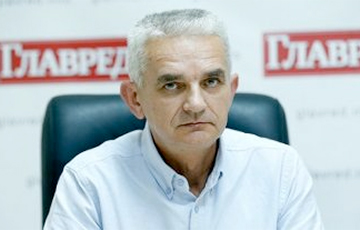
Photo: Glavred
Kremlin's promises to 'become a millionaire' end with Ukrainian drone encounter.
The Kremlin is preparing to drop two million more Russians into war. The new law will allow Putin to use the mobilization reserve without declaring mobilization or martial law. Experts believe that this shows the colossal losses of the Russian army and the crisis of manpower on the front.
What does Putin's move mean? Is the Russian army really short of men, or is Moscow preparing a new offensive operation? For a commentary, Charter97.org turned to military expert, co-director of foreign policy and international security programs at the Razumkov Center in Kiev Alexei Melnik:
- These actions are an attempt to mobilize without mentioning the word "mobilization," which after the so-called "partial mobilization" causes irritation among the Russian population. This is an unsophisticated trick that the Kremlin is now trying to pull off.
Is there a shortage of personnel in the Russian army? Recently, a decrease in the number of those willing to sign contracts has been recorded. And this was even against the background of those space bonuses for most Russians, which in some regions exceeded three million rubles. These sums were periodically changed - increased, decreased. But even for such money the resource of those willing to sign contracts was already exhausted.
The reasons for this are well enough analyzed, because the feedback channel became so powerful that potential contractors - people who still had some remnants of reason - understood perfectly well: all these beautiful stories about the chance to become an instant millionaire and close all financial problems turn out to be a 13-day cycle of life - from the moment of signing a contract to meeting a Ukrainian drone on the line of contact. So the rivulet has slowly shallowed .
The resource that was from prisons was also picked up. Debtors did not become less, but they have already started to think a little. That said, about thirty thousand people with a little plus a month were still being picked up .
There have been several reports in recent days that the original payments, which were in the millions, had to be cut drastically because the money seems to have run out in the budget. So something has to be addressed. And the solution is, among other things, to work with those who have already been mobilized and serve alongside conscripts. But all of this in sum, apparently, does not provide the human resource that is necessary for the further advancement of troops.
Plus there is also a geopolitical factor. Interesting things are happening in Washington right now. More specifically, in the mind of the President of the United States, Donald Trump. It seems that the process of re-evaluating Trump's policy, or, one could say, strategy towards the Russian-Ukrainian war started immediately after the meeting in Alaska. We are already registering changes in Trump's rhetoric - not only of himself, but also of his inner circle. And even statements about concrete steps, which, according to Trump's calculations, will be more convincing to Putin than the "carrots" and "cookies" that he tried to offer in exchange for a ceasefire.
If we talk about the size of the new intake, two million is only the roster. How many of these reservists are actually on Russian territory is unknown. Probably the majority. However, it is clear that it is unlikely to be all two million.
Based on the experience of the previous "partial mobilization" in 2022, Russia was then able to put about 300 thousand people under arms in a short period of time. This is the real volume that the Russian system is able to process in a limited time. Therefore, the figure of two million looks unrealistic, but 300,000 is quite possible.
- What kind of reaction inside Russia can such actions of the Kremlin cause?
- It is unlikely that even in the Kremlin itself someone can unequivocally answer this question. Lines at the border, as in 2022, will most likely no longer exist - the relevant preventive work has been done in advance. Reservists may try to leave, but they will simply not be allowed out.
The system of electronic summonses has recently been launched, which also applies to conscripts. Now even those who simply want to leave the country will not be able to do so. Figuratively speaking, with a single movement of a computer mouse, summonses can be sent out, after which citizens are automatically blocked not only from traveling abroad, but also from many other rights, and serious administrative inconveniences are created. The Russian authorities, at least, have already solved this problem.
As for the reaction of society, this is a complicated question. Russians can limit themselves to the formula: "Well, yes, I don't want to go to war, but where will I go?". They will go wherever they are told to go. This is one of the probable scenarios.
Nevertheless, it cannot be ruled out that local centers of resistance may emerge in some regions or at the individual level. However, this is only a hypothesis. In order to understand what the real reaction will be, it is necessary to wait for the practical implementation of these decisions.
It is absolutely obvious that the new mobilization will be another deception. According to the project in question, reservists are mobilized for a period of two months. But if no truce is reached during this time, no one will let them go. Most likely, the fate of the same "chmobiks", as the mobilized of 2022 were called, awaits them. That is, this draft will actually become indefinite.

Bank's name: Bank Millennium S.A.
Address: ul. Stanislawa Zaryna, 2A, 02-593, Warszawa
IBAN: PL97116022020000000216711123
SWIFT: BIGBPLPW
Name of the account holder: Fundacja “KARTA ‘97”
Purpose/title of payment: Donation for statuary aims
You can contact us by the e-mail charter97@gmail.com