

Why Science Does Not Reciprocate Lukashenko's Favor
12- 21.11.2025, 14:44
- 6,574
There are no breakthrough discoveries for three pennies.
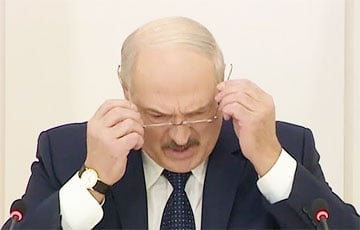
On Friday, Lukashenko gathered Belarusian scientists for a big meeting to ask them for breakthrough discoveries. Characteristically, it's not the first time he's asked them. Lukashenko has been demanding breakthrough discoveries from science for a long time, but science does not reciprocate him. And, as the world practice shows, it will not reciprocate. Because science is an expensive pleasure. And there are no breakthrough discoveries for three kopecks, writes planbmedia.io. But Lukashenko explained who scientists should take from. After all, if scientists are so smart, why don't they walk in formation?
Give me great discoveries
Lukashenko started the meeting with the most important thing. That is, with the financing of scientific developments. And, so that the gathered scientists had no illusions in this life, he immediately explained that money is not the main thing.
"The status (of a scientist) is not salary and money. Therefore, look for the status of a scientist in yourself," said Lukashenko.
That is, there is no money, but you hold on. Because the country needs breakthrough technologies, but Lukashenko needs money even more. Therefore, if any breakthrough technologies happen among Belarusian scientists, Lukashenko will pay them some money.
"Stand up and say - who hasn't been paid for great discoveries. If there are such people, we'll make decisions at once!", - he promised.
In general, breakthrough technologies in the morning - money in the evening, breakthrough technologies in the evening - money in the morning. First discovery - then financing. You could say it's practically a market scheme. I mean, it's a bazaar scheme. That is, corresponding to Lukashenko's understanding of market relations. Let me feel it with my hands first, otherwise why will I pay for something I don't know what for?
That is, an exclusively practical approach. The only pity is that it doesn't work. At least in science. Modern science is expensive. The global growth in science spending is far outpacing the growth of the world economy. Since 2000, in China, spending on scientific research has increased twentyfold. In Europe and the U.S. increased three times.
So no Kulibin will not make any great discoveries in his garage. Great discoveries require expensive equipment. And a little bit to pay Kulibin himself.
And there is no money
"A lot of state funds are spent on financing scientific research, but we do not see the proper return," Lukashenko complained in August this year.
Lukashenko complains regularly that he spends a lot of money on science, but science does not reciprocate. And, of course, he lies. At least about a lot of money.
Belarus spends 0.6% of GDP on science. The United States spends 3.5% on it. China spends 2.5%. Not to mention Israel. In Israel, the share of spending on science is already about 6% of GDP.
Even in Belarus' neighbors, whose devastation the Belarusian propaganda is proud of, the spending on science is much better than in our country. In Poland, expenditures on science amount to 1.5% of GDP. In Lithuania - 1.1%. And even in Russia - 0.9. The worst situation is in Latvia. But even there, spending on science is 0.8% of GDP. Except that the Belarusian authorities have something to be proud of in comparison with Ukraine. In the warring Ukraine, expenditures on science amount to 0.23% of GDP.
But these are all relative figures. Because in absolute figures it is better not to compare at all. Expenses for one scientist in the USA make 400 thousand dollars a year. In Russia - 90 thousand. In Belarus, a scientist averages 20 thousand dollars.
Not so and not there
But the matter, of course, is not only in money. Because in science spending, it's not just how much money you spend that matters. It matters where and how exactly you spend it. In countries that can boast of scientific achievements, such as the United States, China and Israel, the lion's share of money is spent on scientific research.
In Belarus, half of the money allocated for science is spent on the purchase of equipment. Less than 20% of all funds are spent directly on research and scientists. So it is not surprising that Belarusian scientists have nothing to boast about in comparison with their colleagues.
Because the management and financing of Belarusian science is carried out according to the most advanced Soviet technologies. But as practice shows, another approach is more effective in the modern world. When the most part of scientific research is financed not by the state, but by private money.
In the USA private business finances 66% of scientific research, in South Korea - 76%, in communist China - 77%. Even in Russia, private business accounts for 33% of research funding.
In 2022, total spending by U.S. companies on science amounted to more than 500 billion euros. Chinese companies' spending amounted to 222 billion euros. Huawei, for example, spent 21 billion, Volkswagen - 19 billion.
Data on the share of expenditures on science of Belarusian private business could not be found. Surely there is one somewhere. But, apparently, it is too small to be seen with the naked eye.
And the point here is not even that private business is almost always more efficient than state business. The point is that when funding comes from different sources, science does not need to adjust to one person's ideas of beauty. Especially when that person's ideas about breakthrough research are somewhat peculiar.
"Howling and theorizing on a fundamental basis will not work here. Today not only the strategy (we have defined it, it is clear), today tactics are very important," said Lukashenko.
And as an example of breakthrough discoveries he named an automated milking machine, which is very much needed by the domestic agriculture.
If you are so smart, why don't you march in formation?
But the main thing is that Belarusian scientists now have someone to take an example from. Lukashenko explained it to them very clearly. Belarusian law enforcers used to have problems with their status. But then the year 2020 came and the law enforcers, unlike many scientists, made a status choice.
"They have thus raised their status to the highest level. Maybe that time has not come, maybe the "2020 year" for scientists has not come, when you will raise your status," said Lukashenko.
And by status and payment. The share of expenditures on power structures in Belarus is four times higher than the share of expenditures on science. So those who can swing batons are much more expensive for the modern Belarusian state than those who can make breakthrough discoveries. They are four times more expensive.
Not surprisingly, the country is doing well with truncheons, and not so well with breakthrough discoveries. Belarusian science can cope with a milking machine, but it is unlikely to cope with something more complicated. The system needs to be changed.

Bank's name: Bank Millennium S.A.
Address: ul. Stanislawa Zaryna, 2A, 02-593, Warszawa
IBAN: PL97116022020000000216711123
SWIFT: BIGBPLPW
Name of the account holder: Fundacja “KARTA ‘97”
Purpose/title of payment: Donation for statuary aims
You can contact us by the e-mail charter97@gmail.com