
Oleg Belokolos: We Are Already Seeing Manifestations Of Discontent In Russia
2- 23.09.2025, 17:09
- 40,970
Did the AFU adopt Allied tactics in World War II?
Russia's fuel crisis is worsening after Ukrainian drone strikes on refineries and terminals. Prices are rising, and some gas stations are out of gasoline of popular brands.
What real impact are Ukrainian drone strikes on refineries and terminals having on Russia's economy today?
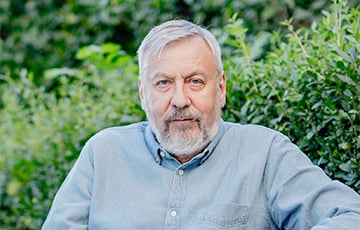
That's what the website Charter97.org spoke with Oleh Belokolos, director of the Center for National Resilience Studies in Kiev and former advisor to the Ukrainian embassy in Canada and Kenya:
- Given that today many economic indicators in Russia are hidden, we can only draw conclusions from circumstantial evidence. Of course, all of this has a complex effect on the economy. Downtime for cars, loss of time, reduced efficiency. Logistics become more complicated, there are delays in the delivery of goods, someone is late somewhere. This is all, of course, a separate layer of negative impact on the economy.
And, actually, on oil refineries - it is no secret that many of them were built at different times, but the equipment was largely imported. Now there are difficulties in supplying similar equipment or replacing that which has been damaged. This is also a serious point. As far as I can judge from open sources, so-called import substitution has definitely not worked in this respect. The Russian industry has not been able and, I think, will not be able to produce analogs of imported equipment. In this respect, the problem will continue to worsen.
- Can we expect that if the attacks persist, the crisis in the fuel sector will intensify and have serious consequences for the Russian industry and logistics? It must be accompanied by a prolonged action. Let us recall, for example, the history of the Second World War. How systematically, actually daily and weekly, the British and Americans carried out powerful bombing raids on oil refineries in Nazi Germany.
First these were enterprises in Romania, then in Hungary, then directly in Germany. As far as I remember from history and memoirs of the same Albert Speer, when the last fuel plant was destroyed, he came to Hitler's headquarters and declared that the war was actually lost.
It is hard to say whether this was actually the case or not. But that it significantly undermined the Nazis' ability to wage war is a fact. We know of cases where, even in the Ardennes Offensive, Nazi tanks had only "one-way" fuel. They were counting on capturing Allied supplies and continuing the war, because the German tank forces had very little fuel of their own in the winter of 1944-1945.
- Is it possible that the fuel crisis will become a trigger for the growth of protest moods in Russia against Putin's government?
- I don't think that this will be the decisive factor. It would have to be a whole complex of reasons linked to each other: losses on the front, tightening internal censorship, perhaps restrictions on the internet and access to information, difficulties with fuel.
But there is another point here. Russia is a big country. If fuel shortages start to really affect the delivery of necessary goods, food, medicines to remote towns and regions, where nothing can be delivered otherwise, it may to some extent push the population to protests. We are already seeing sporadic manifestations of discontent. But the population is so intimidated by the machine of repression that you can get a real sentence for a post on social networks. Therefore, I think, they will tolerate until it becomes absolutely unbearable.
When that will happen is hard to say. But I am sure that it will be a combination of a number of factors. Not just a shortage of food or fuel, but the complex impact of dozens of problems.
- How likely is it that the fuel crisis and economic difficulties will force Putin to come to the table to negotiate a ceasefire?
- I don't think any difficulties will force him to negotiate. This is not a factor that can spur him. Today we see that the war machine has gained momentum. Neither Putin himself nor his inner circle are interested in peace.
Because peace for them is a return to another reality for which they are not ready. From what I read and see, Putin is comfortable in the military paradigm today. It allows him to keep the population in fear, to mobilize, to conduct a propaganda campaign inside Russia. So far this machine is working.
There are no real internal preconditions for regime change. Too much is at stake for Putin personally. Everything will move according to the military scenario. I don't see even minimal signs of a change in rhetoric from him or his entourage. Just the other day Putin again threatened the world with nuclear weapons. This is yet another act of nuclear blackmail. In fact, this is exactly what the Kremlin has been doing since 2022 - and continues to do now.

Bank's name: Bank Millennium S.A.
Address: ul. Stanislawa Zaryna, 2A, 02-593, Warszawa
IBAN: PL97116022020000000216711123
SWIFT: BIGBPLPW
Name of the account holder: Fundacja “KARTA ‘97”
Purpose/title of payment: Donation for statuary aims
You can contact us by the e-mail charter97@gmail.com