The Economist: A New "Axis Of Evil" Is Taking Shape

Russia, China, Iran, and North Korea are coordinating their actions more closely.
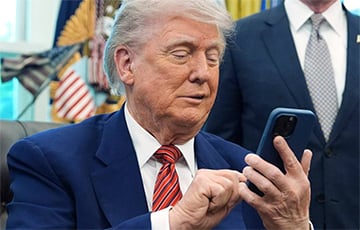
Meeting between Donald Trump, Xi Jinping and Vladimir Putin in Shenzhen, China did not become a new Yalta. On the contrary, the real threat to the world order is posed by an informal collusion between China, Russia, Iran, and North Korea.
Unlike in February 1945, when Winston Churchill, Franklin Roosevelt and Joseph Stalin effectively divided Europe into spheres of influence, the current meeting in Shenzhen will not result in any breakthrough agreements, — emphasizes The Economist in the issue’s lead editorial.
“Some are calling it a new Yalta, but that is far from the truth,” the publication notes.
According to the editorial board, following his setback in the midterm elections, it is important for the U.S. president to once again appear strong in front of the cameras, the Russian dictator, after years of setbacks in the war against Ukraine, wants to appear on equal footing with the true superpowers, and the Chinese leader is happy to play the role of a benevolent emperor. However, Donald Trump’s tactics will not shake the firmly programmed Xi Jinping.
Four Different Regimes with a Common Goal
As early as 2018, then-U.S. Secretary of Defense James Mattis warned of the danger posed by the growing rapprochement among these four anti-Western regimes, and now this coordination is deepening against the backdrop of the weakening of American alliances.
The members of the so-called “new axis of evil” differ significantly in their influence and structure. China has become an economic and technological colossus—with dancing robots and the widespread use of delivery drones in Shenzhen; Russia has a mid-tier economy, while Iran and North Korea remain economic dwarfs. At the same time, power in Beijing, Moscow, and Pyongyang is concentrated in the hands of a few, whereas in Tehran, without a supreme leader, it is unclear who actually runs the country.
“All four regimes share one primary interest—they want a world that is safe for autocrats, particularly for themselves,” writes The Economist.
Their military cooperation is the closest. Russia is destroying Ukrainian cities using Iranian drones and Chinese components, while Iranian engineers are studying how the Russian army is improving these drones in combat conditions. North Korea has sent about 16,000 troops to fight on Moscow’s side in exchange for money and defense technology. China refrains from direct arms deliveries but is gathering data on the use of Russian drones in actual combat, which is particularly valuable for a country that has not participated in major wars since 1979. At the same time, Iranian missiles—which Tehran is targeting at U.S. forces in the Persian Gulf—are equipped with Chinese chemical precursors for solid fuel and also utilize Russian intelligence data and Chinese satellite navigation.
Trade in yuan, the shadow fleet, and lessons from the 1930s
Economic support from China is helping three other sanctioned regimes stay afloat. Chinese payment systems allow these regimes to circumvent Western financial restrictions, and the share of the yuan and the ruble in trade between Russia and China has exceeded 95%, compared to about 25% five years ago.
Russian oil is shipped to China and North Korea, while Iranian oil is shipped to Chinese ports via a “shadow fleet” of tankers, which has grown by 1,500% since 2022. In addition, North Korean workers are employed at Russian factories, partially filling the labor shortage in Russia. In the UN Security Council, Beijing and Moscow simultaneously veto initiatives aimed at curbing Russian aggression, while state propaganda in all four countries reinforces each other’s narratives directed against Western democracies.
The interests of the “Quartet” members often conflict with one another. Unlike rogue states, China has benefited from globalization, is interested in maintaining a world order with clear rules, in trade with Europe and cheap oil, and does not approve of Pyongyang’s destabilization of the region. Nevertheless, their joint opposition to the U.S. outweighs their existing differences. It is in Beijing’s interest for U.S. aircraft carriers to be tied up in the Persian Gulf rather than in the Pacific, and for Western resources to be spent on containing Russia in Ukraine rather than on defending Taiwan.
The publication compares this situation to the 1930s, when Germany, Italy, and Japan did not fight side by side but simultaneously created crises in different parts of the world. Although this analogy has its limits—and Vladimir Putin, despite the hundreds of thousands of deaths he has caused, is not Hitler—in the event of a Chinese invasion of Taiwan, Moscow, Tehran, or Pyongyang could simultaneously ignite a war in another region or launch a large-scale cyberattack using artificial intelligence.
“Authoritarian systems are inferior to liberal democracies in creating wealth, stimulating innovation, and ensuring a decent life for their citizens. However, by acting in concert, they are capable of making the world a darker and more dangerous place,” the editorial concludes, calling on democratic states to recognize this threat and counter it.

Bank's name: Bank Millennium S.A.
Address: ul. Stanislawa Zaryna, 2A, 02-593, Warszawa
IBAN: PL97116022020000000216711123
SWIFT: BIGBPLPW
Name of the account holder: Fundacja “KARTA ‘97”
Purpose/title of payment: Donation for statuary aims
You can contact us by the e-mail charter97@gmail.com