

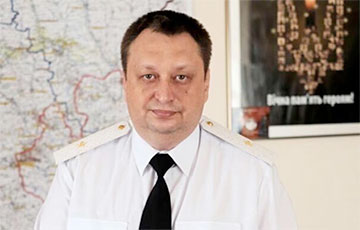
SBU Major General On Ivashov's Statement: The Situation Could Change Dramatically
- 25.11.2026, 14:17
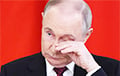
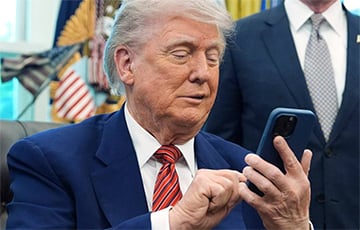
The Russian elite may sacrifice Putin.
Retired Russian Colonel General Leonid Ivashov, who lives in occupied Crimea, called for a “peaceful coup d’état” and Putin’s removal from power. According to him, continuing the war against Ukraine will lead to Russia’s collapse.
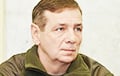
The website Charter97.org discussed this with Major General (ret.) of the SBU and national security expert Viktor Yagun.
— How should we assess Ivashov’s statement? Could the Russian elite heed the general’s call and oppose Putin?
— I would view Ivashov’s statement first and foremost as a sign of growing contradictions within the Russian military-political system. It is important to understand that Ivashov is not a liberal opposition figure, much less a supporter of Ukraine. He is a representative of the Soviet and Russian military-political elite, a man with nationalist-patriotic and, in many ways, imperialist views. As early as January 31, 2022, he spoke out against the war with Ukraine and demanded Putin’s resignation, warning of the catastrophic consequences of the invasion for Russia itself.
Today, Ivashov is effectively acknowledging that his warnings are coming true. And what worries him most is not the fate of Ukraine, but the prospect of the destruction of Russian statehood as a result of the Kremlin’s policies. It is particularly telling that he no longer limits himself to criticizing the military command or individual decisions, but directly raises the question of removing Putin from power.
At the same time, I would not overestimate Ivashov’s own political clout. He has long since retired and lacks the administrative or security resources necessary to bring about a change in power. His statement alone does not yet indicate the existence of a conspiracy. However, we cannot rule out the possibility that some members of the current general staff, representatives of the intelligence services, the state apparatus, and the economic elite share these sentiments.
When the Elite Might Turn Their Backs on Putin
The problem with the Russian elite is that it is largely bound to Putin by shared interests, responsibility for decisions made, and fear of the consequences of a change in power. As long as members of this elite consider preserving the existing system less dangerous for themselves than dismantling it, they will demonstrate loyalty.
The situation could change fundamentally if influential groups within the system itself begin to perceive Putin’s continued hold on power as a threat to their own political, economic, or physical survival.
At the same time, Putin’s departure would not necessarily mean the democratization of Russia or a rejection of imperial policies. Part of the Russian elite may seek not to destroy the existing system, but to save it by sacrificing the head of state.
— According to the latest estimates based on Rosstat data, Russia has lost about 500,000 people killed and another 200,000 missing. What might the publication of these horrific figures lead to? Are ordinary Russians capable of rising up against the war and Putin, who unleashed it?
— The source of this information is of fundamental importance. We are no longer talking about estimates from the Ukrainian General Staff or Western intelligence agencies, which Russian propaganda traditionally tries to discredit. The investigation is based on data from Russia’s own state death registry system.
According to a joint study by Meduza and Mediazona, published on November 23, 2026, at least 490,000 deaths of Russian servicemen had been recorded by the end of September. Taking into account a statistical estimate of deaths that have not yet been registered—including those among the missing—the actual death toll may exceed 700,000.
These are colossal demographic, social, and economic losses, the consequences of which Russia will feel for decades. And this figure refers only to those killed, without accounting for the wounded, those who have become disabled, and those who have suffered severe psychological trauma.
From Passive Resistance to Mass Protest
However, it would be a mistake to assume that the publication of even such terrifying figures will automatically lead to a mass uprising. For many years, the Russian authorities have systematically dismantled mechanisms of civic self-organization, independent media, the political opposition, and civil society institutions. The system of repression significantly raises the cost of open protest for citizens.
Furthermore, the Kremlin has largely succeeded in containing the social consequences of the war by shifting the main burden of losses onto the regions and socially vulnerable segments of the population. The authorities also use cash payments to the families of the fallen as a way to reduce discontent.
It is important to understand the difference between Russians’ reluctance to personally participate in the war and their principled rejection of the aggression against Ukraine. These are entirely different things. A person may not want to go to the front, but still support the war as long as someone else is fighting in their place.
According to an October poll by the Levada Center, 65% of respondents supported the start of peace negotiations. However, support for negotiations does not yet mean a willingness to acknowledge Russia’s responsibility for the aggression, to relinquish the occupied territories, or to oppose the current government.
Most likely, the growing discontent will initially manifest not in a mass uprising but in passive resistance: evading military service, a reluctance to sign contracts, social apathy, localized protests by relatives of military personnel, and a decline in trust in state institutions.
In authoritarian systems, mass protest often becomes politically significant when a split occurs within the ruling elite and the security apparatus loses its ability to control society.
— How do Russians’ reluctance to fight and growing dissatisfaction with Putin among the elites affect the situation on the front lines?
— Russia’s war against Ukraine is gradually turning into a war of attrition not only on military and economic resources but also on the very system of state governance.
For a long time, the Kremlin has offset massive losses through large-scale recruitment of contract soldiers, high monetary payments, and the enlistment of socially vulnerable segments of the population and foreign citizens.
However, the potential of this model is not unlimited. If losses consistently exceed the capacity to replenish personnel, the army will inevitably face a decline in the quality of soldier training, a shortage of experienced commanders, a reduction in reserves, problems with unit rotation, and a decline in offensive capabilities.
The Kremlin Faces a Difficult Choice
The loss of a professional core of personnel is particularly dangerous for the Russian army. It is possible to recruit tens of thousands of new service members relatively quickly, but it is impossible to rebuild a corps of experienced officers and noncommissioned officers, train qualified technical specialists, and form well-coordinated units in just a few months.
The Kremlin faces a difficult choice: increase spending to recruit contract soldiers, resort to a larger-scale forced mobilization, or reduce the intensity of offensive operations. Each of these options comes with its own military, economic, and domestic political costs.
As for discontent among the elites, its impact on the front lines will depend on whether it escalates into a genuine governance crisis. As long as the chain of command remains functional and the security forces carry out the orders of the political leadership, even serious internal conflicts will not necessarily lead to an immediate weakening of the Russian army.
But if the struggle within the elites begins to affect strategic decision-making, resource allocation, and the work of the military command, the consequences could be far more serious.
Signs of a Mounting Crisis
That said, Ukraine should not count on Russia’s automatic collapse, a palace coup, or a mass anti-war uprising. The Russian state retains significant mobilization and repressive capabilities, and a crisis within the Kremlin could be accompanied not only by a reduction in military activity but also by attempts to intensify it.
It is of fundamental importance for Ukraine to maintain its own defense capabilities, develop military-technological superiority, and secure sustained international support.
Russia’s strategic weakening begins not when individual generals publicly demand Putin’s resignation, but when the Russian state loses the ability to replenish the military, economic, and human resources necessary to continue the war.
Ivashov’s statement should be viewed as one of the signs of a growing crisis, but not yet as evidence that this crisis has entered its final stage.

Bank's name: Bank Millennium S.A.
Address: ul. Stanislawa Zaryna, 2A, 02-593, Warszawa
IBAN: PL97116022020000000216711123
SWIFT: BIGBPLPW
Name of the account holder: Fundacja “KARTA ‘97”
Purpose/title of payment: Donation for statuary aims
You can contact us by the e-mail charter97@gmail.com