

"Radio Racja": An Interview With The Most Influential Person In The Belarusian Media Landscape
- 23.11.2026, 8:04
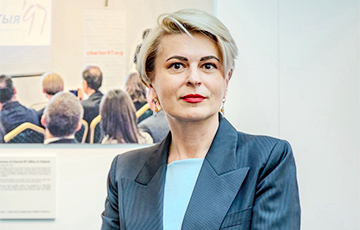
Natalia Radina spoke out about what many Belarusian media outlets are keeping quiet about.
The editor-in-chief of the website Charter97.org Natalia Radina conducted an in-depth interview with Belarusian journalist Yevgeny Voloshin. In just a few days, it became one of the top three most popular videos in the entire history of the “Radyo Racyja” YouTube channel.
We decided to present the main points of this interview.
During the conversation, Natalya Radina assessed the return to the media landscape of blogger Sergei Tikhanovsky, shared insider information from the former boss of Belarusian presidential candidate Viktor Babariko, spoke out strongly about the activities of Tikhanovskaya’s office, and explained why Belarusians may return to their homeland as early as next year.
The Real Situation in Belarus and Russia
Yevgeny Voloshin introduced Natalya Radina as “one of the most influential figures in the Belarusian media landscape in the country’s entire history” and asked why the editor-in-chief of the website Charter97.org is so confident that changes are coming soon. Natalia Radina pointed to several important factors:
— I am convinced that Lukashenko’s regime doesn’t have long left. Let’s take a realistic look at the situation in Belarus—not through the lens of Russian or Lukashenko-aligned media propaganda, but in light of the war they are waging together against Ukraine. We can see that Putin and Lukashenko have been significantly weakened, and what we’ve been waiting for all these years could happen at any moment.
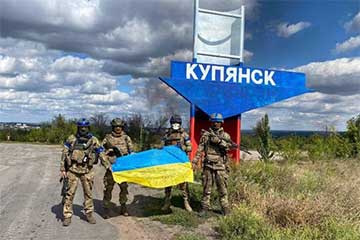
Just the other day, the Crimean Bridge was blown up, and Russia is unable to rebuild it. This symbolic move by Ukraine underscores just how weak the Kremlin regime is today.
When Putin traveled to China, he was not greeted by Xi Jinping, who welcomed U.S. President Donald Trump. This shows just how weak the Kremlin dictator is today. In the current situation, we need to view Lukashenko in the same way—as a “lame duck” who could simply cease to exist at any moment.
It’s also worth noting the age of these individuals. The participants in the meeting in China are older than those at the Yalta Conference. However, at the 1945 summit between the United Kingdom, the United States, and the USSR, the discussion centered on a genuine redivision of the world. So, Trump is 80, Putin is 74, and Xi Jinping is 73.
If we recall Churchill, Roosevelt, and Stalin, their ages were 70, 63, and 66, respectively.
Putin doesn’t have those five years—just as Lukashenko doesn’t either. We shouldn’t be afraid to keep putting pressure on Putin’s regime. It seems to me that just a few more decisive steps—and everything there will collapse. In this situation, under no circumstances should sanctions against the Russian and Belarusian regimes be lifted. We must continue to support Ukraine, and then the dictatorships in Russia and Belarus will collapse, and we’ll be able to prepare to return home as early as next year.
Insider Information from Viktor Babariko’s Former Chief
Yevgeny Voloshin drew attention to a meeting between Natalya Radina and the former vice president of Gazprombank, who is fighting on the side of the Ukrainian Armed Forces Igor Volobuev, who for a long time served as the boss of former banker and Belarusian presidential candidate Viktor Babariko. What did he say about Babariko’s independence as a politician? The editor-in-chief of the website Charter97.org shared an insider account from a former top manager at Gazprombank:
— I asked Igor Volobuev about the events of 2020. As the head of what is essentially a Russian bank, how did Viktor Babariko end up among the presidential candidates in Belarus, a country “allied” with Russia?
Igor Volobuev does not know Viktor Babariko personally, but he told me that there was absolutely no question of any autonomy for Gazprombank managers. Igor Volobuev himself moved to Ukraine after leaving “Gazprombank.” He is an ethnic Ukrainian and is currently fighting in the Ukrainian Armed Forces. Volobuev noted the rigidity of the system at the bank: the level of control was simply enormous. No one could say a word in public without approval from headquarters—that is, from the Kremlin. Therefore, as journalists, we must view with skepticism the fact that a man who headed a Russian bank in Belarus for 20 years is suddenly running for president. I have questions about this.
At the same time, Viktor Babariko served five years in prison. To me, he is, first and foremost, a former Belarusian political prisoner. I simply have respect for anyone who has endured such a long prison sentence. I know that this is an incredibly severe ordeal and a serious trauma for anyone. Right now, I wouldn’t want to pester him with such questions, but to say that I believe Viktor Babariko is some kind of national leader—no, of course not.
A Harsh Response to Supporters of Dialogue and the Lifting of Sanctions
Yevgeny Voloshin pointed out that Viktor Babariko, Maria Kolesnikova and some other activists in their circle advocate for dialogue between Europe and the Lukashenko regime and the lifting of sanctions. The editor-in-chief of the website Charter97.org pointed out the incompetence and hidden motives of those calling on the EU to take such steps:
— There are people who sincerely believe that reaching some kind of agreement with Lukashenko could lead to something good. That’s simply incompetence; there’s nothing more to say. Some harbor romantic illusions: they say that if we reach out to Lukashenko, if Europe starts talking to him, then he’ll release someone. That won’t happen.
Some people—such as Maria Kolesnikova, who had no involvement in politics at all prior to 2020, as well as Svetlana Tikhanovskaya, who was also outside of politics until 2020, — don’t really understand what was happening in Belarus up until that point. But Viktor Babariko, a highly educated man who was forced to closely follow political events in Belarus, should know this. When he or other intelligent people talk today about certain “agreements with Lukashenko,” it raises questions for me.
Viktor’s son is being held hostage. Perhaps this also plays a role? Eduard Babariko remains in prison to this day, and this must be taken into account when assessing how truly independent a person can be in their political statements and actions.
Natalia Radina has also clearly stated her position on putting pressure on the regime:
— Just a few days ago, a statement was released by Lithuanian Foreign Minister Kęstutis Budris stating that sanctions against the Lukashenko regime cannot be lifted, as under current conditions this would not lead to anything good. The war continues, and the Belarusian dictator remains an ally of Putin. In this situation, Europe will not agree to lift sanctions against Lukashenko even if political prisoners are released—something I personally very much hope for. This must be understood. The fact that the issue of Belarus—the situation with human rights and democracy in our country—has finally been linked to regional security also gives me hope for swift change.
Sanctions against Lukashenko’s regime cannot be lifted as long as he remains in power. I have been in opposition to Lukashenko not since 2020, but since 1996. That’s been more than 30 years, ever since dictatorial tendencies began to emerge in Belarus. I’ve seen all these periods of “thaw” in relations between the West and the Lukashenko regime, when sanctions were lifted. Whenever the pressure eased, the situation only got worse.
Tikhanovsky Has Finally Seen the Truth
The host asked Natalya Radina to comment on Sergei Tikhanovsky’s high-profile return to the Belarusian media landscape. Why did the blogger and former political prisoner begin criticizing his wife’s office and the organizations close to him? The editor-in-chief of the website Charter97.org noted that for a long time, Tikhanovsky was satisfied with everything:
— For a while, Tikhanovsky remained silent; for about half a year, everything was fine. He cooperated with his wife’s office, didn’t want to hear any criticism directed at them, saying that ‘it’s all a lie,’ that ‘no one knows who is funding the office’s critics,’ and that ‘they’re working for the regime.’ And now he has started saying the very same things that many critics of Tikhanovskaya’s office—including myself—have been saying.
Sergei Tikhanovsky has denounced the office’s incompetence, speaking about how the 2020 protests were undermined through the strategy of holding protests on Sundays, about corruption within these structures, and where the massive amounts of money went—money that the Belarusian opposition never saw during all the years of fighting the Lukashenko regime. It’s important to ask why so many agents were working within these organizations and projects—for example, the “Peremoga” plan, “Belarusian Women’s Union,” and “The Black Book of Belarus”—projects that led to so many people being imprisoned.
And what about Anzhelika Melnikova, who headed the entire “Coordinating Council”? Another mysterious entity—what is its purpose, and whom does it represent? However, enormous sums were spent on it, and it later turned out that Angelika Melnikova is a KGB officer. So there are a lot of questions.
What did former BT propagandist Tatyana Martynova let slip?
The editor-in-chief of the website Charter97.org emphasized that she doesn’t like Sergei Tikhanovsky’s public communication style, but there are also rational points in what he says:
— I don’t like that he generalizes by talking about “all independent media,” insults people, and mispronounces surnames. That’s just low; you shouldn’t do that. With this kind of behavior, Tikhanovsky is damaging his own reputation and how others perceive him. But there are also rational points in what he says.
For example, did you notice how he quoted the words of former Lukashenko propagandist Tatyana Martynova about “pro-regime” media? We know that there are media outlets that receive grants through Tikhanovskaya’s office—for example, “Nasha Niva” and others—yet they hardly ever write about anyone in the opposition except Svetlana herself. And when they do write about others, it’s mostly in a derogatory or insulting tone.
In one of Tikhanovsky’s livestreams, a quote from Tatyana Martynova is cited, in which she says: “If we want to, we can marginalize anyone; we can simply make sure they’re nowhere to be found—we’ll agree among ourselves not to write about these people.” What is this? It’s a BTS-style propaganda tactic. How can people be destroyed like this? To be honest, I don’t understand why the office staff call those who criticize Tikhanovskaya “marginalized people.” So then, who are you yourselves?
Is it really necessary to constantly establish some kind of “hierarchy”? In Belarus, we have Lukashenko, and abroad—a “president,” certain “ministers,” and a certain “coordinating council.”
There has never been anything like this in the Belarusian opposition, and I’ve been following it since the ’90s. A hierarchy like the one they’ve built around Tikhanovskaya has never existed before. All these security details, motorcades, “ministers” that nobody needs, “coordinating councils.” What is this, if not a waste of money? People are indulging their own ambitions.
Who Could Be an Alternative to Tikhanovskaya
Yevgeny Voloshin voiced a point often made by Tikhanovskaya’s supporters: “Who will the Europeans meet with if Svetlana isn’t there?” Natalya Radina explained what such statements remind her of:
— People used to say the same thing about Lukashenko. People in power—officials, those who worked for the regime, or KGB agents—used to make similar arguments. They all asked: “If not Lukashenko, then who?”
Is Belarus really such a wretched country that it couldn’t find a single talented person? Are there really only two people among the entire population capable of representing Belarusians: Lukashenko and Tikhanovskaya, who, until 2020, knew absolutely nothing about the country in which she lived?
Yes, we see that it is now very convenient for the West to deal exclusively with Tikhanovskaya. Previously, however, meetings were held in which a coalition of politicians and human rights activists participated, and I was also present as a representative of the largest media outlet. Western politicians met specifically with that coalition. Why can’t we do that now? Why is Belarus represented only by a person who currently enjoys no support whatsoever? You surely know that Tikhanovskaya’s approval rating in Belarus is effectively zero. Moreover, it is just as low among the Belarusian diaspora.
The Truth About the Situation Among the Exile Community and in the Belarusian Media
Natalia Radina points out the lack of results from Tikhanovskaya’s trips:
— Look at the situation Belarusian refugees find themselves in right now. Among them are the elderly, people with disabilities, and those who cannot work due to health issues. As a result, they end up practically on the street or living in extremely cramped, dire conditions. They need help, but there isn’t any. Former political prisoners receive assistance for a month or two, or half a year if they’re lucky, and then—that’s it. Yet after five years in prison, these people’s health has been severely compromised; it’s hard for them to work on construction sites. Many end up simply on the street, without any support. We’re seeing “shelters” close down right now—take, for example, the “House of Creators,” which is ceasing operations literally in the next few days. I know people who are about to end up on the street—along with their children. One family has a child with a disability; they have no idea where to go or what to do. They’re terrified. What now?
Or perhaps everything is fine with the independent media in our country, Yevgeny? Maybe “Radyo Ratsia” has no financial problems, which is why we’re recording this broadcast on a phone right now? Or maybe “Charta ’97” isn’t facing any difficulties? The reality is that we’re facing serious challenges: independent media outlets in Belarus with large audiences simply aren’t receiving enough funding today. But let’s be honest: independent media is the last tool we have to influence the situation in Belarus. So how do these meetings between Tsikhanouskaya and European leaders benefit Belarusians?
The situation could change at any moment
At the end of the conversation, Natalya Radina expressed confidence that changes are coming soon to our country and pointed out an interesting paradox: the conditions for change are better now than they were in 2020:
— Before 2020, everyone kept insisting that nothing would happen in Belarus. Check the archives; read what the so-called independent Belarusian analysts wrote about those presidential elections. Take, for example, Artem Shraibman. What did he write? That these would be “the most boring elections in history” and “nothing will happen.”
Now, everything could change at any moment, because a war is underway that is toppling dictatorial regimes. We all need to be prepared for the fact that change in Belarus really could happen—and quickly, and completely unexpectedly. Those who are currently abroad should also prepare to return: I know that many want to come back to Belarus.
Today is not the time for squabbles or settling scores. It is time to start listening to one another and to work not for our own sake, but for the sake of the country. In this regard, I would like to emphasize—addressing Svetlana Tikhanovskaya, Sergei Tikhanovsky, Viktor Babariko, that we must think about the country and the people of Belarus, not about personal interests, ambitions, or attempts to profit from people’s suffering—which is what many are doing right now.
Belarus truly has a tremendous opportunity for change right now. There was an opportunity in 2020 as well, but now a real chance has emerged—one even greater than the one that existed six years ago. There is now a chance to defeat Russia once and for all—a country that has made countless mistakes by unleashing a war against Ukraine, and in essence, against the entire world, against all of Europe. So let’s get ready and believe that Belarus will become free and democratic.

Bank's name: Bank Millennium S.A.
Address: ul. Stanislawa Zaryna, 2A, 02-593, Warszawa
IBAN: PL97116022020000000216711123
SWIFT: BIGBPLPW
Name of the account holder: Fundacja “KARTA ‘97”
Purpose/title of payment: Donation for statuary aims
You can contact us by the e-mail charter97@gmail.com