

Natallia Radzina: Lukashenko Is Clearly Being Warned
6- 3.03.2026, 15:40
- 19,112
There are many signs that Belarusians hate this government.
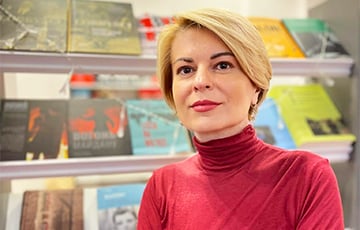
Editor-in-Chief of Charter97.org Natallia Radzina gave a great interview to YouTube channel NEXTA. What signs of discontent with Lukashenko's regime are there in Belarus? How can change come to our country? What projects should the Belarusian diaspora focus on today? Natallia Radzina told NEXTA journalist Dmitry Lupach about this and more.
The host drew attention to the way Natallia Radzina raised in Europe the topic of the condition of Belarusian opposition leader Mikalai Statkevich, who has been in incommunicado detention for a long time. Now the authorities have released him after a stroke, which he suffered in the colony. Natallia Radzina urges to closely follow the situation around the Belarusian opposition leader even today:
- Now the most important thing is that Mikalai Statkevich should be able to restore his health. What happened to him is another crime of the authorities. Statkevich was brought to a stroke by the conditions in which he was imprisoned.
We cried about what was happening to him, I personally spoke at various venues in Europe and said that Statkevich's life was in danger. Let me remind you, we did not know where he was for almost five years. The incommunicado regime was strictly applied only to Statkevich. There was at least some information from other political prisoners. Cellmates saw them, people in the colonies, people told about them when prisoners were released. But nobody saw Mikalai Statkevich. It was known that he had four covitis in the colony, that he had serious heart problems, that he was in a solitary cell, that he was constantly sent to the punitive isolation ward, and that the conditions in this colony in Hlubokoe were absolutely monstrous, medieval. He was purposefully killed.
Natallia Radzina admires the act of Mikalai Statkevich, who refused to leave Belarus:
- There are only a few such people, not only in Belarus, but in the whole world. People, ready to sacrifice themselves for the freedom of their country, remain in memory for centuries.
Lukashenko hates Mikalai Statkevich because he is a coward, a scoundrel and a scoundrel himself. The dictator sees before him a brave, courageous man who really loves Belarus, who is ready to do anything for the freedom of his country, the Belarusian people, who refuses to leave his homeland and prefers to stay in prison, but not to leave. Therefore, of course, Lukashenko hates him.
The editor-in-chief of Charter97.org was asked when she began to perceive journalism not only as a profession, but as a form of struggle against the regime. Natallia Radzina told how she came to Belarusian television as a young journalist:
- A few days and conversations with journalists and editors were enough for me to realize that there is a total caesura here. I will remind you that this was 1997. It was clear that the country was sliding toward dictatorship. First of all, the 1996 coup had already taken place. Lukashenko had dispersed the legally elected parliament, usurped power and started to destroy independent media, including independent television. That's why I made a decision that I would work, of course, only in the independent press. Otherwise, I couldn't imagine the point of doing journalism if you can't write freely and speak freely about what is happening.
Dmitry Lupach touched upon the topic of the 2020 protests. Could they have led to a change of power? Natallia Radzina points out the missed opportunities:
- It is written about it in the book "Natallia Radzina's Belarus: Journalist vs. Dictator", the chapter is called "How the Belarusian revolution was drained". The main mistake that was made was the plan invented by the office of Svetlana Tikhanovskaya and other "excellent strategists" to hold protests on Sundays.
Where have you seen revolutions that take place on holidays or weekends? This is an absolutely absurd decision that could not be challenged by anyone. We addressed Tihanovska's office, among others, and tried to convey information, but no one wanted to listen to anyone. The guys in this office, which was then called the headquarters, "bit their teeth" and decided that they would "soon ride into Minsk on a white horse" and come to power. Or it was just a purposeful draining of the revolution on the instructions of the special services.
Why were the protests in Belarus destroyed like that? Who was behind it? Who thought it up? Who is this "brilliant" strategist? Remember the 2020 protests, they were pointless. To bring out such a large number of people and lead them outside the city, and on Monday tell them to go to work, instead of standing in front of the government house, demanding negotiations with the authorities, going on Belarusian television, demanding airtime for the protesters. I don't understand how this is possible. In the end, all this led to the fact that there were mass arrests, so many people went to prison.
Natallia Radzina spoke about the lessons to be learned from the protests of 2020:
- People should realize that if we go out to fight, we must stand until the end. And certainly look up to the leaders. It is quite clear that back then, in 2020, there were no leaders on the streets. The real leaders, such as Mikalai Statkevich, Evgeny Afnagel, Pavel Seviarynets, were in prison. These are the people who could go to the end, who could lead people.
Another lesson: you need to realize that if there are no decisive people around, then I myself become a leader and lead people.
This is something you should not just be afraid of. "If not Tikhanovskaya, then who?" - I say, "You." There can be many leaders, why did we decide that there should be one? Why are we looking for some kind of leader? We don't need leaders, we don't need monuments that then have to be thrown down.
The editor-in-chief of Charter97.org spoke about the people who prepared the 2020 protests:
- It was clear to me, for example, after the marches of angry Belarusians that took place in 2018 against the "tuneyad" decree adopted by Lukashenko, that there would be a revolution. Even then, it was clear what the mood in society was.
We talked about it, and we prepared this revolution, among other things. I'm talking here about "Charter'97", about the Belarusian National Congress of Mikalai Statkevich, about the civil campaign "European Belarus". Remember, who said that the revolution would take place in 2020? Mikalai Statkevich, Andrei Sannikov, Dzmitry Bandarenka, Yevgeny Afnagel, I also talked about it. Because we knew this would happen.
From most analysts, including the same Artem Shreibman, I heard that this will be "the most boring election." "Nothing will happen. Lukashenko will re-elect himself again." Then covid happened as well. And then suddenly these people are claiming to be "leaders". All these Latushki, Azarovs, Tikhanovski.
Here I single out Sergei Tikhanovski as a person from the new opposition, who really tried to undermine this regime. For which he also paid the price and was arrested together with Mikalai Statkevich in May 2020. If he had been on the streets together with Statkevich, together with Afnagel, I think we could have won.
Dmitry Lupach asked Natallia Radzina about the reproaches to people who left the country. The editor-in-chief of Charter97.org pointed out the importance of the diaspora and spoke about the priority tasks for people who found themselves in emigration:
- If we want to work as journalists and bring independent, free objective information to Belarusians, we can do it only from abroad. That's why I fled Belarus in 2011, because I realized that I would not be allowed to work freely. After prison, when I was under house arrest until the trial, I was constantly visited by a police patrol, arrested, brought to the KGB, where they again threatened to return me to prison and directly told me that I had to sign papers on cooperation with the KGB, not to write on certain topics, not to do interviews with certain people.
Naturally, I refused to sign any papers, but I realized that my re-arrest was a matter of time. That's why I fled. In my case, it was simply impossible to stay in the profession exactly in Belarus. Even then. And now the situation is even worse. That's why we should not feel guilty, we just have to do our job well.
Today there are a lot of Belarusian initiatives and media abroad, it's certainly pleasing. After all, our task abroad is to preserve popular Belarusian mass media, to bring the truth to the Belarusians. Also important are human rights organizations that help political prisoners, politically repressed both inside the country and abroad, as refugees continue to leave the country. Cultural projects that allow Belarusians to preserve their identity are also important. In fact, there is a lot of work. I am sure that in the foreseeable future we will return to Belarus. Specifically in your case, Dmitry, I think you won't have to wait like me for 15 years. We'll return to Belarus much sooner.
Dmitry Lupach asked about the possible unification of the Belarusian opposition. Natallia Radzina posed an important question:
- Unite with whom? You asked me about what led to the defeat of the protests in 2020. Besides the fact that there was an absolutely failed plan to drain the protests, who did Svetlana Tikhanovskaya unite around her? Former Lukashenko officials. Let's remember the GUBOPiK Lieutenant Colonel Alexander Azarov with his "Peramoga" plan. Svetlana Tikhanovskaya recognized only after four years that it was a failed plan. I yelled at Azarov when he came to meet with me and told me about this idea. I said: "Do you realize how many people you will put in prisons?" I said that they are not able to keep this data and it looks like a provocation. Well, if we close our eyes to Azarov's past and trust him completely, it's a very dangerous thing to collect people's digital data. Any leak, they'll go to jail. Azarov didn't want to listen to me, but his plan was actively supported by Tikhanovskaya and appointed a lieutenant colonel of the State Department for Combined Armed Forces of Ukraine to be her "minister" for the "restoration of law and order", although we know that he tortured Belarusian volunteers who fought in Ukraine, working in punitive structures until 2020.
Who is Pavel Latushko? Who is this man of "great values" who calls himself the leader of the democratic opposition, but before that he served the Lukashenko regime for 23 years? It is not necessary to say that he worked for the state, he worked for the criminal dictatorial regime both as ambassador to France and Poland. I remember how I came to France, met with the deputies of the National Assembly, told about the political prisoners who were in Belarus before 2014. They told me: "You know, we have Ambassador Pavel Latushko, he says that there are no political prisoners in Belarus."
Let's remember Anjelika Melnikova. Who is she? A manager at Coca-Cola who turned out to be a KGB agent. She was the speaker of an entire "coordinating council," another obscure structure created in exile by Svetlana Tikhanovskaya's office.
What is the point of uniting now? To unite is to unite around an idea, when we will go to victory. Before free democratic elections, the opposition can unite, as it happened in Poland after the Round Table. I don't see the point now. When a unified center is created, it is immediately infiltrated by agents of special services, which is what we saw in Tihanovska's office. Today we must each effectively do our own thing.
Natallia Radzina is sure that Belarusians have become even more hateful of Lukashenko's regime in recent years:
- I recently read the news that a young Russian blogger from Cheboksary asked Belarusians whether they want to become part of Russia in the Threads social network. In response - thousands of comments, he was sent "following the Russian warship". Remember when the Minsk Philharmonic had an evening in memory of the leader of the "Pesnyars" Vladimir Mulyavin and the whole hall stood up when the song "Malitva" sounded. By such moments you understand how society lives. There are also a lot of testimonies of people who come and say that the protest has not gone anywhere, that people hate this government. Today it is difficult to express this publicly, you can't go out on the streets. However, the rejection of the authorities has only increased, also because of the regressions that have hit the country. Today, probably, there is not a single family that would not be affected by repression after 2020.
The journalist touched upon the change of Kiev's position on Lukashenko. Natallia Radzina warns Ukrainians against formal approaches:
- I looked at the sanctions that Ukraine has imposed against Lukashenko. He has no firms, no bank accounts in Ukraine, no Ukrainian state awards. How should they hit Lukashenko? Likewise - the meeting with Tikhanovska, which may soon take place in Kiev. Just as meaningless. I have a feeling that these are declarations, not real actions that are needed now.
The latest statements of President Vladimir Zelensky make me happy - Ukraine and Belarus should be together in Europe. I liked his latest interview where he said that the Oreshnik missile system in Belarus is a legitimate target for NATO. He explicitly warns Lukashenko that there will be strikes on Belarusian refineries if there is another invasion of Ukraine being prepared. His repeated reminders that the dictator himself suggested he bomb the Mozyr refinery in 2020 are a clear hint.
Okay, this is more like real action, but Ukraine needs a strategy. Kiev needs to work with the real Belarusian opposition and its allies in Europe and NATO to free Belarus. As long as Lukashenko's pro-Russian regime rules in Belarus, there will always be a threat of an attack on Ukraine from the north.
At the end, Dmitry Lupach asked about scenarios of power change in Belarus, in particular - that change will come to our country after the change of power in Russia. Natallia Radzina does not rule out other options:
- Of course, changes in the Kremlin seem to be the most realistic scenario of changes in Belarus. We all remember 1991, when the USSR collapsed, and the communist power in Belarus also collapsed. Revolutions in Poland, Hungary and Czechoslovakia became possible only because the Soviet Union weakened. Therefore, we have a direct interest in Russia losing all its potential and strength in a war with Ukraine. In this situation, of course, it is extremely important to support Ukraine as much as possible - financially, militarily, militarily, with long-range missiles, and with permission to strike all the way to the decision-making centers in Russia. Of course, we need to put maximum pressure on Russia. In addition to the economic sanctions that are already in place, we need to introduce new ones and tighten the screws so that Russia does not have the resources to continue this war. And Russia's economy is very weak, we can see that. The civilian economy is completely dying. Therefore, the chances are very high. Accordingly, the chances for Belarus are increasing.
But there may be different scenarios. I do not claim that changes in Belarus will happen only if the power in the Kremlin collapses. It may happen even earlier, give the war a chance.

Bank's name: Bank Millennium S.A.
Address: ul. Stanislawa Zaryna, 2A, 02-593, Warszawa
IBAN: PL97116022020000000216711123
SWIFT: BIGBPLPW
Name of the account holder: Fundacja “KARTA ‘97”
Purpose/title of payment: Donation for statuary aims
You can contact us by the e-mail charter97@gmail.com