The First Head Of Radiation, Chemical And Biological Defense Of The Russian Armed Forces Died In Moscow
6- 4.05.2026, 18:05
- 2,798
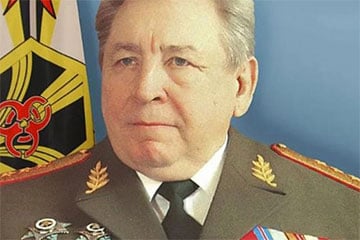
Photo: AP
Stanislav Petrov's body was found in his apartment.
Colonel-General of the Radiation, Chemical and Biological Defense Forces of the Russian Armed Forces Stanislav Petrov has committed suicide in Moscow, Moskovsky Komsomolets reports without citing a source. The body of one of the founders of the chemical defense troops of modern Russia was discovered by relatives around seven o'clock in the morning of April 2 in his apartment in the House on the Embankment in Moscow. Information about this confirmed "RIA Novosti" in law enforcement agencies. They added that a pistol was found near the deceased. The 87-year-old Petrov's body was found "in the kitchen sitting on a chair," the Izvestia interlocutor said.
The publication notes that before the alleged suicide, the retired general, who was the last commander of the USSR's chemical defense troops and until 2001 headed Russia's newly-formed RHBZ troops, worked as a researcher at a military institute and was also the editor-in-chief of the magazine Vestnik Voskiy RHBZ Defense Troops. According to Petrov's official biography, he served as chief scientist at the FGBU 27 Scientific Center, which is under sanctions by the EU, the United States, Britain, Switzerland, Ukraine, and Canada for its involvement in the "development and use of chemical substances" within Russian forces.
In October 2024, London explicitly stated that sanctions were being imposed on the 27th Center, as well as the Defense Ministry's 33rd Central Research and Development Test Institute and the head of the Russian Chemical Defense Forces, Lieutenant General Igor Kirillov, "for the use of chemical weapons in Ukraine," including chloropicrin.
Russia has indirectly acknowledged the center's involvement in the development of chemical weapons. An article on the 50th anniversary of the organization stated that its experts provided Russia with "reliable protection" from threats and "actually leveled the chemical-military potential of the United States and NATO as a whole, which forced them to enter into negotiations that culminated in the signing of the Convention on the Prohibition of the Development, Production, Stockpiling and Use of Chemical Weapons and on Their Destruction."
Born in 1939 in Gorky (Nizhny Novgorod), Petrov served in chemical defense units from the age of 20. He participated in the liquidation of the consequences of the Chernobyl nuclear power plant disaster. From 1989 to 1992 he commanded the USSR chemical defense troops. In 1991, he received the Lenin Prize, and 10 years later he received the title of Doctor of Military Sciences.
A TASS source in the medical services said that the general's death came after an illness: "He had been seriously ill lately."

Bank's name: Bank Millennium S.A.
Address: ul. Stanislawa Zaryna, 2A, 02-593, Warszawa
IBAN: PL97116022020000000216711123
SWIFT: BIGBPLPW
Name of the account holder: Fundacja “KARTA ‘97”
Purpose/title of payment: Donation for statuary aims
You can contact us by the e-mail charter97@gmail.com