


How Many Hours Will Russian Aviation Survive After Tomahawks Launch?
8- 12.12.2022, 12:57
- 35,194
The main conclusions from the attack of Ukrainian drones on Russian air bases.
Two strategic bombers at Engels and an air base at Ryazan were hit by Ukrainian drones. This is one of the most shameful pages of the war for the Russian Armed Forces from a technical point of view, comparable to the sinking of the flagship of the Black Sea Fleet, writes a reader of the website Charter97.org.
The reasons are the same as in the case of the Moskva cruiser: it was an attack against a strategic object, which Ukrainian weapons should not have reached at all. The attack was successful and caused a noticeable weakening of the combat capabilities of the Russian Federation on the core axis.
Moreover, as in the case of the attack of Ukrainian underwater drones on the base in Sevastopol, the RF Armed Forces were warned in their own way. If in the case of Sevastopol, the prototype of the Ukrainian drone was lost by the Ukrainians and picked up by the Russian side, then in the case of Engels some time ago, American satellite pictures of the base and the aircraft standing there hit the press. Even then, the photo showed that two bombers were standing close to each other and could be covered with one successful attack. But they not only left them uncovered but they did not even move them.
Another question: What happened to their air defence? There is an answer to it: their air defence was in Ukraine. Russian resources turned out to be not as big as they were told all the previous twenty years, and the effectiveness of Russian systems has been raising questions since the war in Syria. Compared with the same Ukrainian air defence, which, being literally a strange combination of systems, as well as combining a whole scope of systems from half a dozen countries, has learned to sharply reduce the effectiveness of attacks on the Ukrainian energy infrastructure.
All this is a sign of the technical, educational and organizational advantages of the Ukrainian Armed Forces, as well as not only the Western, but also the Ukrainian military-industrial complex. Let's assume that today's drones and UAVs for the attack on Sevastopol were really Ukrainian-made. Actually, we can assume it, given that this is not Newton's binomial and not a fifth-generation jet fighter. Let's recall that Russia is buying similar drones in Iran, causing Soviet aircraft designers to turn in their graves.
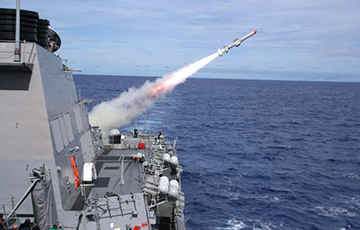
And what would happen if the Russian Federation fought not against Ukraine, but against NATO, capable of hitting bases in the depths of the territory not with hastily assembled piece drones, but with the Tomahawks, for example? How many hours would Russian strategic aviation survive after one huge salvo launch?
Finally, this whole war shows that Russia does not draw conclusions. The leadership of the Russian Federation plans to cover the technical gap from the enemy with the purchase of drones in Iran, shells in North Korea, as well as the rounding up of hastily mobilized troops. There are no purges within the military-industrial complex, no one bears legal responsibility and even the protection of strategic facilities are not being strengthened, giving rise to suspicions that either the leadership of the Russian Federation really wants to lose the war, or there is simply nothing to strengthen the army. You can guess the most likely outcome on your own.

Bank's name: Bank Millennium S.A.
Address: ul. Stanislawa Zaryna, 2A, 02-593, Warszawa
IBAN: PL97116022020000000216711123
SWIFT: BIGBPLPW
Name of the account holder: Fundacja “KARTA ‘97”
Purpose/title of payment: Donation for statuary aims
You can contact us by the e-mail charter97@gmail.com