SBU Major General: War May Become A Point Of No Return For Lukashenko
14- 13.05.2026, 11:06
- 8,744
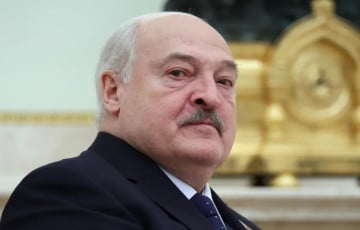
The participation of the Belarusian army in combat operations can blow up the regime from within.
After returning from the parade in Moscow, Lukashenko held a meeting with the military and said in front of the media that Belarus should prepare for war. At the same time, the dictator did not specify with whom exactly he was going to fight.
With whom Lukashenko was going to fight and why did he make this statement? Charter97.org talked to the SBU major-general in reserve Viktor Yagun about it:
- Lukashenko's statement that Belarus should "prepare for war" is not so much a signal of Minsk's imminent entry into a major conflict as an element of several political and military tasks at once.
First of all, it is part of the general Russian-Belarusian strategy of psychological pressure on its neighbors and its own population. After his visit to Moscow and his demonstrative participation in Russian events, Lukashenko has actually synchronized his rhetoric with the Kremlin. It is important for him to show Putin his absolute loyalty and readiness to remain part of the common military-political space with the Russian Federation.
Secondly, such statements are an instrument of internal control. The Belarusian regime after 2020 lives in the logic of constant threat: the threat of protests, "color revolution", sabotage, external pressure. Therefore, the thesis "the country is in danger" allows to justify militarization, strengthening of special services, expansion of the army's powers and further tightening of screws inside the country.
With whom can Belarus really "fight"? Formally, the Belarusian propaganda traditionally includes Ukraine, Poland, the Baltic States, NATO as a whole.
But objectively Minsk is not interested in a direct war with any of its neighbors. Lukashenko understands perfectly well: an independent military conflict against any NATO member means disaster for the regime, while an open invasion of Ukraine creates the risk of an internal crisis within the Belarusian army and society.
- What is the Belarusian army today?
- The Belarusian army is a relatively compact armed force of about 45-50 thousand soldiers plus a reserve. Its strengths include well-preserved Soviet infrastructure, a high level of discipline by post-Soviet standards, a developed air defense system, close integration with the Russian army, and the presence of trained special operations units.
But there are also critical limitations. The Belarusian army has never fought a modern full-scale war. It has virtually no real combat experience. Much of the equipment is a modernized, but still Soviet heritage. Logistics, aviation, intelligence, and strike capabilities are heavily dependent on Russia.
The main problem is motivation. Unlike the Russian system, Belarusian society does not demonstrate a massive willingness to fight. By many accounts, a significant portion of officers and soldiers are extremely skeptical about the prospect of participating in a war against Ukraine. That is why Lukashenko has avoided directly involving his army in hostilities as much as possible since 2022.
- Is the Belarusian army capable of fighting any of its neighbors at all?
- For an independent offensive war - extremely limited. Against Ukraine, the Belarusian army could create a local threat on the border, distract Ukrainian forces, provide bridgeheads, logistics or missile infrastructure of the Russian Federation. But it is unable to conduct a successful deep offensive operation without the Russian army.
The situation is even more complicated against NATO countries. Even Poland significantly exceeds Belarus in terms of total potential. And a conflict with the alliance automatically means a clash with a much more powerful coalition.
- Does Putin have plans for Lukashenko's army and what role can he assign to it?
- Yes, and they have existed for a long time. For the Kremlin, Belarus is a strategic military bridgehead, a buffer against NATO, a territory for the deployment of Russian weapons systems, an element of pressure on Ukraine, a part of the unified defense architecture of the so-called Union State.
Putin needs the Belarusian army not so much as an independent striking force, but as an auxiliary instrument.
The most likely roles are: covering the northern direction, diverting Ukrainian reserves from the front in the east and south, joint border protection, deployment of Russian troops and missiles, participation in the flexible military operations in the north and south of the country. Already, air defense systems, training, headquarters, exercises, and some command mechanisms are deeply integrated with the Russian Federation.
But there is an important nuance: Lukashenko is trying to maintain control over his own army as the last guarantor of personal power. That is why he is balancing between demonstrating full loyalty to Moscow and unwillingness to send troops into a real war. He realizes that direct participation of the Belarusian army in a large-scale conflict may become a point of no return for his regime.

Bank's name: Bank Millennium S.A.
Address: ul. Stanislawa Zaryna, 2A, 02-593, Warszawa
IBAN: PL97116022020000000216711123
SWIFT: BIGBPLPW
Name of the account holder: Fundacja “KARTA ‘97”
Purpose/title of payment: Donation for statuary aims
You can contact us by the e-mail charter97@gmail.com