

Kremlin Hides Huge Military Losses
1- 5.06.2023, 7:42
- 12,494
Russia withdraws from the Treaty on Conventional Armed Forces in Europe.
On 29 May, Russian President Vladimir Putin signed a law denouncing the Treaty on Conventional Armed Forces in Europe (CFE Treaty), previously adopted by the Russian Duma. In fact, Russia has suspended its participation in the treaty as early as March 11, 2015. So far, it has not legally formalized this, continuing to be part of it, Obozrevatel writes
Key parameters of the CFE Treaty
It's worth mentioning that the Treaty on Conventional Armed Forces in Europe was signed on 19 November 1990 by 16 NATO member states and 6 Warsaw Pact countries. Its aim was to limit the main weapon systems that could be deployed by the parties to this treaty in the territories between the Urals and the Atlantic. In particular, the main limits were set for no more than 40 thousand tanks, 40 thousand artillery systems, 60 thousand BMPs and other armored vehicles, 13.6 thousand aircraft and 4 thousand attack helicopters on the border. This number of armaments was divided equally between the two signatories, then NATO and the Warsaw Pact countries. However, following NATO's 2004 enlargement, Russia suspended its participation in the CFE Treaty in 2007, prior to the invasion of Georgia, citing the fact that the North Atlantic Alliance had not ratified the 1999 Istanbul Agreement on the Adaptation of the CFE Treaty.
Russia's systematic withdrawal from continental security treaties
Some experts have already expressed concern about this, such as the Polish observers on the Defence24 portal. They argue that it means that the arms control architecture involving Russia is being dismantled by Moscow. The question is what the NATO and US response will be. The challenge here will be, on the one hand, to maintain Alliance cohesion and, on the other hand, to build adequate operational capabilities.
However, Russia's withdrawal from the CFE Treaty is likely to change nothing in practice, as the Kremlin has not actually complied with its terms for 16 years. This merely completes the general trend of Russian withdrawal from key security treaties, notably the Intermediate-Range and Shorter-Range Missile Treaty and the Treaty on Measures for the Further Reduction and Limitation of Strategic Offensive Arms (START-II).
Russia hides huge losses from Treaty monitoring
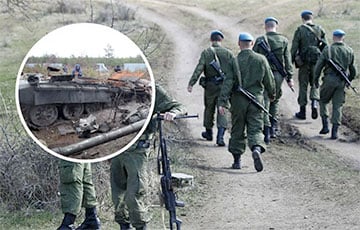
It is worth noting that the CFE Treaty contains very strict requirements for detailed quantity control, information exchange, on-site inspections, on-call inspections and monitoring of the destruction of surplus armaments. Parties to the Treaty have an unrestricted right to monitor the Treaty process, including through satellite surveillance to verify the deployment of large military equipment. In particular, the Russian quota a few years ago provided for the deployment of 3,660 tanks, 7,690 combat vehicles, 4,634 artillery systems of over 100mm calibre, 1,542 aircraft and 365 attack helicopters. However, at the end of 15 months of war against Ukraine, Russian losses have reached such proportions that this has to be concealed both from the Russians themselves and from the world, especially arms control inspectors.
Unprecedented losses of military equipment result in degradation of Russia's military capabilities
Oryx's rather conservative estimate shows that the documented losses of the Russian army in the war with Ukraine have already exceeded the figure of 10,000 units. In particular, losses of Russian tanks have reached 2,000, armoured combat vehicles of all types almost 4,900, about 400 communication and control vehicles, more than 300 pieces of engineering equipment, more than 800 pieces of artillery systems and MLRS, about 120 anti-aircraft, 82 aircraft and 90 helicopters, as well as about 2,600 vehicles.
Ukrainian experts believe that at least 20-30 per cent of the equipment whose destruction was simply not recorded, especially along the front line - artillery, anti-aircraft systems, military vehicles and engineering equipment - should be added to these calculations. It is also necessary to take into account the large amount of equipment that breaks down during ruthless military operation, which can increase the Russian army's casualty figures by 40% or more for certain types of weapons.
Hence, Russia's withdrawal from the CFE Treaty, apart from everything else, aims to hide huge losses in new and basic types of military equipment of the Russian army and to replace them with old models, as evidenced by the massive disbanding and sending to the front of old types of tanks and combat vehicles, artillery and other weapons. Consequently, rearming the Ukrainian army with NATO equipment and weapons is a process that should critically affect Ukraine's qualitative advantage on the battlefield in the future and help the Ukrainian army to meet the goal of liberation of the occupied territories.