
‘My Life Is Part Of Belarusians’ Great Struggle’: ‘Natallia Radzina's Belarus’ Presented In Warsaw
1- 19.01.2026, 10:13
- 1,422
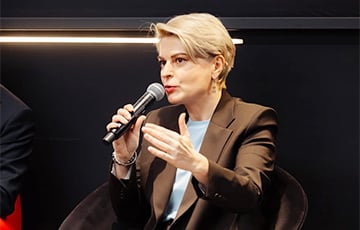
Photo: Charter97.org
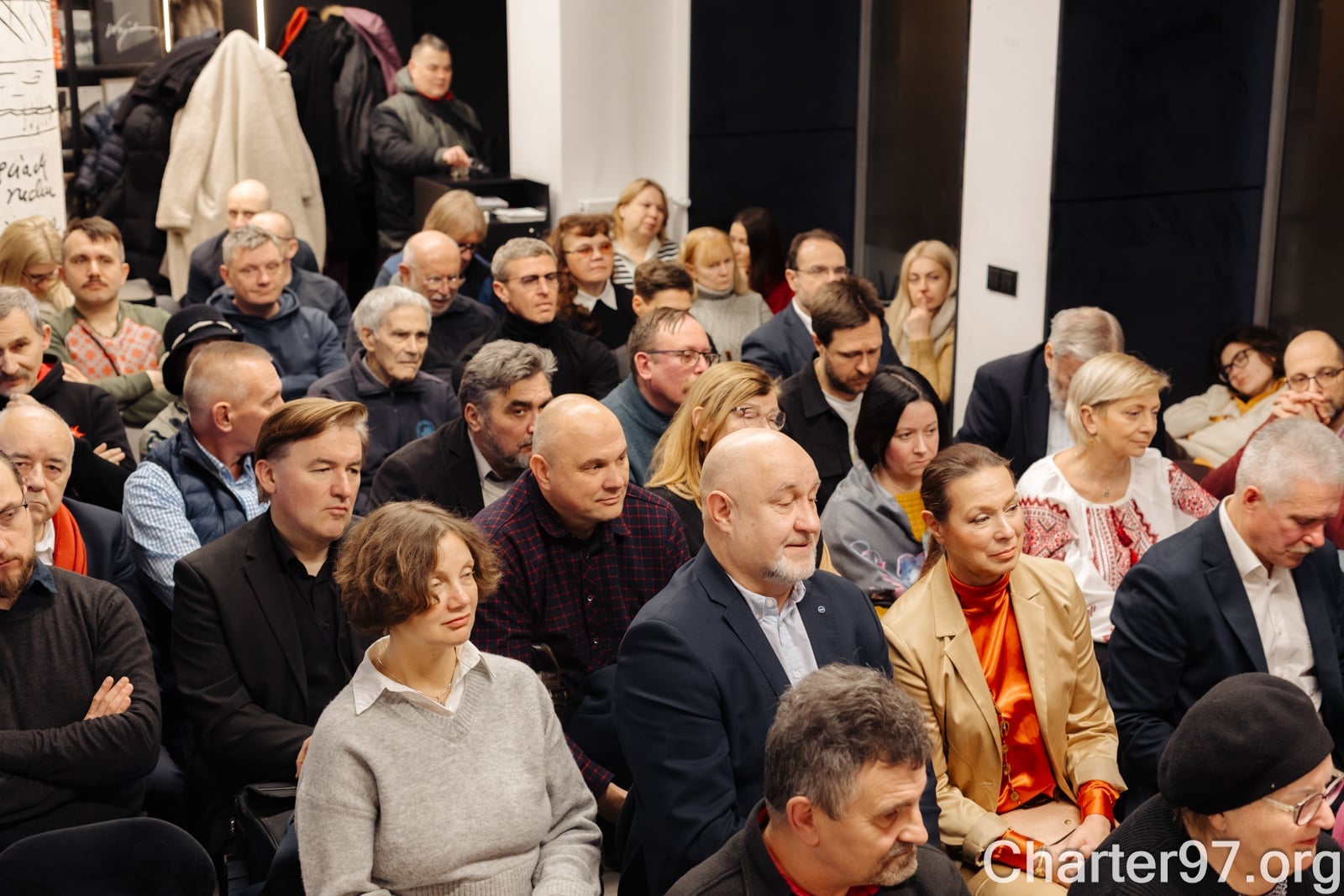
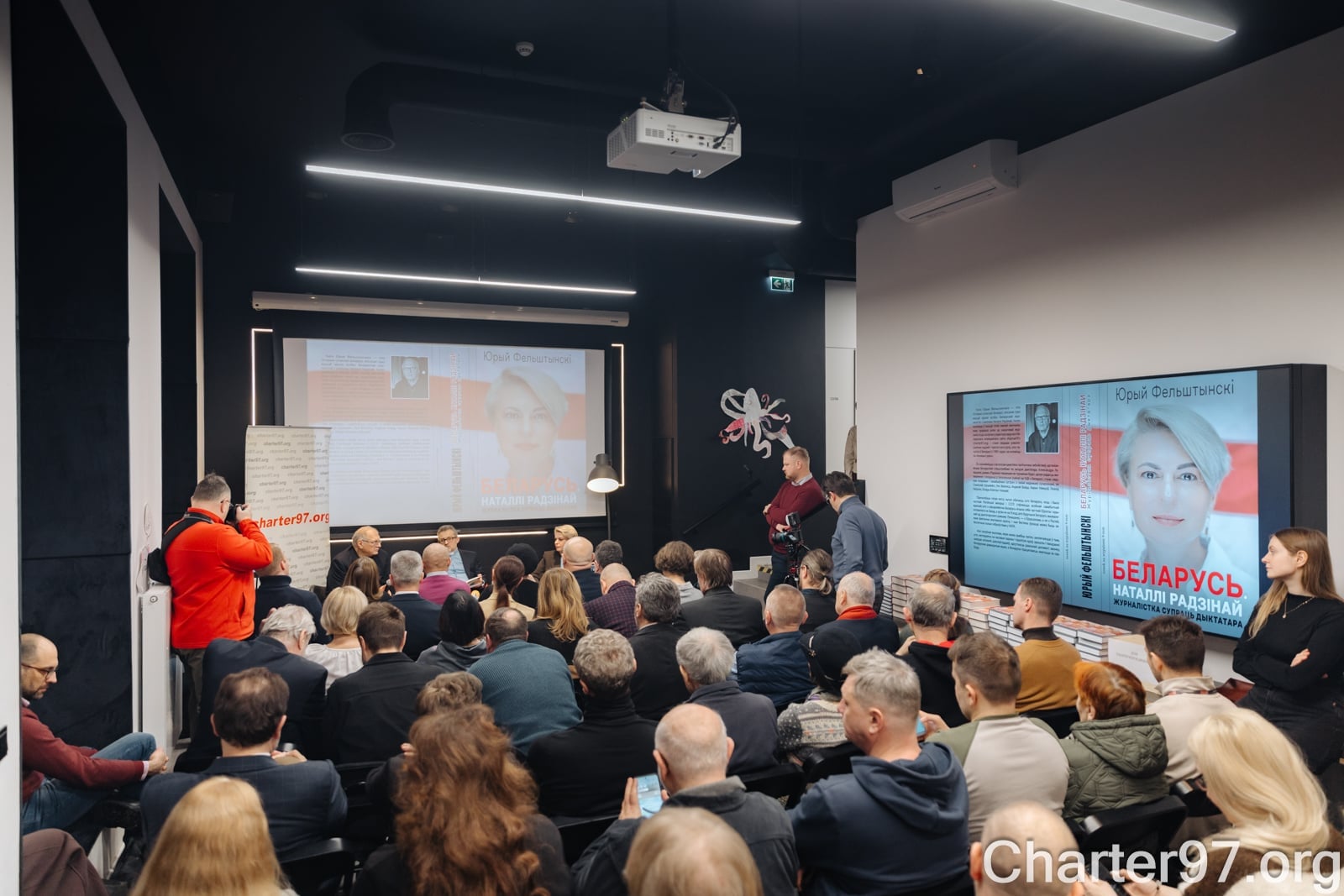
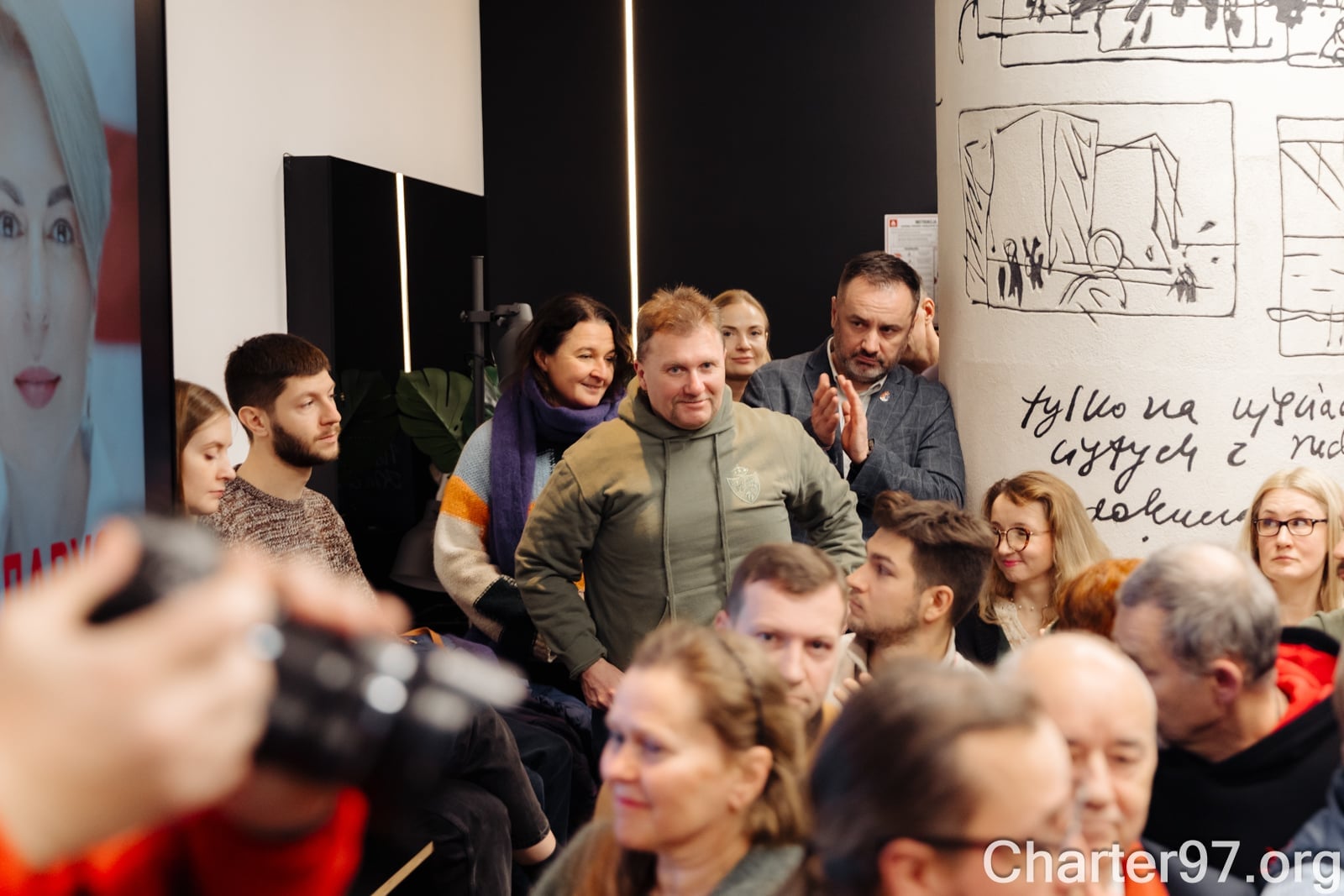
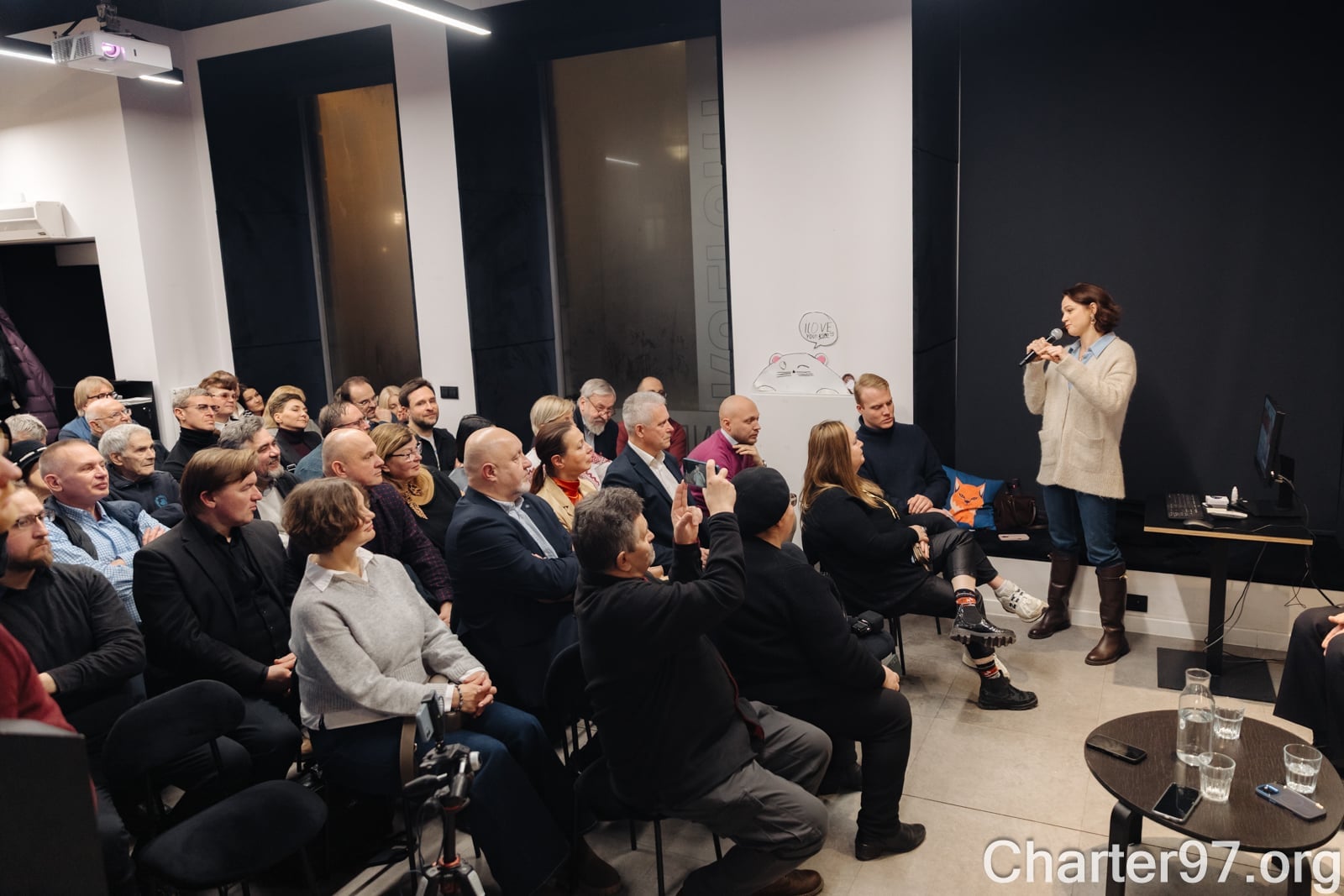
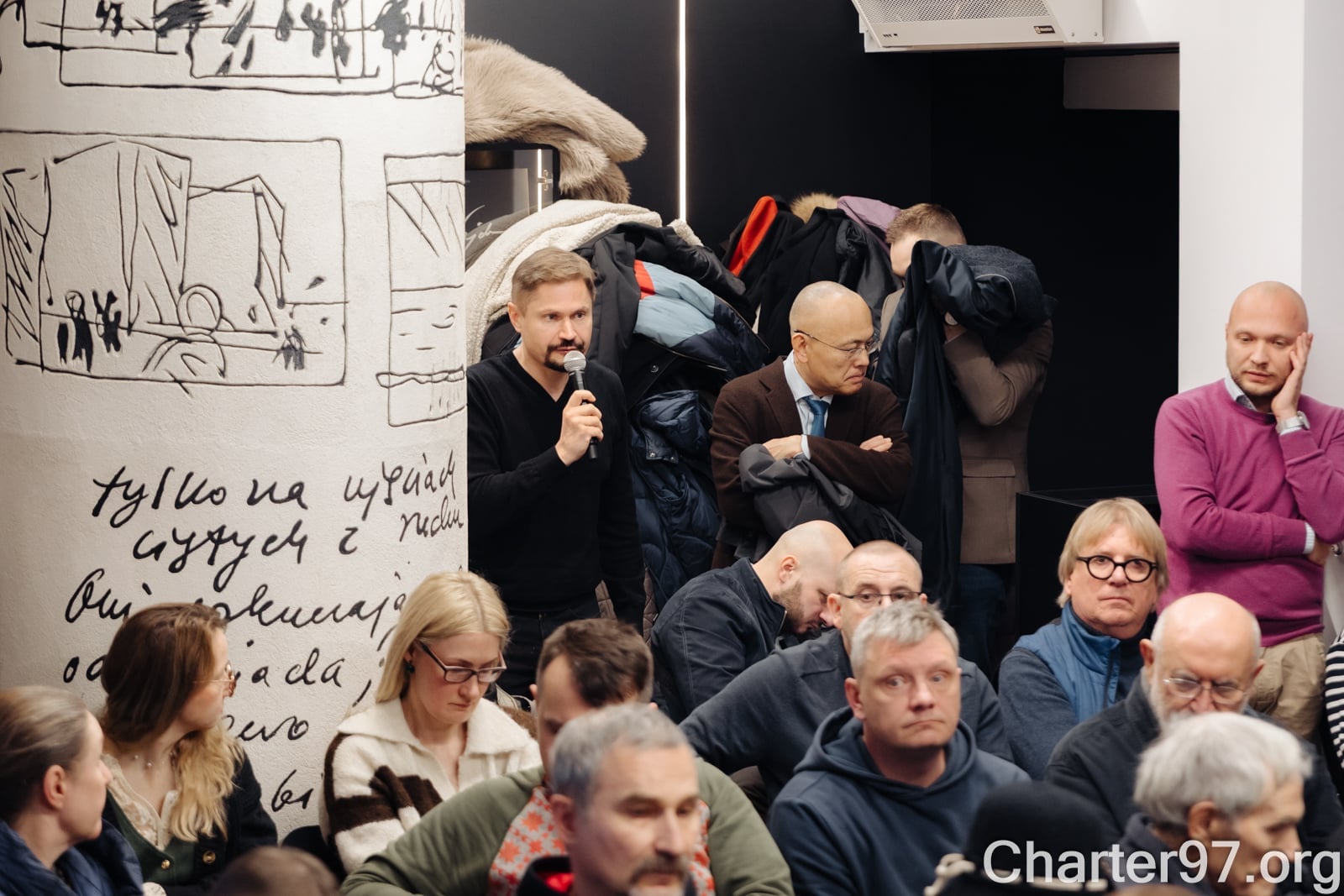
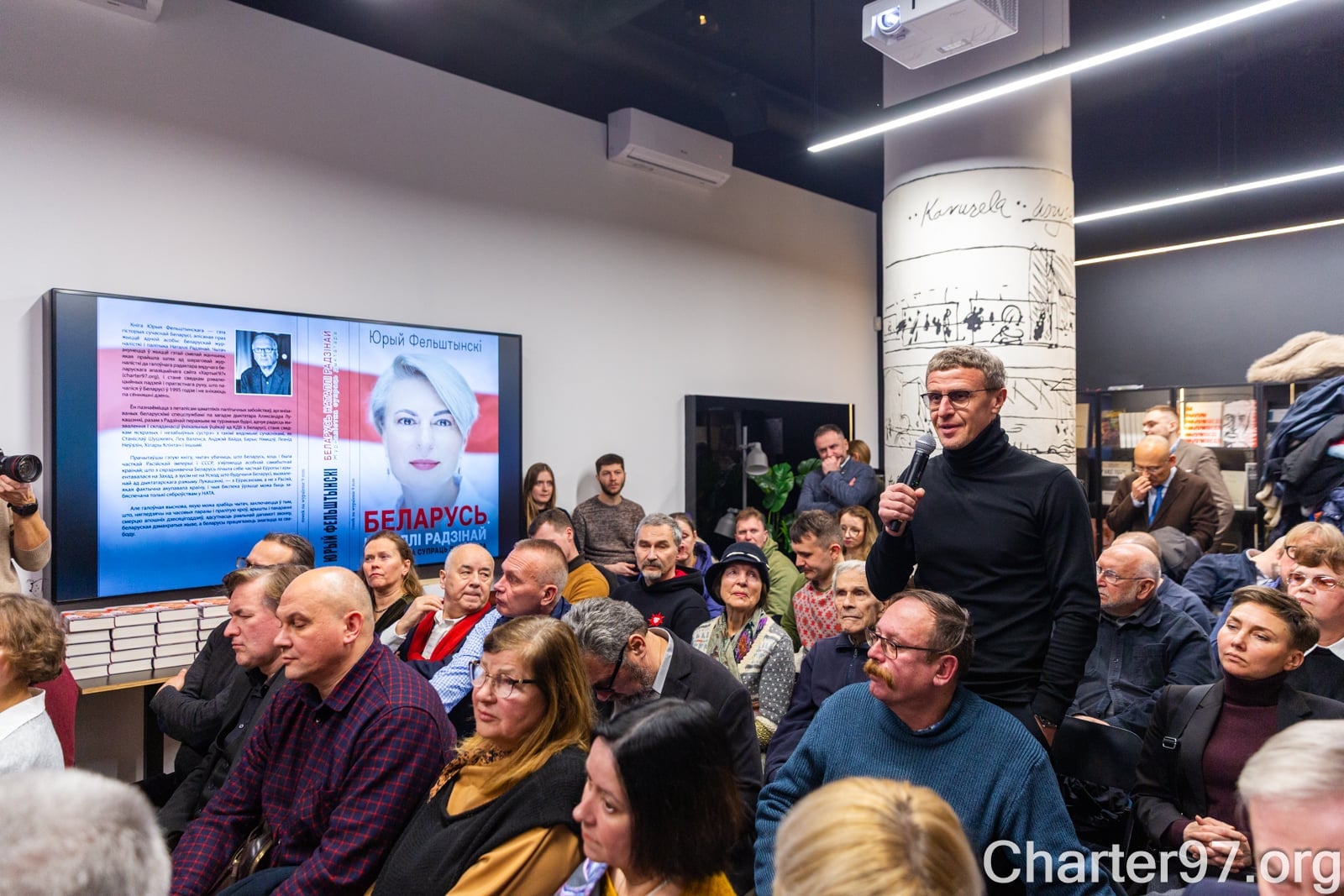
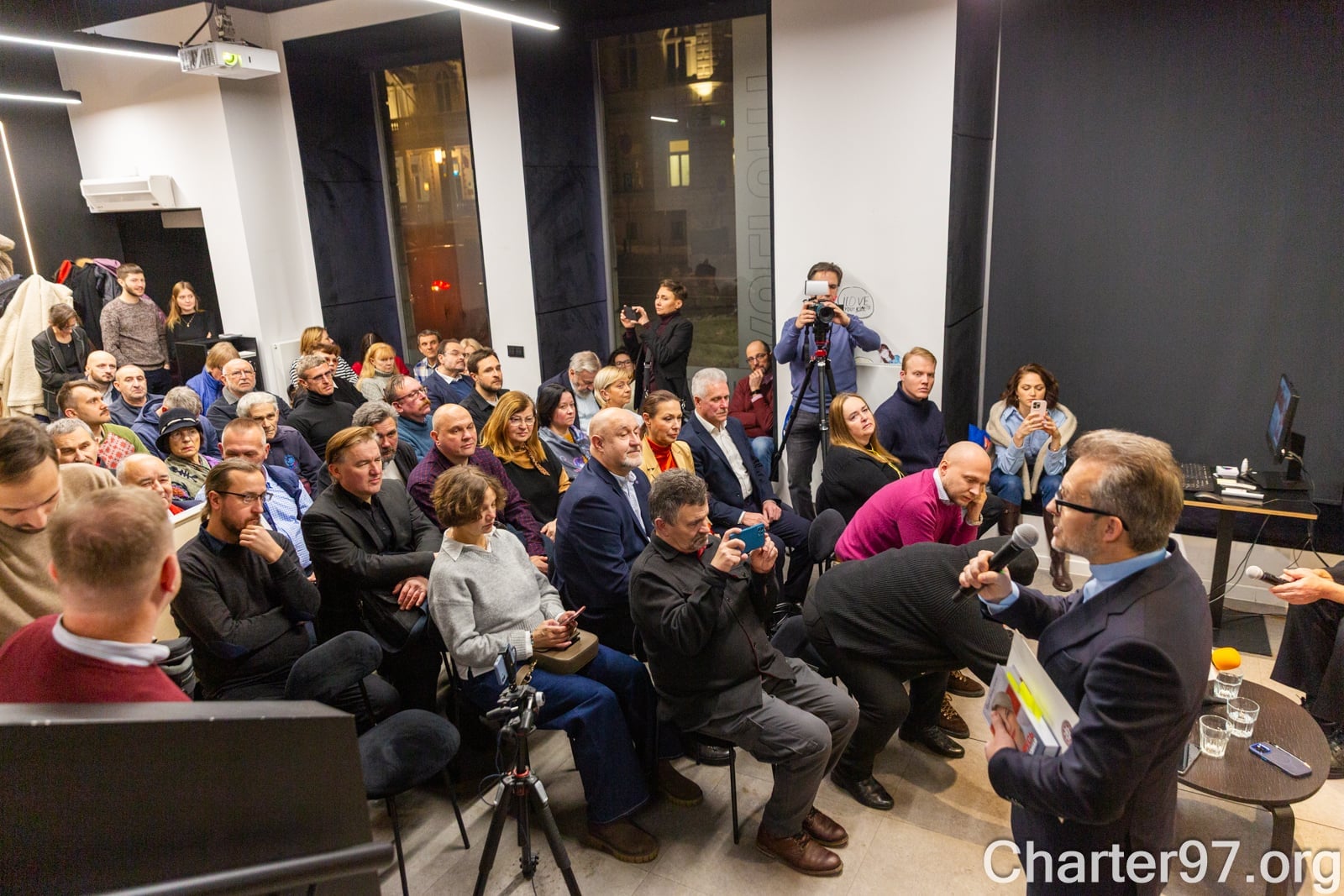
The presentation of Yuri Felshtinsky's book gathered a full hall.
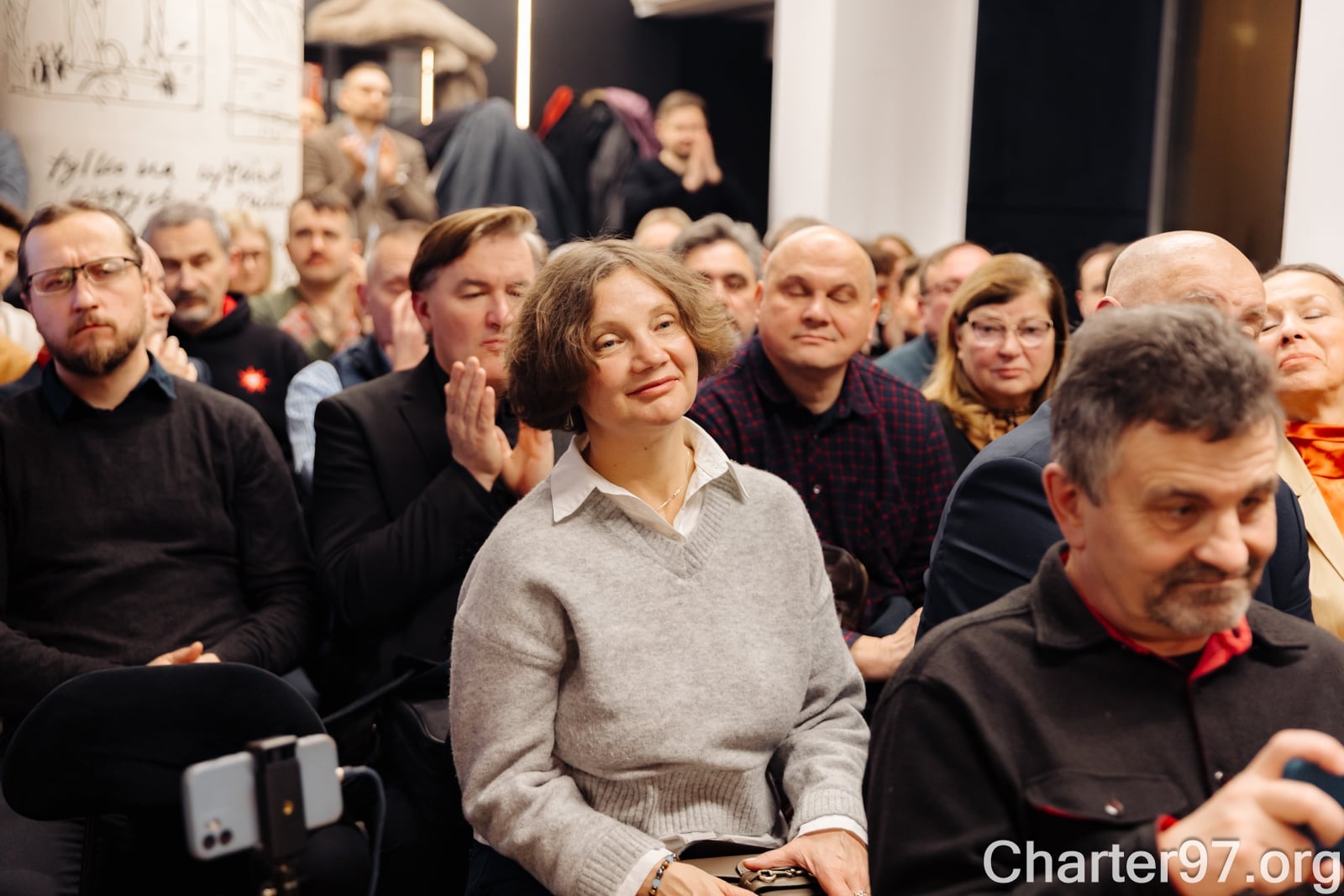
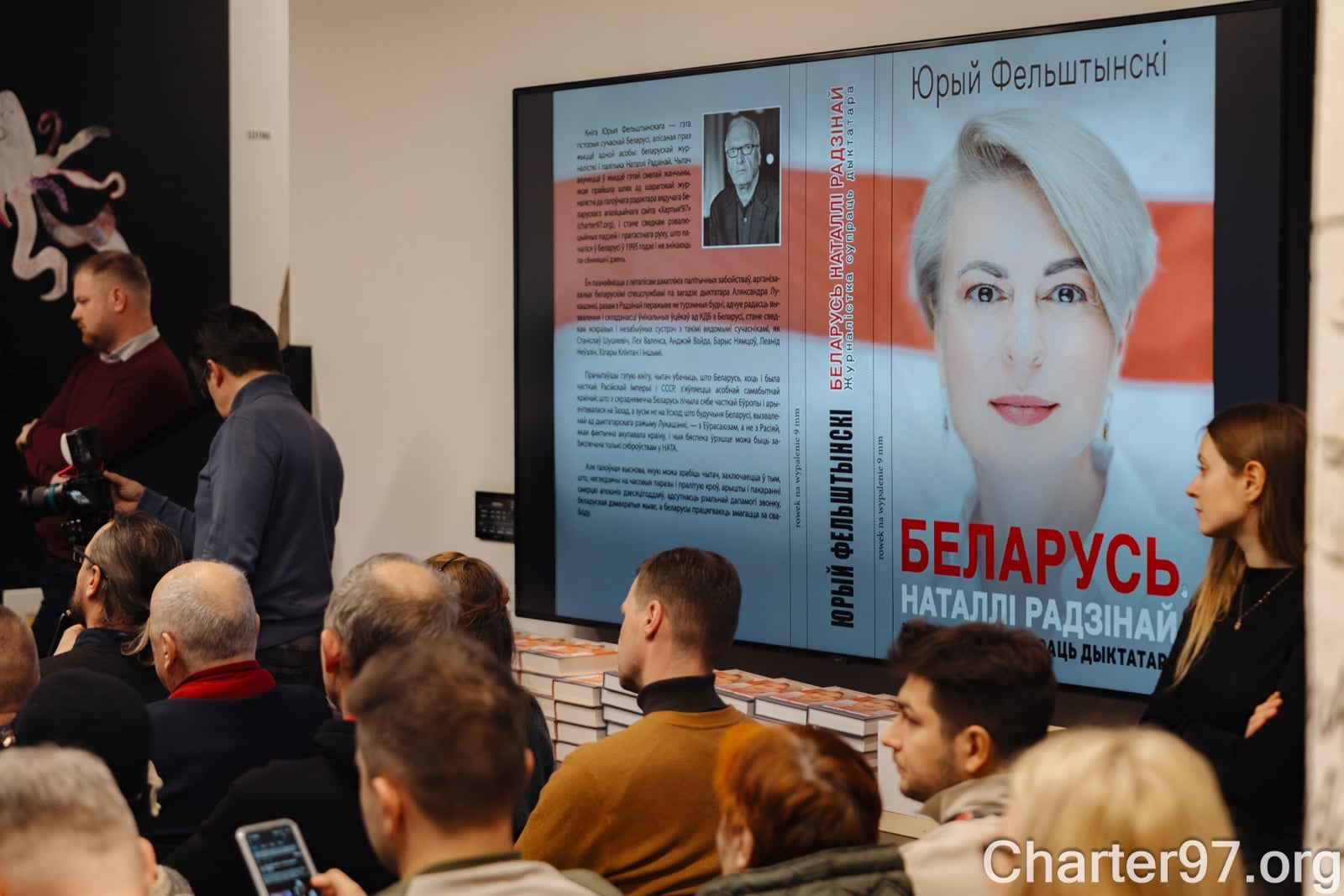
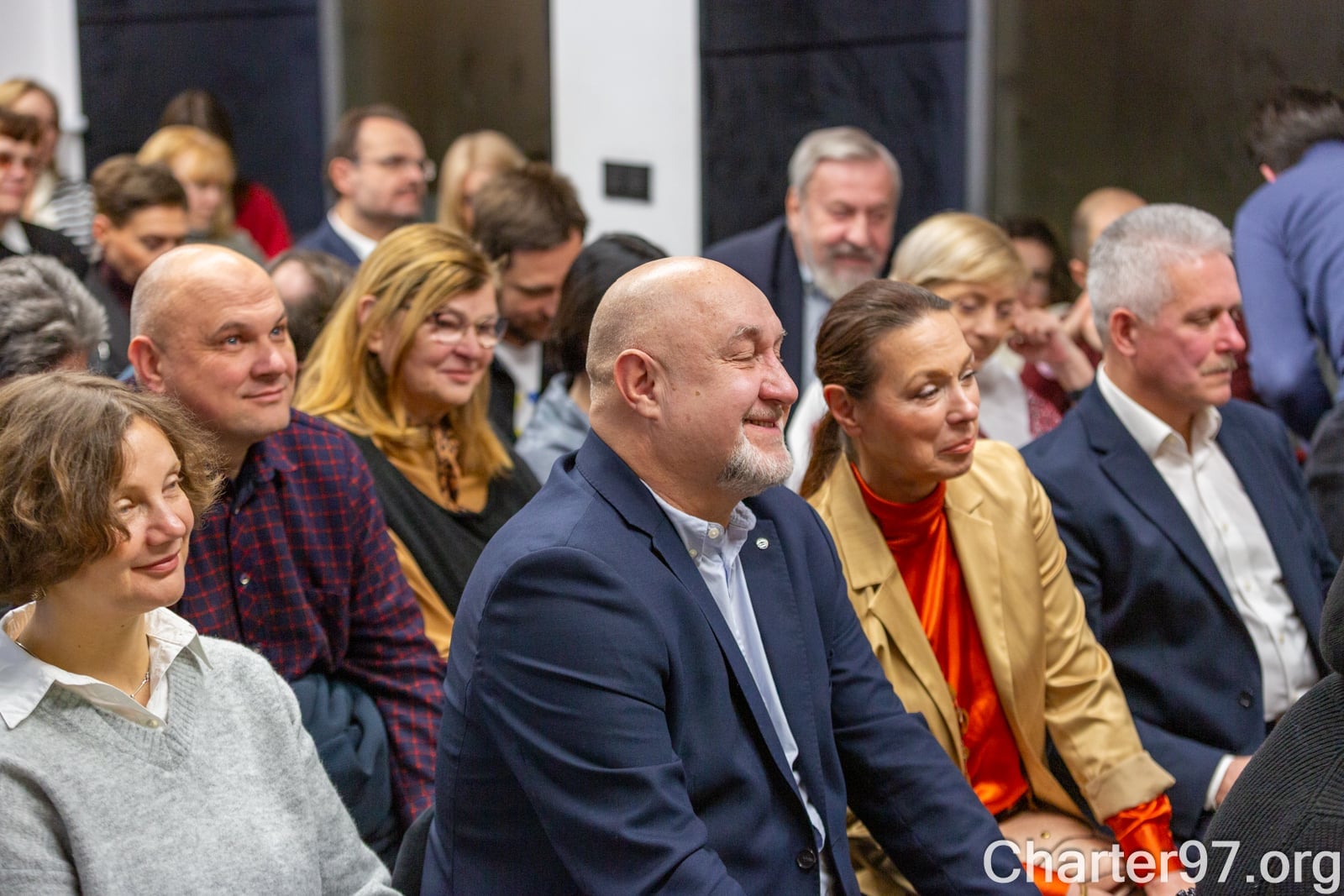
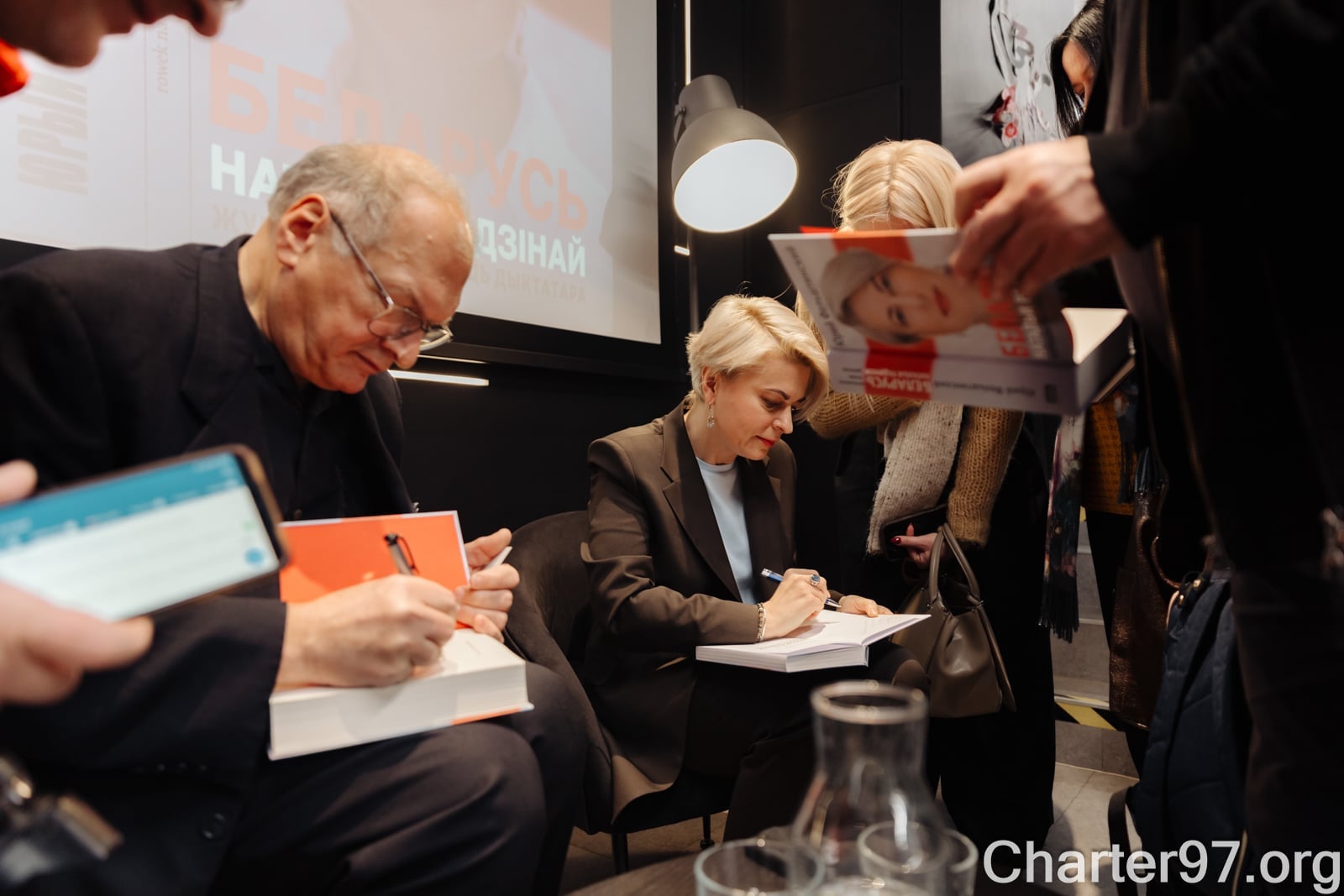
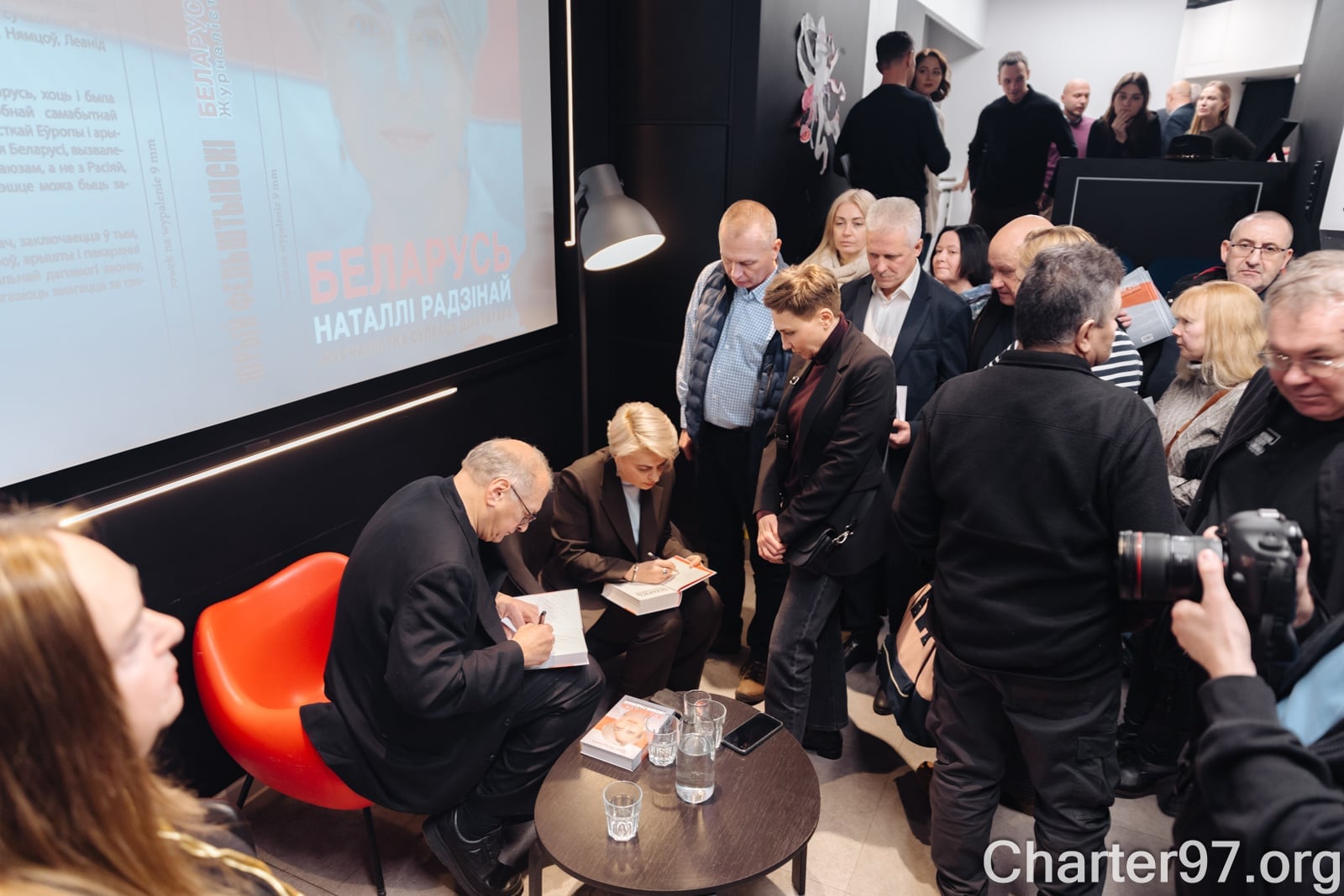
Warsaw has hosted the presentation of the book by the famous American writer Yuri Felshtinsky "Natallia Radzina's Belarus. Journalist vs. Dictator." The Andrzej Wajda Center, where the event was held on January 16, was crowded. The meeting, which gathered opposition politicians, Belarusian, Ukrainian and Polish journalists, as well as foreign diplomats, lasted almost three hours.
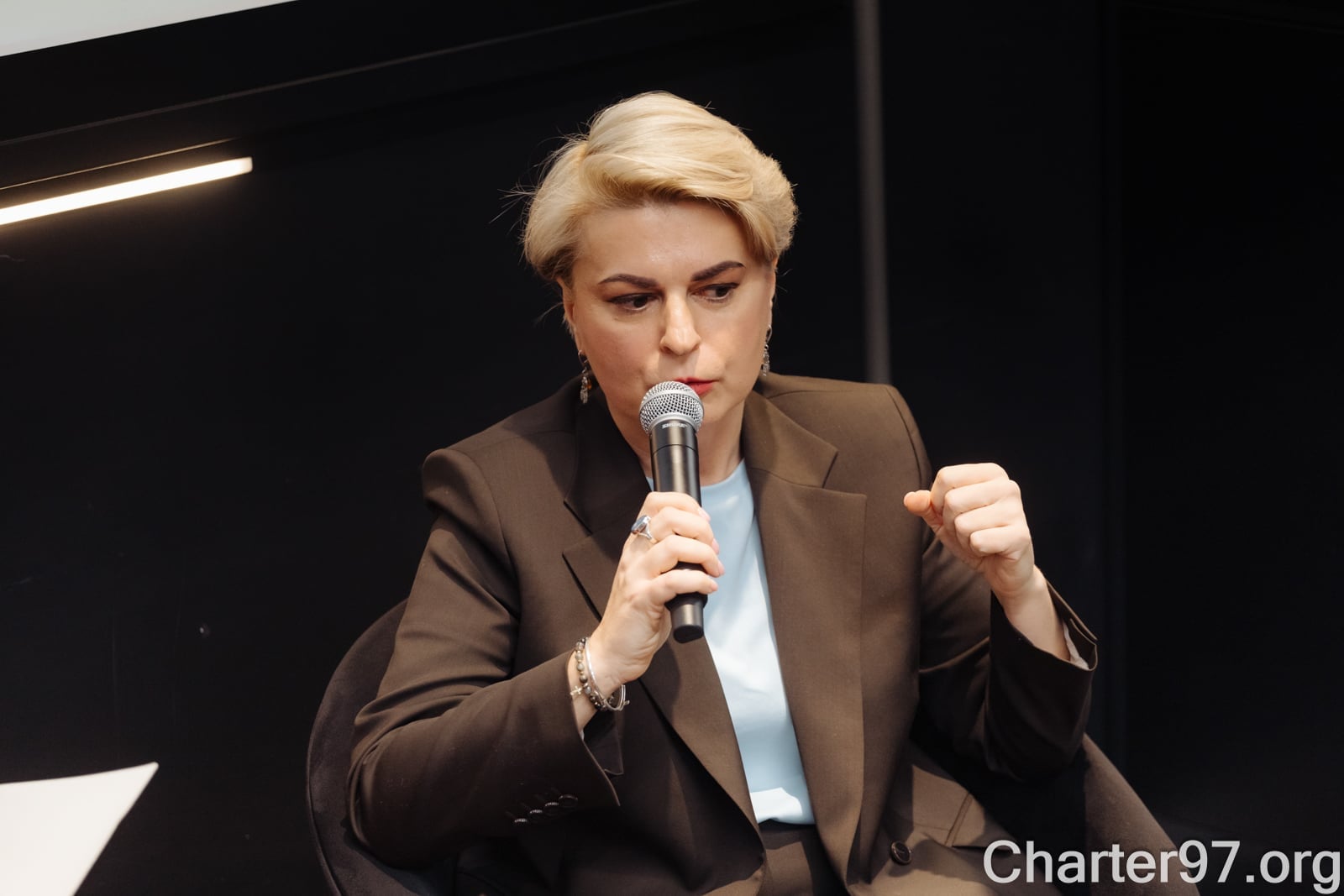
The event was moderated by the pastor of the Belarusian Catholics in Warsaw, priest Vyacheslav Barok. The priest said that he read the book in one breath:
- If someone thought that coming to the presentation of the book, he will hear the memoirs of Natallia Radzina, he is mistaken. Of course, on the one hand, this is a book about history.
Reading Natallia Radzina's Belarus, I caught myself thinking how lucky we Belarusians are to have such a textbook on the history of modern Belarus. However, this book reads very easily, it is not overloaded with chronology and dates, though it has them. It is a living book about the struggle of Belarusians for freedom and independence. When you read it you realize that it is about you. After all, it contains many events that relate to our common struggle.
Vyacheslav Barok shared his opinion on how to understand the title of the book:
- When a person reads it, he sees that the plot is not centered on Natallia Radzina, and it is not about "Belarus belongs to Natallia Radzina," the book is about the fact that Natallia Radzina fully belongs to Belarus. This is a completely different approach.
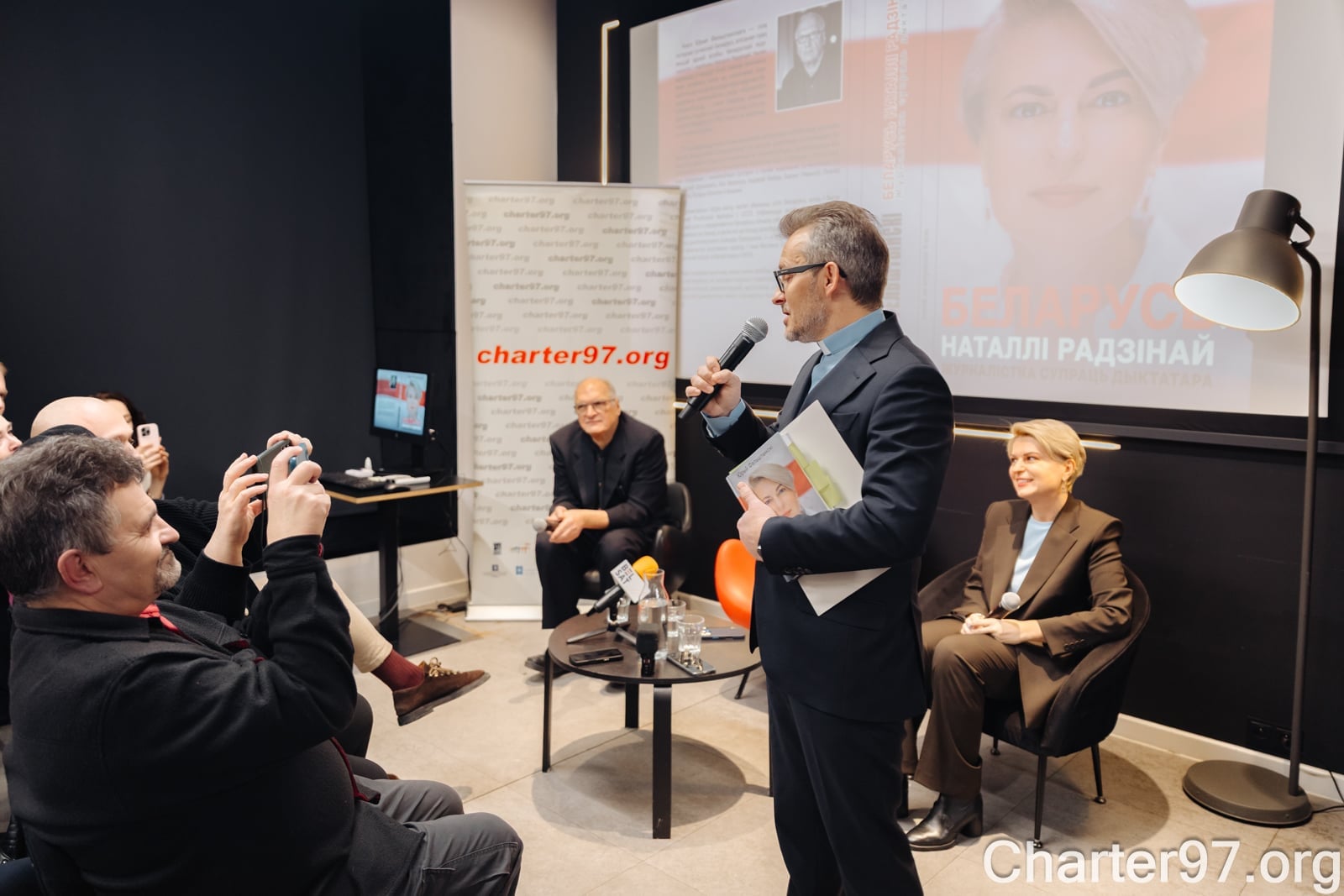
Yuri Felshtinsky, author of such bestsellers as "The FSB Blows Up Russia," "The Corporation: Russia and the KGB under President Putin," "World War III. Battle for Ukraine", told why he decided to write a book about Belarus. The American historian admitted that he had been looking at the history of our country wrong all his life:
- It was the moment when Natalia and I found ourselves together at the Free Russia Forum, speaking on the same panel. And Natalia gave a very short lecture on the history of Belarus for the uninformed to the audience. And I realized that this lecture was given for me. At that moment I realized that I had been looking at Belarus absolutely wrong all my conscious life, and many questions and subjects that were closed for me were put together like parts of a puzzle. Everything began to fall into place. It became clear how to fight with Russia, how to change the situation, what should be done for that.
When this plot with Belarus opened for me, I, of course, began to think through whom I could understand an absolutely alien country. And I made an appointment with Svetlana Tikhanovskaya. I flew to Vilnius, we met with her, with part of her team. The rest of the team was in Washington, and I met with her as well.
I will say frankly that Tikhanovskaya did not make an impression on me (I always add that, apparently, I did not make an impression on Tikhanovskaya either). Maybe it was my mistake, maybe it was my fault, but I realized that Tikhanovskaya would not help me in my plot of cognition of Belarus. Unlike Natalia, who helped a lot.
We agreed with Natalia that I would record a series of interviews. We worked on it for several months - I flew to Warsaw from the USA, then worked on the text. There were other participants of this book - the leader of the civil campaign "European Belarus" Andrei Sannikov, the coordinator of "European Belarus" Dmitry Bondarenko and three-time Olympic medalist, world and European champion in swimming Alexandra Gerasimenya. I hope that "Natallia Radzina's Belarus" turned out to be light and dynamic, because the task was to write a book that would be easy to read.
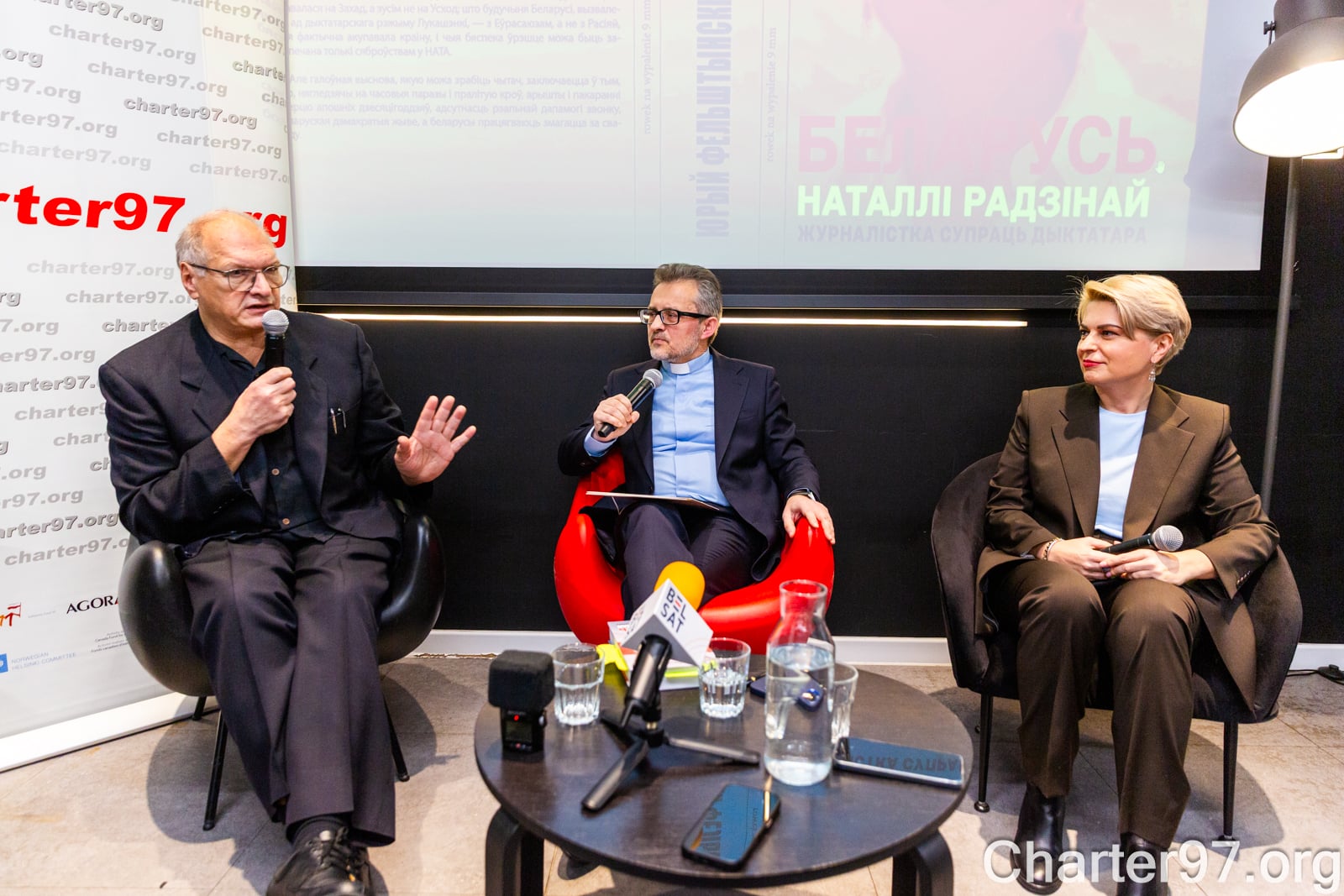
One of the reasons why Yuri Felshtinsky decided to write a book about Belarus is the strategic importance of our country:
- To understand the geopolitical importance of Belarus, all you need to do is to look at the map of Europe. Nothing else needs to be done. I am absolutely convinced that most people have not done this once in their lives. Although it sounds a bit wild, but for example, in America, where I have been living for almost 50 years, there is simply no geography at school. If you look at a map, it's pretty clear that Belarus is Russia's gateway to Europe. In good times, it is a gateway for trade. And in bad times, unfortunately, in which we now live, it is a gate for attack. And against the backdrop of the Russian-Ukrainian war, it became clear that control over Belarus is, accordingly, a gateway for Russian invasion of Europe. It turns out that removing Belarus from Russian control, freeing Belarus from Russian occupation, and Belarus' accession to the EU and NATO solves the issue of European security.
An American historian is confident that changing Lukashenko's regime is a simple task for Europe and Ukraine:
- We often talk about the need for regime change in Russia. But I have to tell you as a historian that regime change in Russia, when the state security came to power there as a result of a quiet coup in 2000, is a very difficult task. And if you look at it realistically, it is a task for decades. I am not one of those critics of the Putin regime who believe that with his removal everything will fall into place. I believe that this problem is much more serious and deep. And if we approach its solution rationally, we should raise the question not about regime change in Russia, but about regime change in Belarus. And this task is absolutely reasonable and real. And it can be realized against the background of Russia's war with Ukraine, and it can be realized by the forces that Ukraine already has today. Europe was obliged to think about this topic, to look at the map from time to time, and to help the Belarusian people to overthrow this regime in 2020.
Natallia Radzina said that she had a hard time working on the book, but it was important to tell the story of the Belarusian resistance:
- It was very difficult for me to agree to work on the book, because it brought me more problems than joy, because it is very hard to remember your whole life.
We really talked a lot with Yuri, worked a lot with the book already written. It was probably the hardest moment in my life, much harder than prison. Because you look back at your life and you think: was it really worth living like that? Was it worth devoting your whole life to work? Was it worth it to dream since childhood only to live in your own free European country? When the book was written, I realized that it was. And I really have no regrets. And it was very important to realize this for myself.
Secondly, I agreed to work with Yuri, because it was necessary to write a book about Belarus, about our struggle. Belarusians are a very heroic people: they have been fighting for their freedom for hundreds of years, fighting against Lukashenko's regime for more than three decades. And there are actually very few books about it. Or they don't exist at all.
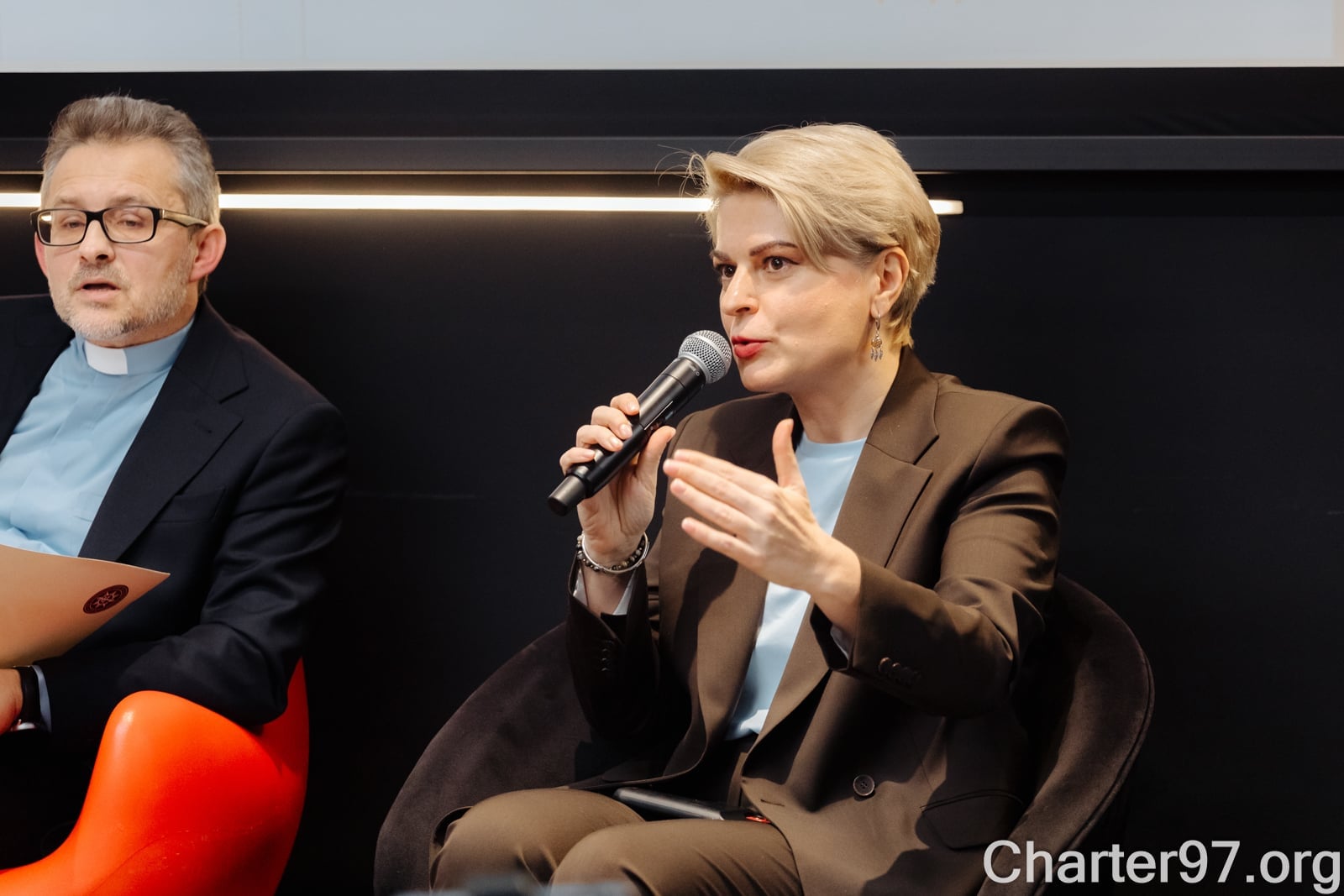
The editor-in-chief of Charter97.org pointed out that many Belarusians who opposed Lukashenko's regime in 2020 don't know the history of the resistance. Nor do they know it in Europe, which became more interested in our country after the Belarusian revolution. One of the tasks of the book is to tell about those who fought against Lukashenko before the events of 2020:
- I personally knew many people who died in this struggle with the regime. Such as Viktor Gonchar, Hennady Karpenko, Yuri Zakharenko, Anatoly Krasovsky. Many of my fellow journalists died in this struggle for freedom. They are the founder of the Charter'97 website Oleg Bebenin, journalist Dmitry Zavadsky, and they are my friend Veronika Cherkasova.
Many journalists died early due to serious illnesses, and there are so many questions as to why this happened. I list in this book dozens and dozens of names of journalists with whom we worked in independent publications since the 90s.
These heroes who opposed Lukashenko's regime were very, very many, and their names have become forgotten. When Yuri suggested: let you tell the stories and we will write this book, - I agreed. Because it should be remembered, it should be talked about.
I am very grateful that Andrei Sannikov and Dmitri Bondarenko helped me to tell the real history of Belarus. It is very important that it should be written. Because we sometimes forget what we did 10-15-20 years ago. And it should be remembered, because, I think, many worthy deeds were done.
Priest Vyacheslav Barok asked Natallia Radzina how she managed to overcome fear, because the fight against the regime is associated with constant danger:
- I can't say that I was never afraid: there were different moments. But this fear had to be overcome. Because the most important thing is that this fear does not possess you. That's all. I'm a human being like all of you in this room. I'm sure that almost everybody wants Belarus to be free, and they do a lot for that. Because the book is not about "what a heroine, what an incredible Natallia Radzina". My life is only a small part of the great struggle of the Belarusian people for their freedom, for their country. I am sure that a good book can be written about the life of each of you. I am grateful to fate that Yuri decided to write this book about my life. But I'm sure that there will be many books about Belarusians, known and unknown, who fight for the freedom of their country.
Nowadays the most important thing for Belarusians is not to regret anything, it's necessary to get out of depression. I don't understand this state, which is now very popular in emigration: "This is how bad things are in our country". This is just a stage. Yes, these are hard times, but they will end, believe me!
How many such stages there were during the struggle of Belarusians for freedom. Remember the uprisings in which Belarusians participated in the 19th century together with Poles and Lithuanians. And what, were they doing well? But they continued to do what they had to do: they fought for their country.
And the same thing is happening during these thirty years of Lukashenko's dictatorship. We in "Charter'97" know it well: if Lukashenko suppressed another protest action, we should support and inspire the Belarusians. We must not stop the struggle, we will win anyway, this dictatorship will end.
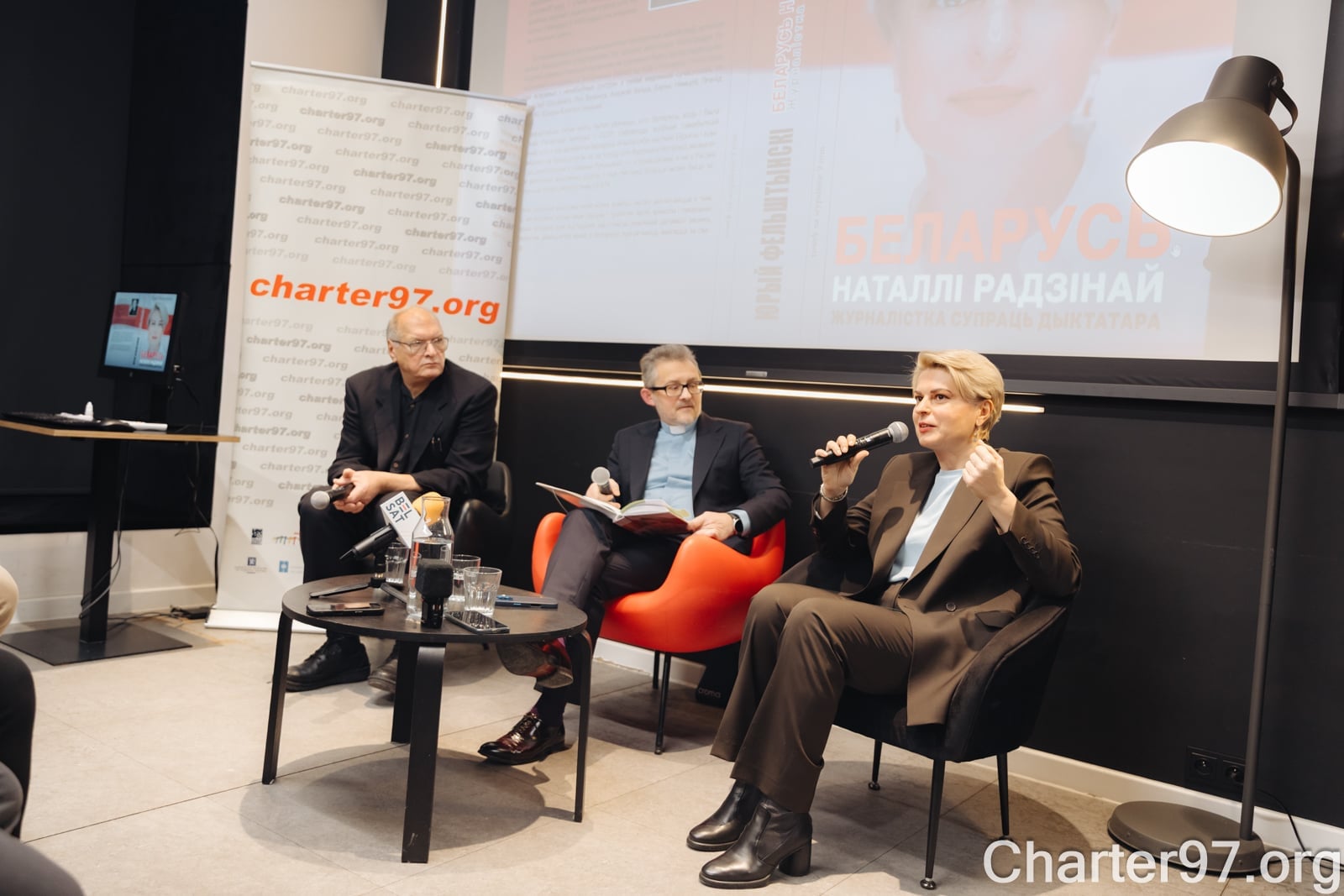
Andrei Sannikov, the leader of the civil campaign "European Belarus," took the floor. In his opinion, the main value of the book "Belarus by Natallia Radzina" is in the objective presentation of the history of modern Belarus, which has recently started to be rewritten:
- First of all, we have two heroes here. I'll start with the first one. Natasha, of course, is very lucky, but in fact all of us are lucky. Because a world-famous historian and writer, a best-selling author, is writing about Belarus. This is a person who does a lot not only to popularize the history of Belarus, including through the book about Natalya, but also to expose the evil that is now obvious.
I am grateful to Yuri because he immediately accepted our position on how important Belarus is. That all the knots, not only in our region, not only in the former Soviet Union, can be untied by solving the issue of Belarus. Yuri is not just a historian by vocation - he is an archivist. He is very good at working with documents: finding out all the smallest details, putting them together and collecting them.
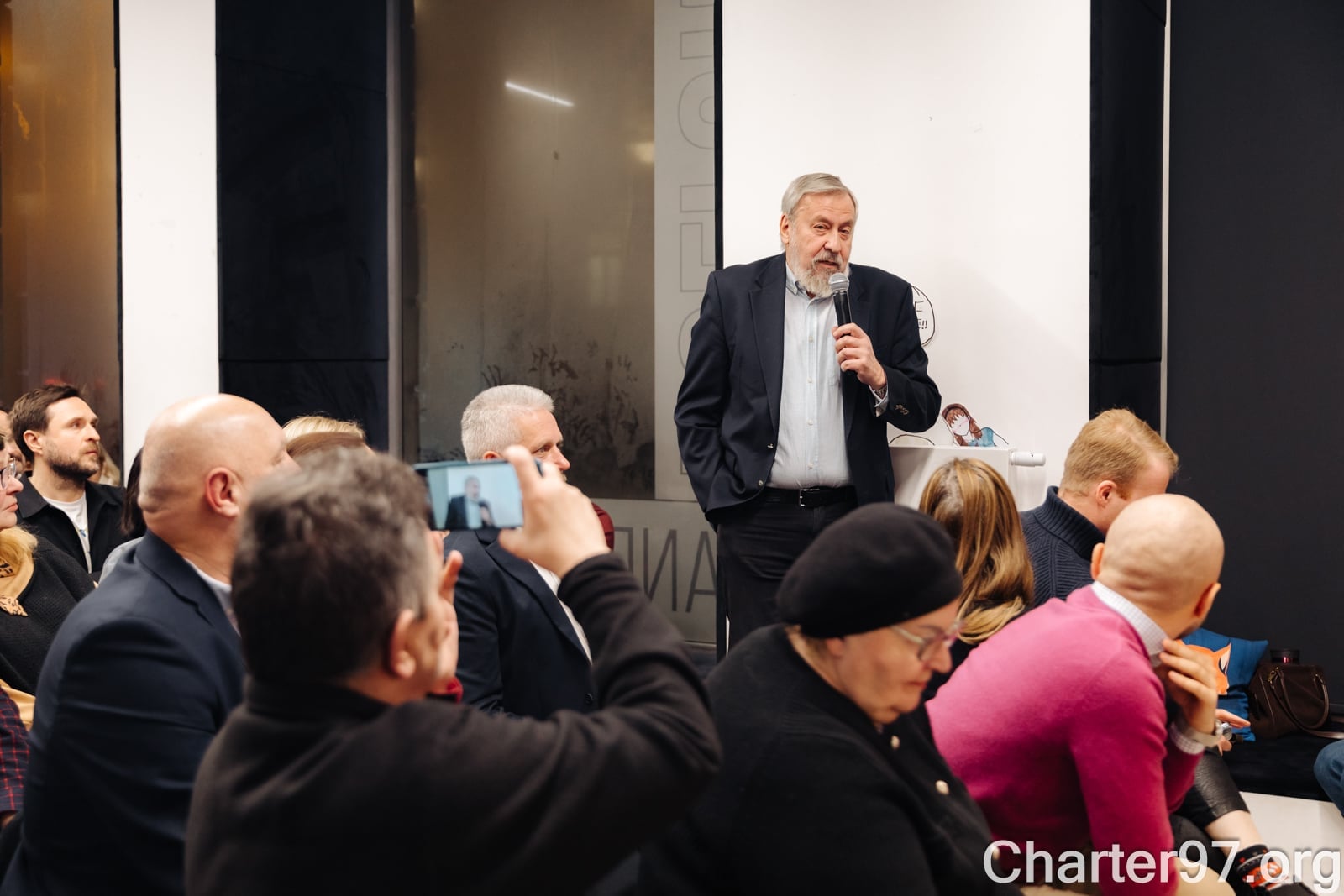
I would like to move on to the heroine. The thing is that this is not Yuri's first biography: first he wrote about Orwell's life. And now he's written about Natallia Radzina, who lives in Orwell's world, who today is boiling in all this and fighting with all this. And the fact that through Natalya you can really tell the story of Belarus, the story of struggle - it is true. And I am grateful to Natasha for making this book happen. I know how difficult it was, how hard it was to work on it.
Today, alternative truth is everywhere - among historians, journalists, analysts. They create Lukashenko's story and start to believe in it themselves. I see that people in their twenties say that they fought in Afghanistan and defended Yeltsin in the White House. That's how it is: they create this artificial history.
But Natalia is a real heroine! She has really done an incredible amount for Belarus. And what I always liked about her - she never looked in the direction of other countries. Even when she found herself in prosperous Holland, she did everything to move closer to Minsk - to Lithuania, and then to Poland.
When there was an escape from Belarus, when she was famous in the world and could take advantage of it - she never had a thought of leaving her work in "Charter" and Belarus. I am very grateful to our two heroes for making this book happen.
The well-known Ukrainian journalist Evgeniy Klimakin told why it is important for his compatriots to read the book "Natallia Radzina's Belarus:
- One person in Minsk usurped power, sold and gave away the Belarusian language, Belarusian culture, Belarusian territory, where occupants can enter and do whatever they want - so in the understanding of many Ukrainians, because of this person who sits in Minsk, who you don't even want to call by name, Belarus is perceived as an extension of Russia.
And it is this book, such people as Natallia Radzina, such people as fighters of the Kalinovsky Polk, such people who in 2022 undermined railroad tracks and overturned cars with Russian equipment, - show: Belarus is not Russia.
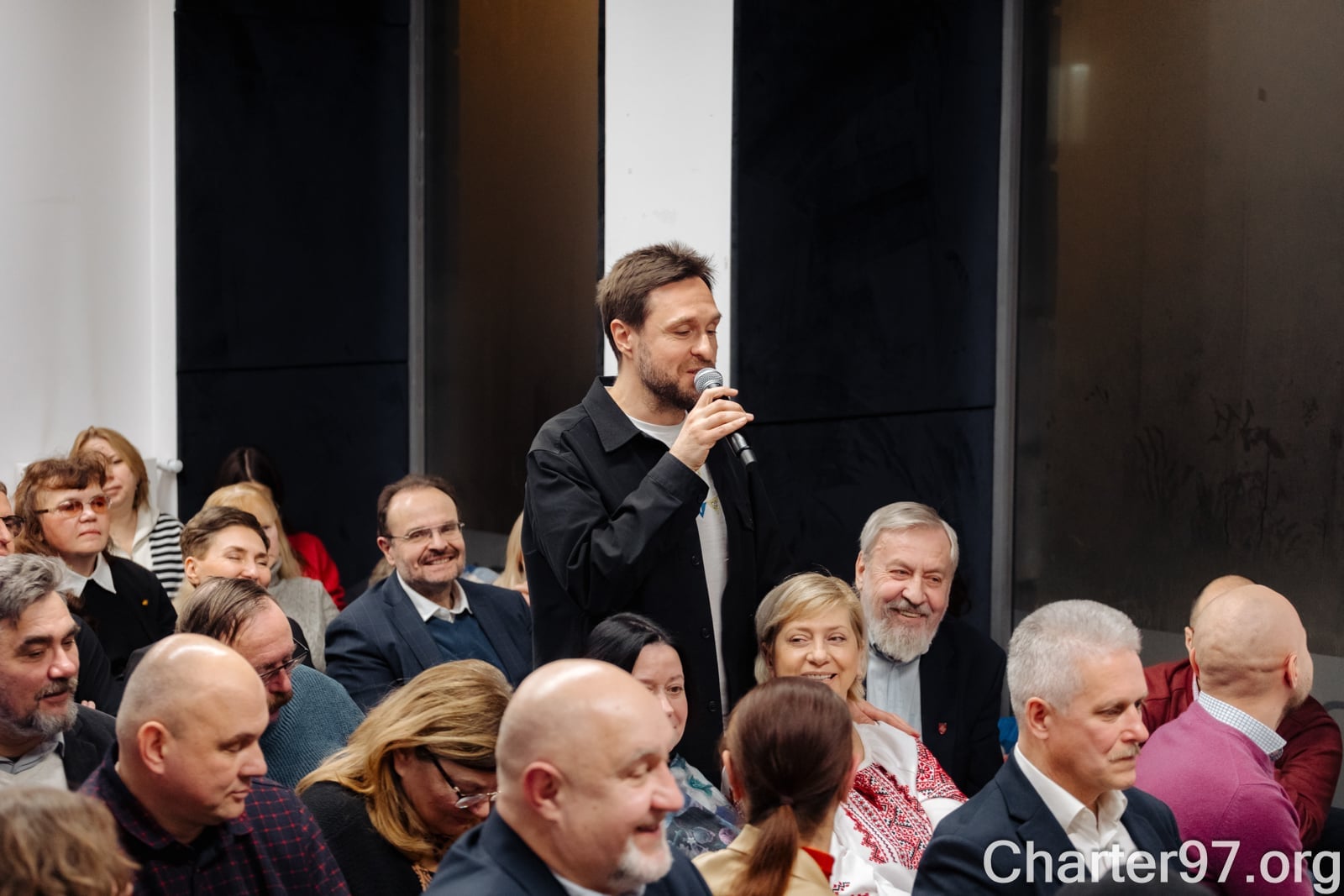
It is people like Natallia Radzina who share common values with us, Ukrainians. They see their future not in Russia, not in some incomprehensible country that will be neutral between Russia and the West, not to interfere anywhere. No! Only such people understand that our common future, a calm future, is the EU, it is NATO.
That is why I would very much like as many people from Ukraine as possible to read this book and learn that the Belarusian protest did not start in 2020, that it was much earlier. That many people paid for it with their lives.
I welcome the appearance of this book. And you, Natallia Radzina, I respect and love you very much. It feels like it is Natalia's birthday today, but today we will not sing songs, but just say to you: many years.
We wish that we live as soon as possible to the time when we can change this regime in Belarus. That all Belarusians who dream of their home, of seeing their friends, parents, of going to the graves of their relatives - that this will eventually become possible.
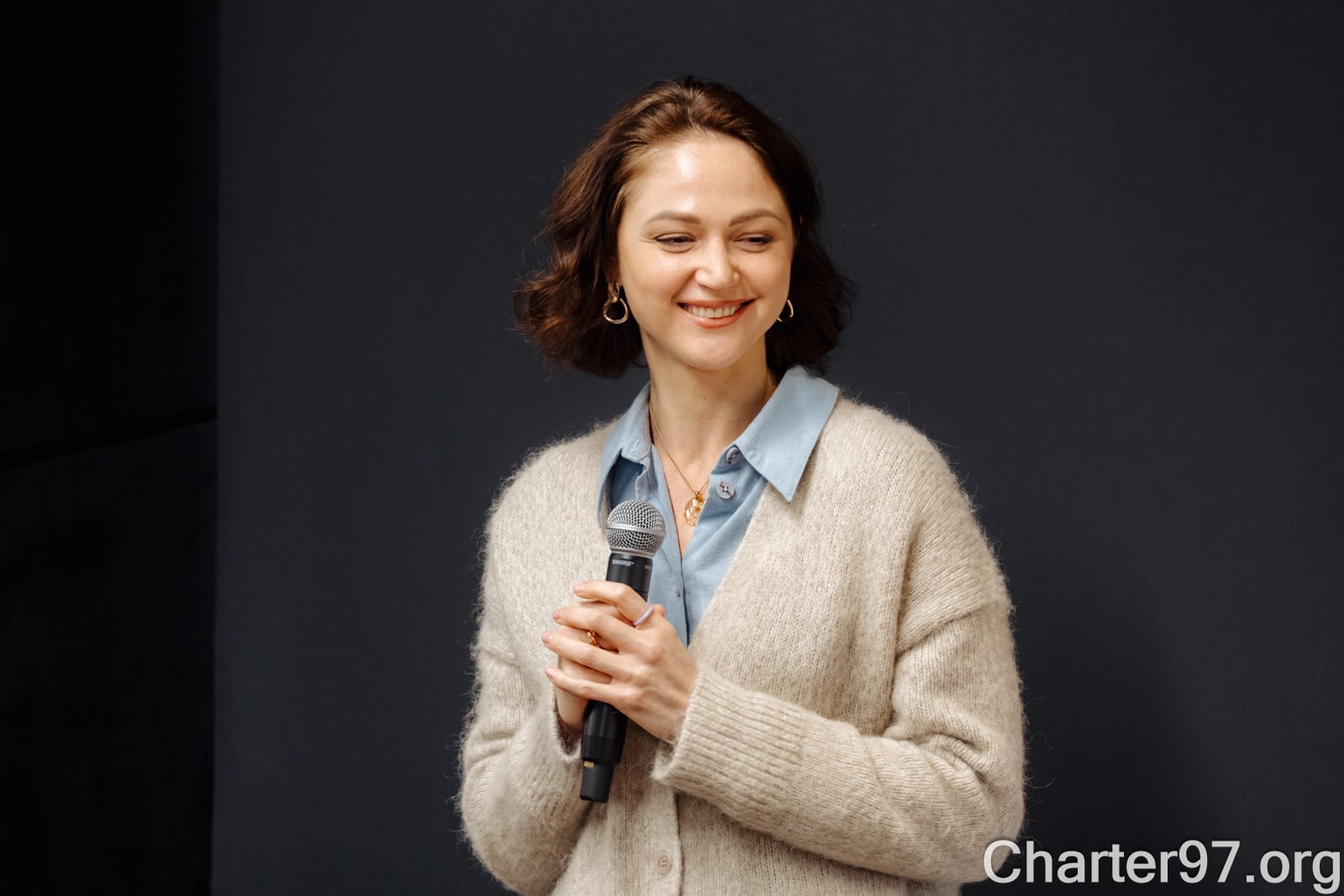
Triple Olympic medalist, world and European champion in swimming Alexandra Gerasimenya shared the story of how Natallia Radzina helped her:
- This book is about each of us. This book is about every honest Belarusian who fights for the truth, who fights for his country, who loves his country, who is ready to go to the very end.
You all know Natalia: she is such an honest, strong woman with a strong inner core. She is. She loves her country, she has that backbone on which she stands.
But on the other hand, she is a soft, kind woman who will never pass by. Do you know who the first person who wrote to me when the war started? I was in Ukraine at the time. It was Natalia, and we had only met once before that. She was the first to write: "Sasha, come on, come quickly! We will help!"
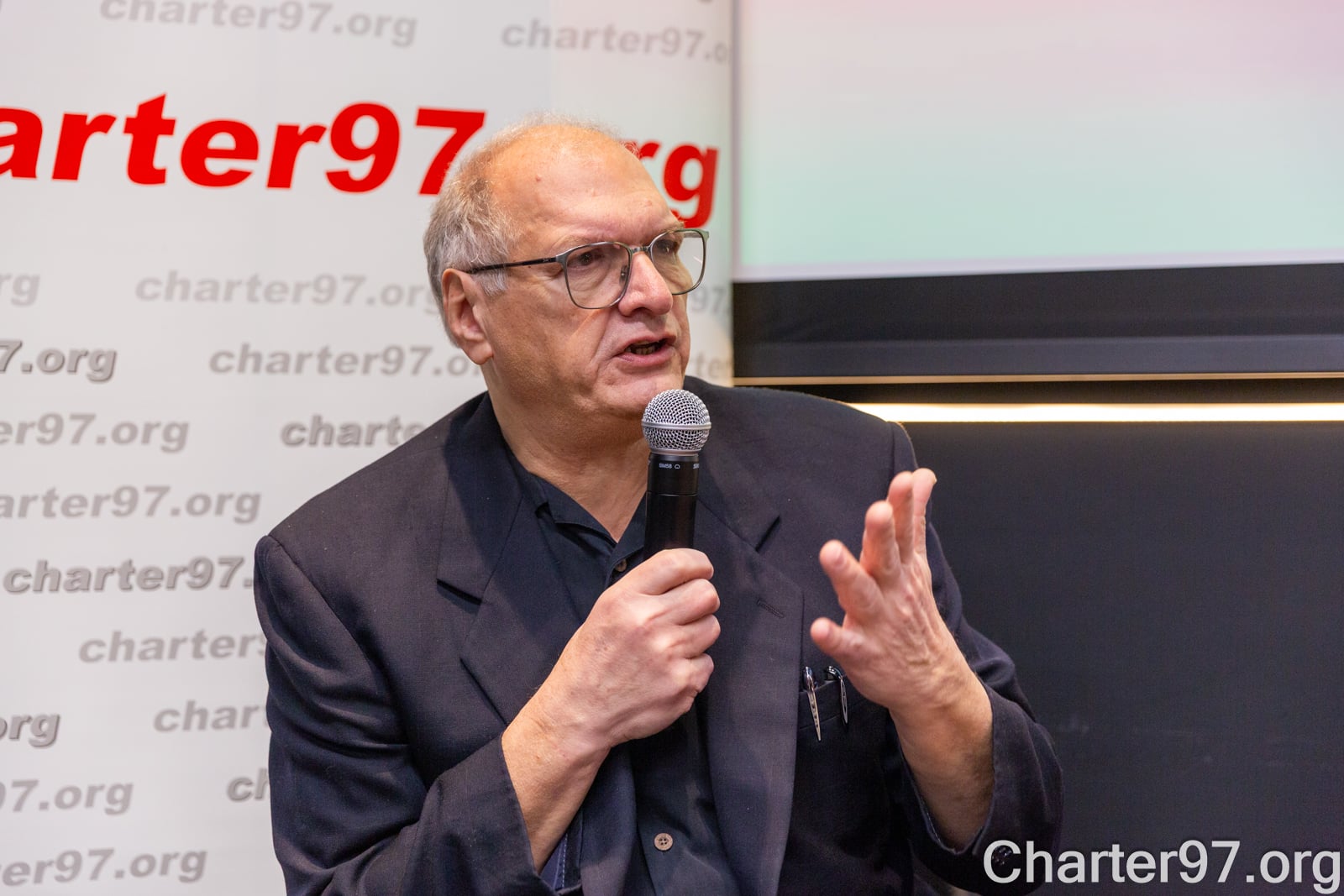
Answering questions from the audience, Yuri Felshtinsky expressed the opinion that two actions are needed to stop the war in Ukraine - the overthrow of Lukashenko's regime and strikes on Moscow:
- Overthrowing Lukashenko's regime is an easy task. After all, the invasion of the Kursk region and Operation Spider's Web are much more difficult tasks. However, as we see, there is no political solution of this type. Why it is not adopted is another question.
What concerns strikes on Moscow - the only territory that defines something in Russia is the capital of the Russian Federation. You have to be a very unprofessional person (I don't want to say "idiot") not to realize this. Not only because 10% of the population is concentrated in Moscow, which is a lot, all the millionaires, propagandists and officials are in Moscow.
Most importantly, when Wagner commander Utkin tweeted on April 24, 2023 that he was marching on Moscow, Putin disappeared. The Russian capital emptied out; you can watch footage of those days. Moscow became extinct. Some kind of military equipment drove around the city. People in military uniforms were taking control of buildings that no one was going to attack.
So if the task is to stop this war - you have to strike Moscow. There is no other way to bring Russia to the negotiating table. If there is an idea to try to create a situation when there will be forces in Russia that will be interested in eliminating Putin's regime, they can rise only if strikes are launched against Moscow.
At the end, Natallia Radzina answered the question about what Belarus means to her personally:
- Belarus is my native country. It's all Belarusians, it's my mother, my father, my family. That's why Yuri writes in this book and I tell about my family. Among my relatives very many were repressed, many were deported from Belarus during the First World War. My relatives were in prison, deported to Siberia after 1939. Family stories were many and different. And all of them are about Belarusians. When have we ever had easy times? It was always hard. But people survived and still took care not only of themselves, but also of their native land.
What else is Belarus to me? I was very impressed by the video from the Minsk Philharmonic. You must have seen it: when there was a concert in memory of Vladimir Mulyavin, the legendary leader of the ensemble "Pesnyary", the big screen showed footage of him singing the song "Malitva" to the verses of our poet Yanka Kupala. And then the whole hall stood up. All the people stood up at the same time. Nobody ordered them to do it, nobody gave them a command - people just stood up.
And this is Belarus for me. And this today proves that Belarusians are not broken. No matter how difficult the situation is, today there is no opportunity to protest, no opportunity to openly express one's protest against this power. But people show by such actions that they love their country. Therefore, I believe that Belarus will be free. I believe that everything we do for our country is not in vain.
The main thing is to return to your land, to achieve freedom for your country and all of us.
At the end of the meeting everyone could buy the book for a symbolic donation for the politically repressed Belarusians.
We remind you that the book "Belarus by Natallia Radzina" can be purchased:
Belarusian edition - platform of the publishing house "Januszkiewicz" "Knigauka" and in Warsaw in the bookstore "Knigauka" at ul. Kłopotowskiego 4, 03-717.
Russian edition - publisher's website "ISIA Media" and Amazon.
Ukrainian edition - "Drukarskyi Oleg Fedorov's Dvir" and Yakaboo.

Bank's name: Bank Millennium S.A.
Address: ul. Stanislawa Zaryna, 2A, 02-593, Warszawa
IBAN: PL97116022020000000216711123
SWIFT: BIGBPLPW
Name of the account holder: Fundacja “KARTA ‘97”
Purpose/title of payment: Donation for statuary aims
You can contact us by the e-mail charter97@gmail.com