

Portnikov: Putin Turns Out To Be A Mix Of Kashpirovsky And Zhirinovsky
- 5.10.2026, 13:30

The USSR was a country of deep illiteracy and a belief in miracles.
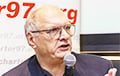
Ukrainian columnist Vitaly Portnikov, on his YouTube channel commented on the death of Anatoly Kashpirovsky and explained why the figure of the Soviet psychic is important for understanding today’s Russia.
The website Charter97.org provides the full text of the speech:
— Anatoly Kashpirovsky, the self-proclaimed healer and psychic from the perestroika era who passed away recently , will be buried in St. Petersburg in secret—even from his closest friends.
No one knows when the funeral service will take place or where Kashpirovsky will be buried. A fitting fate for one of the most flamboyant charlatans of the past, who drew audiences numbering in the thousands and whose pseudoscientific hypnosis sessions were broadcast on Soviet Union’s national television.
If perestroika had any striking symbols that underscored what had actually happened to Soviet society during the years of communist dictatorship, they were, of course, Anatoly Kashpirovsky and Alan Chumak. However, both considered each other charlatans.
Kashpirovsky was, without a doubt, an artistically gifted man. But it is clear that without the support of the Soviet leadership at the time, he would never have made it onto television screens or hypnotized audiences with his—essentially—assertions about the need to submit to hypnosis.
When perestroika ended, Kashpirovsky continued to find a receptive audience among new television show hosts across the country. And in this case, we’re talking not only about Russia but also about the post-Soviet space. As is well known, both Andrey Malakhov and Dmitry Gordon provided a platform for the now-almost-forgotten psychic. However, it is clear that they were not the architects of Anatoly Kashpirovsky’s success during the perestroika years; but rather those very curators from Lubyanka who managed the psychic’s career and brought their future political representatives—such as Vladimir Zhirinovsky—into the political arena.
It was by no means a coincidence that Kashpirovsky became a deputy of the first State Duma precisely from Zhirinovsky’s party, whose faction included quite a few opportunists of that era. Who Zhirinovsky really was and how deep his ties to the KGB of the USSR ran, I believe, became evident throughout the political career of a man who was used by the Kremlin to test the Russian leadership’s most extravagant plans on the public—plans that have now become reality.
As for Kashpirovsky, he was cut from roughly the same cloth, just in a different field. Politically speaking, he was essentially a psychic version of Zhirinovsky. After all, it’s no coincidence that a man born in Ukraine—who spent most of his life in that very country until the collapse of the Soviet Union— in Kyiv, supported Russian aggression against Ukraine in the 2020s and died in Vladimir Putin’s hometown, virtually forgotten by his own compatriots.
It is precisely Kashpirovsky’s political orientation, his ties to Zhirinovsky’s LDPR, and his political statements—which left no doubt whom he actually sympathized with, can shed light today on how a man who decided he could cure illnesses with the sound of his voice ended up on Soviet television in the first place.
It was necessary not only to somehow divert the audience’s attention from the problems that arose during the years of perestroika to sessions of televised hypnosis. It was necessary to find people who could subjugate society and carry out the tasks that Soviet security officials had already set for themselves at that time. Both Zhirinovsky and Kashpirovsky were precisely the kind of people who approached the fulfillment of this important mission in different ways.
But Kashpirovsky didn’t quite succeed. It became clear almost immediately that he was a charlatan capable of attracting only a fairly narrow group of people—those with absolutely no understanding of science or education—and that he would never become a serious public politician or community leader.
Although, of course, Kashpirovsky himself saw things quite differently. That is precisely why he was immediately removed from the roster of perestroika icons by those who had brought him onto national television. No one tried to convince television executives anymore of how important Kashpirovsky’s sessions were for calming Soviet society.
And in all the years that followed, the retired psychic was no longer able to demonstrate his paranormal abilities in any way.
His trip to the seized maternity hospital in Budennovsk, where Kashpirovsky met with Shamil Basayev and tried to hypnotize him, became a striking symbol, Portnikov said."
— Basayev merely snorted skeptically, looking into the eyes of the State Duma deputy from the criminal faction, and asked why he wasn’t succeeding. In essence, this was Kashpirovsky’s last appearance in Russian politics. After that, he was known only for his statements in support of Russia’s war of aggression against Ukraine.
However, the very fact that hundreds of thousands, if not millions, of people turned on their televisions during Kashpirovsky’s TV sessions and believed he could help them recover already suggests that the myth of the most educated and well-read country in the world, which persisted during the Soviet era, was shattered by these television sessions.
In reality, despite all its outward trappings, the Soviet Union remained a country of deep illiteracy and belief in miracles. And it was precisely this deep-seated illiteracy that would soon allow the KGB to establish control over the country, and enable Vladimir Putin to swiftly eliminate any seeds of change and lead Russia back to its Stalinist past.
It was Putin who turned out to be that very combination of Kashpirovsky and Zhirinovsky in one package—the one who was able to carry out the tasks set by the USSR Committee for State Security for its agents back in the late 1980s and early 1990s.
So perhaps it is quite symbolic that Kashpirovsky will be secretly buried in the very hometown of the man who became a hypnotist for millions of Russians—people who were easy prey for someone who did not attempt to heal them with his voice, but instead offered them a political program that resonated with the uneducated masses.

Bank's name: Bank Millennium S.A.
Address: ul. Stanislawa Zaryna, 2A, 02-593, Warszawa
IBAN: PL97116022020000000216711123
SWIFT: BIGBPLPW
Name of the account holder: Fundacja “KARTA ‘97”
Purpose/title of payment: Donation for statuary aims
You can contact us by the e-mail charter97@gmail.com