
NYT: Russia's Offensive In Ukraine Has Slowed Sharply
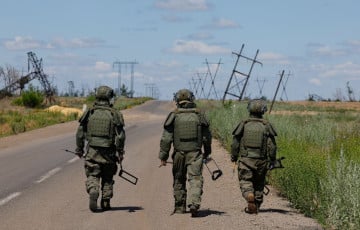
September was the worst month for the occupiers in three years.
Russian dictator Vladimir Putin has repeatedly claimed that the occupiers will allegedly soon take over the entire Donbas. However, recent trends on the battlefield paint a very different picture, writes The New York Times.
The Ukrainian counteroffensive in the northern part of the Donbas, which has been ongoing for several months, has thwarted Russia’s attempts to encircle the cities in the region that remain under Ukrainian control. Western analysts believe that the occupying forces have lost dozens of square kilometers of territory during Ukraine’s “Operation Vivaldi.”
At the same time, in the southern part of the Donbas, Russia continues to launch fierce attacks in an attempt to break through Ukrainian defensive lines. However, Ukrainian troops have reorganized their defenses in this area and have so far prevented the Russians from advancing further in their attempts to encircle major cities in the Donbas.
The publication emphasized that the pace of Russian troop advances across the entire front line in 2026 has slowed significantly compared to last year’s already extremely slow pace. According to the Finnish research firm Black Bird Group, September 2026 was the worst month for Russia since June 2023 in terms of net territorial gains in Ukraine.
Western analysts cite different figures, but they generally agree that this year Russia has gained only slightly more territory than it has lost. Journalists noted that this stands in stark contrast to the version put forward by the Russian Ministry of Defense, which claims that the Russian army allegedly captured more than 5,000 square kilometers of territory.
Furthermore, the publication added that even ultra-nationalist Russian “war correspondents” doubt that Russia will succeed in encircling the so-called “fortress cities” of Donbas.
The publication noted that Putin had previously stated that Russia’s full control over the Donbas—achieved either by force or through concessions from Ukraine—is one of Russia’s conditions for ending the war. Ukraine, however, has no intention of giving up its territories.
Because Russia’s objectives in the Donbas remain unfulfilled, Moscow has intensified its airstrikes on Ukrainian cities. Ukrainian officials previously reported that at least 20 people were killed as a result of strikes on several cities on the night of October 7 alone. They described the Russian bombings as a terrorist campaign aimed at breaking the country’s will to resist.
In early 2026, Russian troops captured Pokrovsk, and in the months that followed, they continued to advance slowly northward. However, the publication noted that Ukrainian soldiers and military analysts believe the Defense Forces ultimately stabilized the front lines, preventing Russia from achieving its strategic objectives.
Ukrainian commanders told reporters that Russia is determined to regain its offensive momentum and continues to throw hundreds of soldiers into the fray every day. In particular, Lieutenant Colonel Kirill Dubrovsky, a commander in the First Azov Corps, stated that the implementation of the “Delta” digital situational awareness and combat management system played a decisive role in containing the Russian offensive.
The publication added that the advance of Russian troops largely depends on infiltration tactics. Individual groups of troops cross the so-called “kill zone,” and then, once behind Ukrainian fortifications, they regroup, lie in wait, and launch an attack.
George Barros, a senior analyst at the Institute for the Study of War (ISW), noted in a conversation with journalists that the Russians have nearly exhausted this tactic due to the expansion of the “kill zone.”

Bank's name: Bank Millennium S.A.
Address: ul. Stanislawa Zaryna, 2A, 02-593, Warszawa
IBAN: PL97116022020000000216711123
SWIFT: BIGBPLPW
Name of the account holder: Fundacja “KARTA ‘97”
Purpose/title of payment: Donation for statuary aims
You can contact us by the e-mail charter97@gmail.com