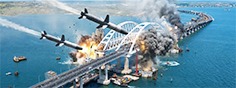


The Collapse Of The Kerch Bridge: The Kremlin’s Crimean Disgrace
- 18.11.2026, 8:22
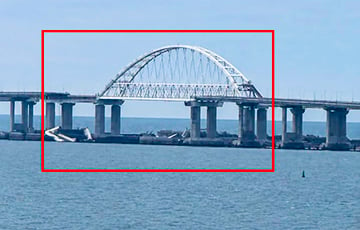
Russia's "gateway" on the peninsula has finally collapsed.
Since February 2022, Ukraine has carried out at least four large-scale operations, during which the Kerch Bridge—sacred to Putin—was damaged. But the most recent of these—on November 16 and 17, 2026—proved so successful that Russia’s “Crimean gateway” finally collapsed.
When, on May 15, 2018, Russian dictator Vladimir Putin personally opened the Kerch Bridge to vehicular traffic, many Ukrainians held their breath, united by a single wish: that the bridge would not hold and that the “KAMAZ” truck, driven by the Kremlin old man, would sink to the bottom of the Sea of Azov. It didn’t work out then. However, on October 8, 2022, the Security Service of Ukraine carried out its first operation to dismantle the occupiers’ “construction of the century”: a truck carrying two dozen metric tons of explosives detonated on the Kerch Bridge, and the bridge, as they say, “got a little tired” — the explosion caused two half-sections of the road section to collapse and triggered a massive fire on the railroad track.
Another particularly memorable operation by the Ukrainian Defense Forces in the Kerch Strait took place in July 2023. At that time, SBU special forces, together with the Ukrainian Navy, attacked the bridge using experimental Sea Baby surface drones. Strikes on the supports led to the collapse of one of the road spans.
After that, the Russian occupiers began to reinforce the crossing’s defenses by erecting additional towers equipped with “Pantsir-S1M” air defense systems around it, covering it with S-400 batteries, patrolling the waters with FSB vessels, and attempting to prevent possible attacks by Ukrainian surface and underwater unmanned craft… From the outside, it appeared that, in terms of the intensity of its defenses, the Kerch Bridge could easily rival Putin’s residence in Valdai and had “cover” no worse than that of the Kremlin.
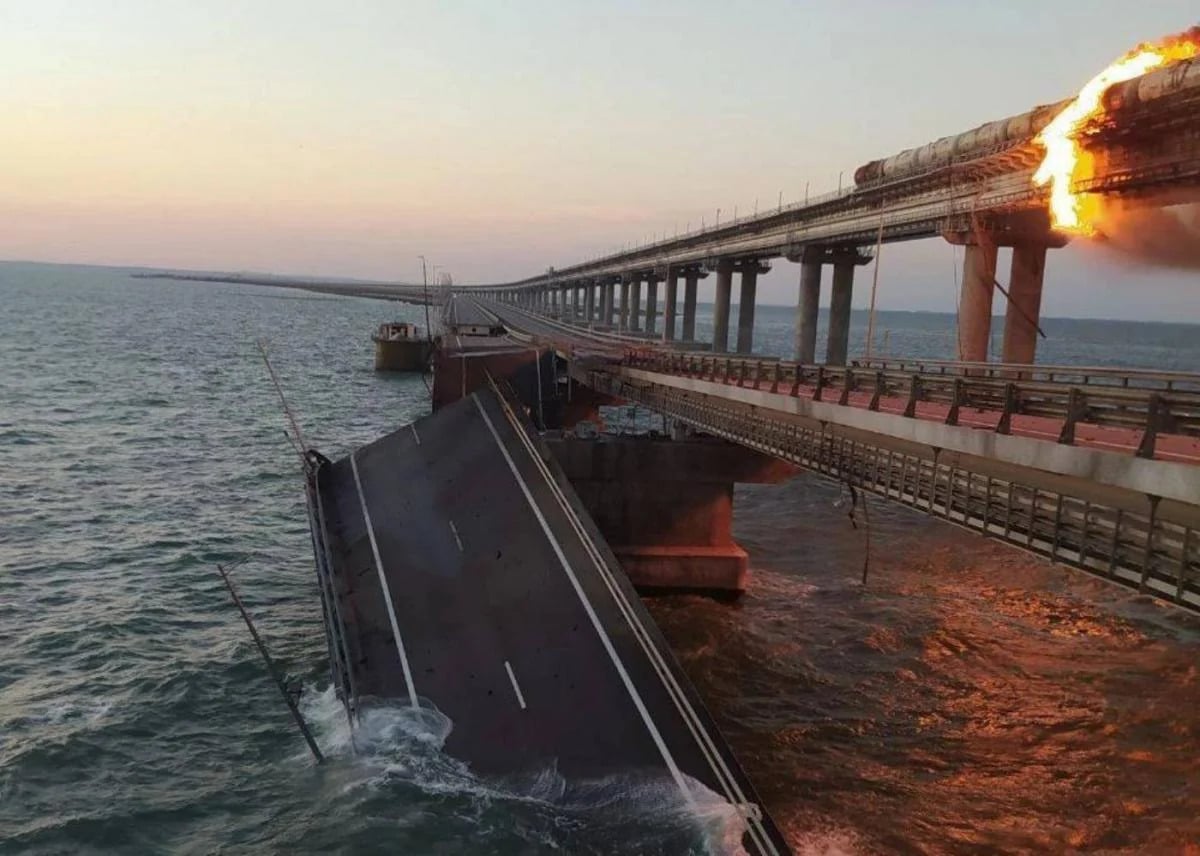
But this did not prevent yet another SBU operation, when in 2025, 1,100 kg of explosives (in TNT equivalent) were planted near the bridge’s supports. After the explosion, the bridge essentially became structurally unsound—its supports were damaged right at the base. And a little over a year later, in November 2026, a combined missile-and-drone attack finally led to the collapse of the arch—it, along with the highway span, fell into the water. Like the first “domino” capable of triggering the large-scale collapse of Putin’s “Russian Empire.”
They couldn’t hold onto what they stole… and will abandon it
One of the symbolic consequences of the destruction of the Kerch Bridge is that Crimea is now, for the Russian Federation, a suitcase without a handle. As noted by the head of the “Delovaya Stolitsa” analytical center Vadim Denisenko, the peninsula has effectively been blockaded.
“There are no ferry crossings, no railroad—only the ‘road of death’ through the so-called land corridor,” he pointed out.
Thus, according to him, the situation in Crimea will indeed be very dire. And it seems the peninsula’s residents already suspect something. After all, social media is already full of posts expressing fears of “running out of food,” “facing another gasoline crisis,” or “being left without electricity and unable to leave”.
But the main point the political analyst highlights is this: in such cases, Russians simply remove the “troubled” region from the media agenda. In other words, no one in mainland Russia will simply know about the hardships faced by the peninsula’s residents (or at least, they’ll pretend not to).
“That’s what happened with the Kursk Region during our special operation, and with Belgorod during the blackout. It will be the same with Crimea, Sevastopol, and the occupied parts of Ukraine. Crimea will simply disappear from Russia’s information landscape,” Denisenko notes.
Indeed, if you look at the Russian news from November 17, it’s all about a total “victory”: “Traffic on the Crimean Bridge has resumed after the attacks,” “The bridge will be repaired and will be even better than before,” says Peskov. And, considering that most Russians have never been to Crimea in their lives, headlines about the brilliant work of Russian air defense forces, “damage from shrapnel,” and the rapid (albeit virtual) “restoration of traffic” on the bridge.
But none of this negates the real consequences (of which the Kremlin is, obviously, well aware).
Real Consequences
“For the civilian population the damage to the bridge has an interesting aspect, since such an attack returns Crimea to an energy blockade. Furthermore, due to the blockade of the peninsula’s infrastructure, we can expect a new wave of evacuations of the Russian population of Crimea, which has numbered over 1 million people since 2014… “However, unfortunately, this will not have a significant impact on military logistics,” notes Dmitry Zhmailo, executive director of the Ukrainian Center for Security and Cooperation.
According to him, Russia had previously diversified its logistics routes. The Russians used the bridge to transport only personnel, as well as weapons and ammunition in camouflaged civilian trucks. Therefore, the “Azov Ring”—a system of roads and railways running through the occupied territories of southern Ukraine—is now a priority for the occupiers.
Analysts at the Institute for the Study of War (ISW) only partially agree with this view. Their report states that the land corridor and the Kerch Bridge are the two main arteries for the occupiers. And disruptions to one of them would obviously place an excessive burden on the other. This, in itself, complicates military logistics.
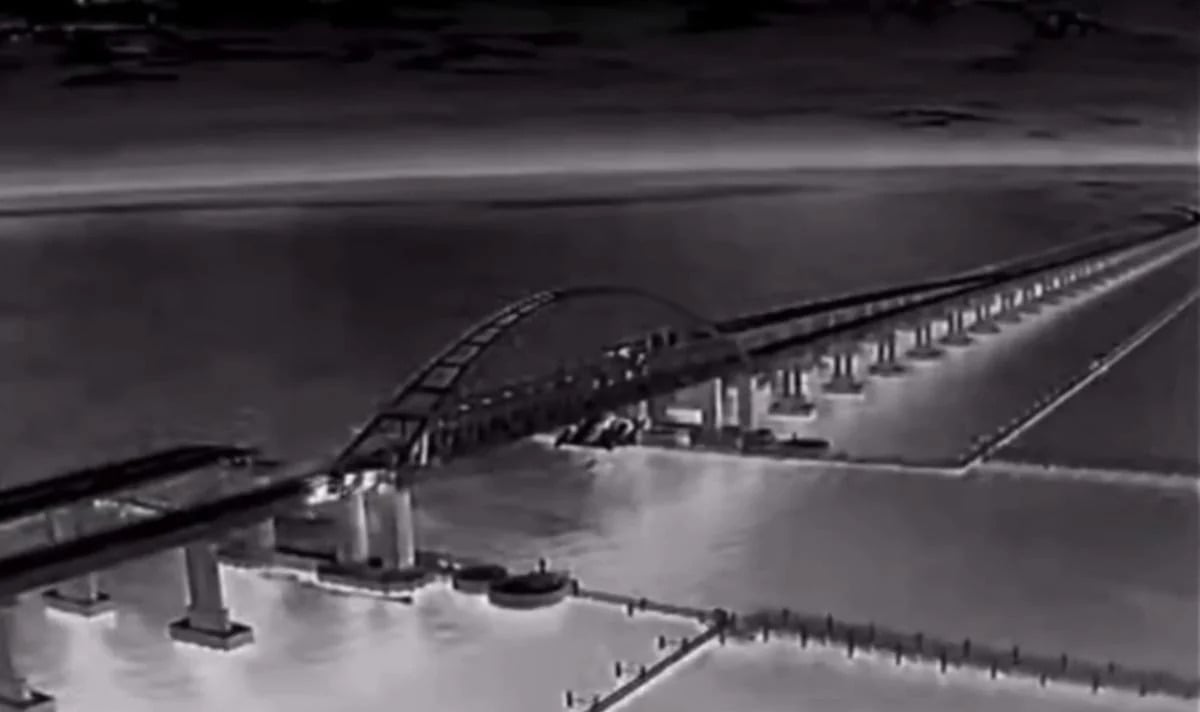
Another ripple effect of destroying the vehicular section of the Kerch Bridge is that the Kerch-Yenikal Canal would cease to function. Mikhail Gonchar , President of the “Strategy XXI” Center for Global Studies , points out that, although the Kerch Strait is 4.5 km wide at its narrowest point, it is shallow (only 3–5 meters), so its navigable channel is only 120 meters wide.
“The consequences of damage to the Kerch Bridge affect not only the ports of the Sea of Azov, but also the river ports of the Don and Volga (hello, Volga-Don Canal), as well as the Caspian Sea. In other words, not only will ‘river-sea’ class vessels be unable to leave the waters of the Azov, the Don, and the Volga; not only will NATO be unable to enter ‘Russia’s internal waters,’ but also the boats and small ships of the Russian Federation’s Black Sea Fleet and Caspian Flotilla will no longer be able to sail from Novorossiysk to Kaspiysk and back,” – the expert notes.
The Destruction of the Dream of the “Third Pole of the World”
The destruction of the Kerch Bridge, aside from its purely practical significance, certainly also has symbolic significance. The current state of the crossing is proof that Russia cannot reliably protect its key strategic facilities.
“The damage inflicted is unacceptable for a facility that is supposed to be under heavy guard,” noted analysts at the Institute for the Study of War.
NATO has already taken note of this (an organization that Putin, in his fantasies, has been successfully destroying for months now). Alliance Secretary General Mark Rutte, ahead of the meeting of the Contact Group on Ukraine’s Defense (“Ramstein-37”) in Brussels, noted that “Ukraine is defending itself, striking logistics hubs, and this is inevitable.”
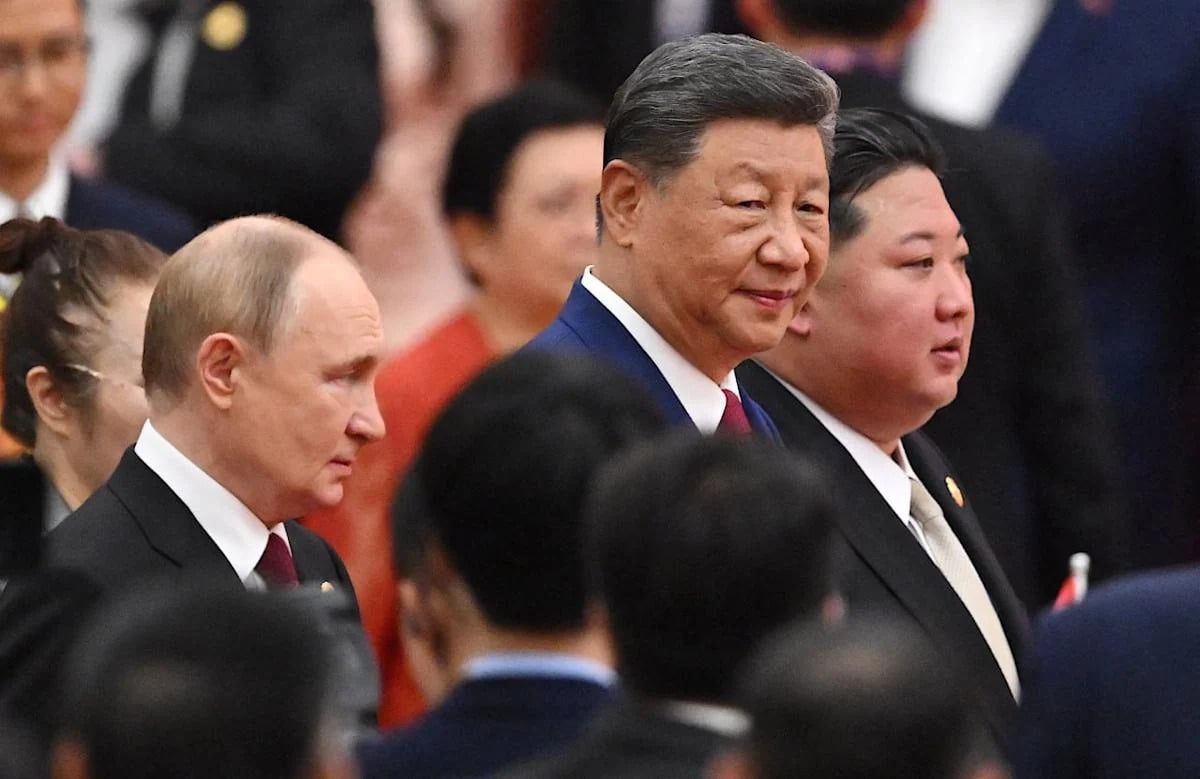
And, obviously, this will be noted at the Asia-Pacific Economic Cooperation (APEC) summit, which will take place on November 18–19 in China. UNIAN has already reported on the hopes Putin is pinning on his meeting with Chinese leader Xi Jinping and U.S. President Donald Trump. Now Xi has even more leverage to avoid entering into any dubious deals—whether with the American “lame duck” (which the White House chief will become starting January 3, when the new Congress takes office), nor with his eternal vassal—the Russian “failed bear” (which cannot even defend its former conquests on its own, let alone conquer anything new).
The funniest thing is that the Russians have already found someone to blame for the bridge’s collapse, and it turned out to be… a British RC-135W Rivet Joint electronic intelligence aircraft, which allegedly guided Ukrainian missiles toward the bridge. In particular, Russian propagandist Vladimir Solovyov claimed that NATO has “de facto entered the war” against Russia, and this requires “the toughest possible response.”
“Why does Moscow need this narrative? It’s too painful for the Kremlin to admit that the Ukrainians themselves found a way to strike Crimea’s most heavily defended facility twice in a single day,” notes political analyst Viktor Taran. “It’s much easier to once again tell its citizens that Russia is not at war with Ukraine, but with NATO as a whole. And at the same time, to scare the British with the prospect of escalation.”
But here, the Kremlin is once again shooting itself in the foot. Russian citizens will believe anything. All they need are simple “answers” like: “Where did the bridge go?—It sank.” However, those “partners” with whom Vladimir Putin prefers to sit at the same table as equals can already see perfectly well that the bridge collapsed into the sea thanks to Ukrainian intelligence, Ukrainian engineers, and the Ukrainian military—whom the “strong” Russian Federation has been “defeating” for five years now.
Tatyana Urbanskaya, UNIAN

Bank's name: Bank Millennium S.A.
Address: ul. Stanislawa Zaryna, 2A, 02-593, Warszawa
IBAN: PL97116022020000000216711123
SWIFT: BIGBPLPW
Name of the account holder: Fundacja “KARTA ‘97”
Purpose/title of payment: Donation for statuary aims
You can contact us by the e-mail charter97@gmail.com