Political Analyst On The Declaration By Trump, Putin, And Xi: Pure Abstraction
- 19.11.2026, 16:03
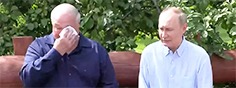
The Kremlin leader was put in his place.
In Shenzhen, China, on the sidelines of the APEC summit the leaders of the U.S., China, and the Russian Federation met. Donald Trump, Xi Jinping, and Vladimir Putin adopted a “declaration of peace.”
The meeting caused quite a stir, but did it live up to the parties’ expectations? What did this joint statement reveal?
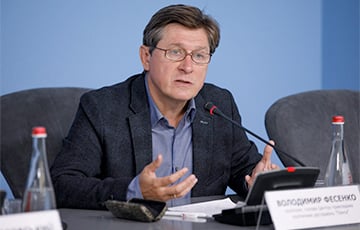
The website Charter97.org discussed this and more with renowned Ukrainian political scientist and head of the “Penta” Center for Applied Political Studies, Vladimir Fesenko:
— Let me start by saying that for Ukraine and Europeans, it is not the APEC summit itself that matters—nor has it ever been. Let me remind you that we are talking about the Asia-Pacific Economic Cooperation—an association of 21 countries in this region; Europe has nothing to do with it. But for the first time—at least in recent years, during Russia’s full-scale invasion of Ukraine—the leaders of the United States, China, and Russia all attended this summit. Not only did they attend, but they also held bilateral meetings with one another.
This, of course, caused quite a stir, including comparisons to a “new Yalta”—claims that they would be dividing up the world and so on. There was already a lot of excitement surrounding this trilateral meeting even before the summit. I’d like to point out an important detail: very few people knew about the existence of this organization—mainly experts on the region. There has probably never been as much excitement as there is now.
So in that regard, there were very high expectations—and a wide variety of them, including some alarming ones—for the meeting of the three leaders at this summit. But in the end, hype is hype—aside from photos and what I would call a very specific, brief, and rather abstract joint statement, there were no other results. And there likely couldn’t have been any.
A Strange Declaration
— What did this joint statement reveal?
— By the way, this was what Russia was pushing for, because the other two parties, let’s put it this way, weren’t particularly eager for it; the mere fact of the meeting was enough for them. Russia, on the other hand, was specifically seeking a joint statement as a concrete outcome.
It’s important to understand here that Putin is clearly striving to solidify this “Big Three.” Just as there are the G7 and G20 formats, so too has the “Big Three” emerged as a sort of alternative, particularly to the “Big Seven.” That is where Putin’s interest lies. Unfortunately, Trump fell for this ploy. But my prediction is that after Trump, the situation will change dramatically. So it is very noticeable now that there are only four points in this joint statement, and only two of them are relatively specific.
One point is quite specific—the thing that united all three leaders, including Trump: their dislike of the International Criminal Court. This is very telling and alarming. It shows a disregard for international justice, and this court is part of the UN system.
Then there’s the call to boost oil production and trade. This benefits Russia. Indirectly, this may suggest that all three countries—not directly, but indirectly—might agree to the de facto lifting of oil sanctions against Russia. But the Americans might lift them. I doubt Europe will do so. This is a very important point. But, one way or another, there is a common interest here as well.
The other two points are abstract and seem to reflect a very tentative compromise. For example, the call to reform the UN. It seems like a good idea, but we must understand that the three permanent members of the UN Security Council are opposed to changing their status. So, while they appear to be in favor of UN reform, in reality they will oppose any genuine reform of the UN. That’s the paradox. And regarding nuclear weapons: Trump wanted China to join the Strategic Arms Reduction Treaty. Plus, he wanted some kind of stance on Iran. But what was the result? An abstract clause stating that the parties believe nuclear weapons should not create problems or pose threats.
An absolutely empty, abstract clause. For Trump’s sake, they mentioned the topic of nuclear weapons, but there were no specifics. And a very important point: there’s no mention of Ukraine, which means they didn’t reach an agreement—the three leaders don’t have a unified position on this issue. That’s what matters. So in this regard, Putin—who clearly wanted to secure some kind of joint position on Ukraine—was unable to achieve it.
Was Putin humiliated?
— Yesterday, Xi Jinping showed Putin his place while posing for a group photo. What does this indicate?
— This is very telling. There’s a lot of talk about Putin being humiliated. I don’t think Xi Jinping wanted to humiliate the Kremlin leader, but he certainly wanted to show him his true place. He clearly demonstrated that Trump is far more important to China. And that’s what matters.
So here, Xi Jinping has precisely shown China’s real top priorities. Russia is important to China, but more as a junior partner.
But the main interest—and, let’s say, equality of status—lies, of course, in relations with the U.S. The lavish reception (even Trump himself noted this) when Xi Jinping welcomed him, along with all the pomp and circumstance, clearly made an impression on Trump. So that’s who Xi Jinping was actively engaging with at this summit—Trump.
He understands that Putin isn’t going anywhere, so his attitude toward him was reserved—yes—and, as you correctly pointed out, the Kremlin leader was shown his true place.

Bank's name: Bank Millennium S.A.
Address: ul. Stanislawa Zaryna, 2A, 02-593, Warszawa
IBAN: PL97116022020000000216711123
SWIFT: BIGBPLPW
Name of the account holder: Fundacja “KARTA ‘97”
Purpose/title of payment: Donation for statuary aims
You can contact us by the e-mail charter97@gmail.com