


Wood Dating Back To The 24th Century B.C. Was Found At The Site Where Noah's Ark Is Believed To Have Been Located
- 23.11.2026, 19:51
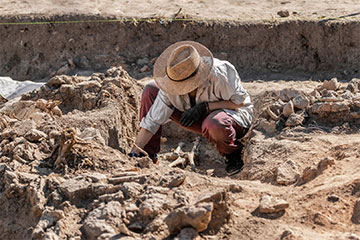
The age of the wood corresponds to some estimates of when the Great Flood occurred.
Wood samples dating back approximately 4,300 years have been discovered at the site of the supposed location of Noah's Ark in eastern Turkey. Researchers have announced the initial results of radiocarbon dating of samples collected there, according to Arkeonews.
The wood samples were collected in the Durupinar geological formation in Ağrı Province. They have attracted researchers’ attention due to their contours, which resemble the hull of a ship.
Sivas University professor Cümhuriyet Jenker Atila reported that an American laboratory dated the samples to the period between 2400 and 2200 B.C. Deputy expedition leader Andrew Jones noted that these dates coincide with some estimates of the timing of the Great Flood given in biblical chronologies.
The research took place from June 28 to September 30, 2026. About 20 specialists from five countries studied the geological structure of Durupinar and collected fragments of wood and charred material. The researchers are currently awaiting analysis results from Switzerland and Turkey. These will be compared with data from an American laboratory to more accurately determine the age and properties of the finds.
Radiocarbon dating helps determine the age of the wood. However, to determine whether it was processed by humans and how it ended up at this site, it is necessary to study the samples themselves and the surrounding soil.
The Durupinar Formation is located approximately 30 km south of Mount Ararat. From a distance, its outline resembles the silhouette of a ship, and its length is about 160 m, which is comparable to the estimated dimensions of Noah’s Ark. In late August, researchers used underground scanning to detect anomalies—numerous voids, angular structures, and cavities with smooth edges, according to the newspaper Milliyet.

Bank's name: Bank Millennium S.A.
Address: ul. Stanislawa Zaryna, 2A, 02-593, Warszawa
IBAN: PL97116022020000000216711123
SWIFT: BIGBPLPW
Name of the account holder: Fundacja “KARTA ‘97”
Purpose/title of payment: Donation for statuary aims
You can contact us by the e-mail charter97@gmail.com