

Atlantic Council: The World Didn't Realize How Ukraine Became A Superpower
- 25.11.2026, 18:20

Kyiv has achieved phenomenal success in the field of unmanned warfare.
Events in Libya, where the Ukrainian military destroyed a Russian warship and damaged two transport ships, demonstrate Ukraine’s transformation into a global superpower in the field of unmanned technology. This was discussed in an op-ed on the website of an American think tank Atlantic Council, British journalist Peter Dickinson writes.
As the author notes, recent operations by Ukrainian naval drones have demonstrated the geographic expansion of the Defense Forces’ capabilities. In particular, Ukrainian drones sank one of Russia’s most advanced warships in the port of Benghazi, Libya. The following day, Volodymyr Zelenskyy confirmed Ukraine’s involvement in the attack on a Russian cargo ship in the Gulf of Finland.
“These two strikes in the Mediterranean and Baltic Seas underscored the growing geographic reach of Kyiv’s offensive capabilities,” he writes.
Dickinson explains that the development of Ukraine’s drone industry was a response to Russia’s numerical and firepower superiority. By the second year of the full-scale war, hundreds of Ukrainian defense startups were already designing and manufacturing drones. Thanks to collaboration with military units, new models could be quickly tested and refined. As a result, production has grown from a handful of units to millions of drones per year.
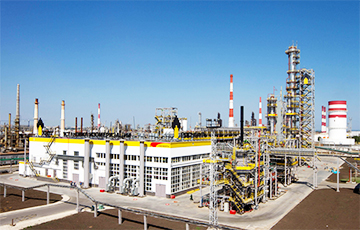
At sea, Ukrainian drones forced the Russian Black Sea Fleet to leave occupied Crimea and relocate to Russian ports. On land, unmanned ground vehicles are used for logistics, evacuating the wounded, and combat operations. In the air, strike drones have created a dangerous strike zone along the front lines, while long-range drones are attacking Russian military infrastructure and oil refineries.
According to Reuters, Ukrainian strikes have reduced Russian oil refining capacity by 45% in the last month alone.
“Ukraine is now widely recognized as a superpower in the field of unmanned warfare at sea, on land, and in the air,” the author emphasizes.
According to Dickinson, Kyiv’s international partners should more actively support Ukrainian drone production. He notes that many domestic companies are operating far from full capacity, and that additional funding and technological assistance would significantly expand their capabilities.
The author believes that the development of Ukraine’s drone industry could become one of the most important factors in increasing pressure on the Kremlin and bringing the war to an end.

Bank's name: Bank Millennium S.A.
Address: ul. Stanislawa Zaryna, 2A, 02-593, Warszawa
IBAN: PL97116022020000000216711123
SWIFT: BIGBPLPW
Name of the account holder: Fundacja “KARTA ‘97”
Purpose/title of payment: Donation for statuary aims
You can contact us by the e-mail charter97@gmail.com